

Louise Harnby | Crime Fiction and Thriller Editor
  • Home
  • Resource library
  • Services
  • Courses
  • Books
  • Podcast
  • Blog
  • Training login
  • Contact
The Editing Blog: for Editors, Proofreaders and Writers

FOR EDITORS, PROOFREADERS AND WRITERS

How to get fiction editing and proofreading work

2/4/2018

10 Comments

 
How do you get fiction editing and proofreading work? This post offers some pointers for new freelancers, and experienced editors looking to shift specialisms.
Picture

1. Start with baseline training

To be fit for working in any editing discipline, fiction or otherwise, training is the foundation. Even if you’ve been devouring your favourite genres for years, you need to understand publishing-industry standards.

This isn’t about snobbery. It’s about serving the client honestly and well, especially the self-publisher, who might not have enough mainstream publishing knowledge to assess whether you’re capable of amending in a way that respects industry conventions.

It’s about the reader too. Readers are canny, and often wedded to particular genres. They’re used to browsing in bookshops and bingeing on their favourite authors. They have their own standards and expectations.

One of our jobs as editorial professionals is to ensure we have the skills to push the book forward, make it the best it can be, so that it’s ready for those readers and meets their expectations.

And so if you want to proofread or edit for fiction publishers and independent authors, high-quality editorial training isn’t a luxury: it’s the baseline.

What kind of training you need will depend on what services you plan to offer.

Courses
I recommend the Publishing Training Centre and the Chartered Institute of Editing and Proofreading (CIEP) for foundational copyediting and proofreading training. I’m based in the UK, and those are the two training suppliers I have experience of so I’m in a position to recommend them.

That doesn’t mean that other suppliers aren’t worth exploring. Rather, I don’t recommend what I haven’t tested. Keep an open mind. Check a range of suppliers and their course curricula. Then choose what suits your needs.
​
  • Essential Proofreading: Editorial Skills One (Publishing Training Centre)
  • Essential Copy-Editing: Editorial Skills Two (Publishing Training Centre)
  • Proofreading 1–4 (CIEP)
  • Copy-editing 1–4 (CIEP)
  • See also this list of professional editorial societies; they’ll be able to advise you if you live outside the UK

If you want more information about how the PTC and CIEP courses compare, talk to the organizations’ heads of professional development and training.

2. Decide which fiction editing services you want to offer

Some beginner self-publishers don’t understand the differences between the different levels of editing, which means they might ask for something that’s not in their best interests (e.g. a quick proofread even though the book hasn’t been critiqued, structurally edited, line- and copyedited).

It’s essential that the professional fiction editor is able to communicate which levels of editing they provide, and recommend what’s appropriate for the author.

That doesn’t mean the author will take the advice, but the editor must be able to articulate her recommendations so that independent authors can make informed decisions.

3. Invest in appropriate specialist fiction training

The next step is to gain skills and confidence with fiction editing and proofreading work. As with any type of editing, the kinds of things the editor will be amending, querying and checking will depend on whether the work is structural, sentence-based or pre-publication quality control.

When deciding what specialist fiction editing courses to invest in, bear in mind the following:
  • Even if you have experience of developmental editing non-fiction, this skill will unlikely transition smoothly to story-level fiction editing without specialist training.
  • Even if you’re an experienced sentence-level fiction editor, this skill will not make you fit to offer structural editing or critiquing without specialist training.

Courses and reading
Explore the following to assess whether they will fill the gaps in your knowledge. Check the curricula carefully to ensure that the modules focus on the types of fiction editing you wish to offer and provide you with the depth required to push you forward.
​
  • Switching to Fiction (Louise Harnby; course: webinar and book)
  • Introduction to Fiction Editing (CIEP; course)
  • Developmental Editing: Fiction Theory (Sophie Playle, Liminal Pages; course)
  • Developmental Editing: In Practice (Sophie Playle, Liminal Pages; course)
  • Editing Fiction (Publishing Training Centre; introductory e-learning module)
  • Editing Fiction at Sentence Level (Louise Harnby; book)
  • Fiction editing courses (Louise Harnby)
  • ​Write to be Published (Nicola Morgan; book)
  • The Magic of Fiction (Beth Hill; book)

This isn’t a definitive list but it’ll set you on the right track.

4. Get in the right mindset

Fiction editing requires a particular mindset for several reasons:

Style and voice
We’re not only respecting the author, but the POV character(s) too. The fiction editor who doesn’t respect the voices in a novel is at risk of butchery.

Being able to immerse oneself in the world the writer’s built is essential so that we can get under the skin of the writing. If we don’t feel it, we can’t edit it elegantly and sensitively.

Intimacy
Non-fiction is born from the author’s knowledge. Fiction is born from the author’s heart and soul.

If that sounds a little cheesy, I’ll not apologize. Many of the writers with whom I work are anxious about working with an editor because they’ve put their own life, love and fear into the world they’ve built.

A good fiction editor needs to respect the intimacy of being trusted with a novel. If that doesn’t sound like your bag, this probably isn’t for you.

Unreliable rules
At a fiction roundtable hosted by the Norfolk group of the Chartered Institute of Editing and Proofreading, guest Sian Evans – an experienced playwright and screenwriter – talked about how punctuation in screenplays is as much about ‘the breaths’ the actor is being directed to take as about sentence clarity.

These ‘breaths’ exist in prose. They help the reader make sense of a sentence ... not just grammatically, but emotionally. And so the addition or removal of just one comma for the sake of pedantry can make a sentence ‘correct’, or standard, but shift tone and tension dramatically.

The fiction editor needs to be able to move beyond prescriptivism and read the scene for its emotionality, so that the author’s intention is intact but the reader can move fluidly through the world on the page and relish it.

All of which is a rather long-winded way of saying that if you want to get fiction editing work, and keep on getting it, you’ll need to embrace rule-breaking with artistry!

Fiction work requires us to respect both readability and style. The two can sometimes clash so gentle diplomacy and a kind hand will need to be in your toolbox.

5. Read fiction

If you don’t love reading fiction, don’t edit it.

And if you don’t love reading a particular genre, don’t edit it.

Editing the type of fiction you love to read is a joy, and an advantage. If you read a lot of romance fiction, you’ll already be aware of some of the narrative conventions that readers expect and enjoy.

I started reading crime fiction, mysteries and thrillers before I’d hit my teens. I turned 51 in March and my passion for those genres hasn’t waned. That stuff makes up over eighty per cent of my work schedule too. Here’s the thing though – my pleasure-reading has supported my business.

I get to see first-hand how different authors handle plot, how they build and release tension, how they play with punctuation, idiomatic phrasing, and sentence length such that the reader experiences emotion, immediacy and immersion. And that helps me edit responsively.
​
Honestly, reading fiction is training for editing fiction. In itself, it’s not enough. But professional training isn’t enough either. Love it and learn it.

6. Learn from writers

​If you want to understand the problems facing the self-publishing author community, listen and learn.

Join the Alliance of Independent Authors. Even lurking in the forum will give you important insights into what self-publishers struggle with an how you might help.

Take advantage of online webinars aimed at beginner writers. Penguin Random House offers a suite of free online resources. Experienced writers and instructors take you on whistle-stop tours of setting, dialogue, characterization, point of view, crime fiction writing, children's books and a whole lot more.

Listen to published novelists’ stories. My local Waterstones hosts regular author readings/signings. I’ve seen Garth Nix, Jonathan Pinnock and Alison Moore speak. In April 2018, Harry Brett is chairing a session on how to write crime with Julia Heaberlin and Sophie Hannah.

In May, fellow editor Sophie Playle and I are attending 'Why Writing Matters', an event hosted by the Writers' Centre Norwich in association with the Norwich & Norfolk Festival. And Jeffery Deaver's coming to town too. Ticket booked!

These workshops cost from nothing to £12. That's a tiny investment for any fiction editor wanting to better themselves.
Jeffery Deaver

7. Get in front of publishers

The best way to get publisher eyes on your editing skills is to go direct. Experienced fiction editors are sometimes contacted direct but sitting around waiting to be offered work never got the independent business owner very far and never will.

Experienced ... but not in fiction
If you’re an experienced editor or proofreader who already has publisher clients but they’re in a different discipline (e.g. social sciences, humanities) you’ll likely have built some strong relationships with in-house editors.

Publishing is a small world – in-house staff move presses and meet each other at publishing events. It might well be that one of your contacts knows someone who works in fiction and, more importantly, will be happy to vouch for your skills.

With specialist fiction training, you’ll be able to leverage that referral to the max. So, if you have a good relationship with an in-house academic editor, tell them you’d like to explore fiction editing and ask them if they’d be prepared to share a name and email and give you a recommendation.

Newbie
If you’re a new entrant to the field, it’s unlikely that a cold call to HarperCollins or Penguin will be fruitful. The larger presses tend to hire experienced editors with a track record of hitting the ground running.

There are two options:
​
  1. Target smaller, independent fiction presses. Ask if they’d consider adding you to their freelance list. Be clear about the training you’ve done and your genre preferences. The fees might not be great, but I recommend you look at this as a paying marketing and business-development opportunity. You’ll be able to leverage the experience, the testimonials and the portfolio entries later.
    ​
  2. If the small press responds by saying that they aren’t in a position to hire external editorial work, ask if you might do a one-off gratis proofread/edit for them as a way of gaining experience and supporting their independent publishing programme – mutual business backscratching. Again, you can leverage this experience when targeting paying fiction clients (publishers and indie authors).

8. Be visible online

There’s no excuse for any twenty-first-century professional editor to be invisible. There’s no one way to visibility – take a multipronged approach.

Directories
If you’re a member of a national editorial society, and they have a directory, advertise in it as a specialist fiction editor/proofreader.

If you’re not a member, become one. It won’t be free, but running a business has costs attached to it. If we want to succeed, we need to be seen. That doesn’t land on our plates; we must invest.

If your society doesn’t have an online directory, lobby for one to be set up and promoted. I’d go as far as to argue that a professional editorial society that isn’t prioritizing the visibility of its members isn’t doing its job properly.
​
  • The Chartered Institute of Editing and Proofreading (CIEP) IS doing its job properly. I rank highly in Google for certain keyword phrases, but it’s not always my website that shows up – sometimes it’s my CIEP directory entry. It thrills me to know that my membership sub is providing me with networking, friendship, training opps, and visibility in the search engines.

    If you don’t qualify for inclusion, make doing what’s necessary a key goal in your business plan.
 
  • Reedsy – despite what you might have heard – does NOT set low rates that encourage a ‘race to the bottom’. Editorial professionals set their own rates and Reedsy takes a cut of the fee. I receive several requests a month to quote for fiction copyediting or proofreading via Reedsy and have worked with some wonderful authors. Entry in Reedsy’s database is free but you must have a certain level of experience to be invited.

    Again, if you don’t qualify for inclusion, make doing what’s necessary a key goal in your business plan.

Create content for indie fiction authors
Any self-publishing fiction writer looking for editorial assistance is more likely to think you’re wowser if you help them before they’ve asked for it.

Create resources that offer your potential clients value and you’ll stand out. It makes your website about them rather than you. And it demonstrates your knowledge and experience.

Doing this might require you to do a lot of research, but what a great way to learn. Don’t think of it as cutting into your personal time but as professional development that makes you a better editor.

And think about it like this: Who would you rather buy shoes from? The shop where the sales assistant tells you all about her, or the shop where the sales assistant helps you find shoes that fit? It's no different for authors choosing editors.
​
I have an several pages dedicated to resources for fiction authors. I’m not alone. These fiction editors have resource hubs too: Beth Hill, Sophie Playle, Lisa Poisso and Manda Waller. There are others but I’m already over the 2,000-word mark!
Shout out your fiction specialism
Shout your fiction specialism from your website’s rooftop. Why would a fiction writer hire someone who doesn’t specialize in fiction when there are so many people dedicated to it?​
Picture

Related reading

Here are some additional articles that you might find useful if you're considering moving into the field of fiction.

  • The different levels of editing: Proofreading and beyond
  • How do mainstream publishers produce books?
  • Should a writer hire a freelance editor before submitting to an agent?
  • What's a sample edit? Who does it help? And is it free?
  • Fiction editing resources for editors
  • ​Resource library for editors

Good luck with your fiction editing journey!

Online training to help you get started

Here's a free webinar where you can review this guidance and other various aspects of fiction editing.
​
Picture
​And if you're thinking about transitioning from non-fiction but are unsure what else you need to know, take a look at my course, Switching to Fiction.
Picture

About Louise Harnby

About Louise HarnbyLouise Harnby is a line editor, copyeditor and proofreader who specializes in working with crime, mystery, suspense and thriller writers.

She is an Advanced Professional Member of the Chartered Institute of Editing and Proofreading (CIEP) and co-hosts The Editing Podcast.

  • Get in touch: Louise Harnby | Crime Fiction & Thriller Editor
  • Connect: X @LouiseHarnby, Facebook and LinkedIn
  • Learn: Books and courses
  • Discover: Resources for authors and editors

10 Comments

5 tips for writing about physical pain in fiction

25/9/2017

9 Comments

 
Writing about pain is hard, but there’s no shame in that struggle; it’s difficult to articulate even when we’re experiencing it.
Picture

Exploring the writing of pain

Picture
​​Pain is […] the kind of subjective and poorly delineated experience that is difficult to express satisfactorily in language […] Indeed, pain shares some of the characteristics of target domains that have received considerable attention in the cognitive linguistic literature. Like LOVE, for example, it is private, subjective [...] cannot be directly observed.
That insightful quote is from ​linguist Elena Semino.

​When researching this article, I was surprised by how little has been written about the art of depicting physical pain in fiction. And, yet, the act of hurting is prevalent in most genres; it deserves as much attention as emotional distress.

I've come across a few examples in my sentence-level editing work this year where great writers came a little unstuck, tending towards repetition and overwriting the pain. That was my prompt to delve deeper.


I thought it would be interesting to look at depictions of physical pain from within the bubble of novel craft ... and beyond, in medicine and poetry.
​
Here are 5 tips to help you write about physical suffering.

​​1. Don’t always say it hurts – less is more

'Pain is something we all go through to a lesser or greater extent. It’s something we all know intimately. Yet it’s so hard to describe and write about. It’s hard to push beyond “it hurts” and not wallow in it and also hold your reader,’ writes Justine Larbalestier.

She’s spot on. It’s why some beginner writers’ pain scenes end up either repetitive, overwritten or clichéd. 

Trust your reader. If a character’s elbow is smashed with a hammer, do we really need to be told that it hurt, that he ‘writhed in agony’, that he was ‘wracked with pain’? Sometimes less is more.

Readers are very good at filling in the gaps. Just as we imagine (without being directed to) a character rolling her eyes when she’s frustrated, raking her hands through her hair when she’s downcast, or biting her lip when she’s anxious, so we know that she feels pain when she’s kicked or punched, when she stubs her toe, when she’s stabbed, whipped or bitten.

Mick Herron is a master of keeping it lean. It’s not that he avoids mentioning pain, but he weaves experience into its telling that makes the reader think, Yes, I get that. Here’s an extract from Slow Horses:
Picture
​   Arms pulled River upright and his body screamed, but felt good at the same time – aching its way out of a cramp.
   A bottle was pressed to his lips, and water poured into his mouth. River coughed and bent forward; spat; threw up almost. Then blindly reached for the bottle, grabbed it, and greedily gulped down the rest of its contents.
   ‘Shit, man,’ Griff Yates said. ‘You really are a fucking mess.’

​2. Consider the type of pain

Commonly understood descriptors can be useful when thinking about pain writing. Semino references the 1971 McGill Pain Questionnaire and summarizes author Ronald Melzack’s categorization as follows:
​
  • Physical damage via insertion of pointed object: Stinging, pricking, boring, drilling, penetrating
  • ​Physical damage via the application of sharp objects: ​Sharp, cutting, lacerating, stabbing, lancinating, piercing
  • ​​Physical damage via pulling/tearing: Tugging, pulling, wrenching, drawing, squeezing, tearing
  • ​​Physical damage via the application of pressure/weight: Pinching, pressing, crushing, tight, heavy
  • ​​Malevolent animate agent whose actions may cause physical damage: Punishing, cruel, vicious, torturing, gnawing, killing
  • ​High and low temperatures: Hot, burning, scalding, searing; cool, cold, freezing
  • Meanings to do with movement: Beating, pounding, jumping, shooting
  • ​Emotional or affective dimensions: ​Wretched and annoying
The first way in which you might use the list above is to apply the descriptors to your writing of a character’s pain. These can help you with the shape and movement of it.

Here's a fine example cited by Susannah Mintz. It's a scene from Sharon Cameron's Beautiful Work, where the narrator, Anna, says of her pain:
Picture
​​[It is a] beating between my breasts, and a reverberation of beating upward to my collarbone – a low steady hum, close to my body, not touching it. But agitating it. Below the beating, a thick, spikelike pressure was driving down to my belly …. The roof of my mouth was dry. I couldn’t swallow. A harsher beating arose near the surface of the skin in my left breast below the nipple. (84)
The descriptors are evident, but Cameron uses them artfully to bring the pain to life; it has intention. It does things to Anna ... it's 'near' her, 'close to' her, rather than within her. In this detached state, the pain becomes a supporting character in the scene.

​3. Focus on pain's consequences

Think about how you might show physical and emotional reactions rather than telling the pain. You could use the descriptors from the table above as nudges as to what those reactions might be.

For example, if your character’s pain is crushing, you might express this by showing him struggling for breath; if it’s gnawing, you might have him bent and holding his belly.
​
Back to the hammer and the elbow … what if instead of being told that the character is in agony, we learn that he doubles over, falls to his knees, vomits, or blanches? Perhaps he experiences a white-out, or loses control of his bowels. What about the sounds he makes … or those he doesn’t because he’s rendered voiceless? How does the pain move and what does it look like? 

Some of these reactions might be brutal, but the injury and consequent pain are themselves brutal and needn’t be shied away from.

Similarly, emotional reactions can help with the writing of physical pain. How does your character feel when that hammer hits his elbow? Depressed, frightened, vulnerable, hopeless, despairing, humiliated, angry?

In The Poppy Factory, William Fairchild focuses sharply on the sounds and movements his character makes, and shows the hurting through them.
Picture
​Then suddenly you're down and all movement stops like a jammed cine film. You're still screaming but now it's different. It's because of the pain and when you try to get up, your legs won't move. You don't know where you are. All you know is that you're alone and probably going to die. When you stop screaming and look up, the sky is dark and you can't hear the guns any more, only the sound of someone moaning softly. It takes a few moments before you realise it's yourself.
In the PDF cheat sheet available at the end of this article, I've included some additional ideas for how you might show rather than tell a character's pain.

​4. Acknowledge the limitations of agony

When I’m told that a character is in (physical) agony, my expectations of what she is capable of are changed. I’ve only been in agony a couple of times in my life, and I was good for nothing, rendered almost immobile. Reason left me. So did language. 

And so just because our protagonist is an MI5 agent with advanced armed-combat skills and interrogation-resistance techniques, there’s probably only so much she can take if she’s in agony.

Some genres of writing lend themselves better than others to acute pain tolerance – fantasy and sci-fi, obviously, when world-building rules allow for it; and action/adventure with Jason Bourne-like characters who refuse to go down no matter what they’re subjected to.

Somewhere there’s always a line, though – a point where Invulnerable Uberguy becomes unbelievable, laughable. If we’re told he’s in agony but he’s still throwing cool punches, turning roundhouse kicks, evaluating his escape route and planning this evening’s dinner date all at the same time, parody’s not far away.

There’s nothing wrong with escapist writing that allows for agony tolerance and superhero-like brilliance as long as that’s your intention and your reader’s expectation. If you’re aiming for authenticity and grit, though, be mindful of pain thresholds, especially what’s possible when your character’s in agony.
​
Agony, drawn realistically, can make us doubt the protagonist’s ability to make it. Why is that interesting?

Says K.M. Weiland: 
Picture
​A good story should have the power to engage [readers] in a character’s suffering even when they know it’s all going to turn out right in the end. Every time an obstacle shows up between your protagonist and his goal, ask yourself: Is this just something that happens to him? Does he just brush it off and move on? Or does it hit him where it hurts? Does it make him (and readers) doubt his ability to make to the end of his journey?

​5. Look at how the poets do it

Might the poets have some answers? Let's look at Milton. Who better?

​In this excerpt, we’re left in no doubt as to Satan’s physical suffering, and yet there’s no mention of his feeling it. Instead, we see it in our mind’s eye through the effort of his movements (‘uneasy steps’) and the detail in the environment (‘burning marle’, ‘torrid clime’, ‘inflamed sea’) that ‘he so endured’.
Picture
​​His Spear, to equal which the tallest pine
Hewn on Norwegian hills, to be the mast
Of some great admiral, were but a wand,
He walked with to support uneasy steps
Over the burning marle, not like those steps
On Heaven’s azure, and the torrid clime
Smote on him sore besides, vaulted with fire;
Nathless he so endured, till on the beach
Of that inflamed sea, he stood and called
His Legions, angel forms [...]

​Which choice is best?

​Whether you choose to leave your character's hurt to the reader's imagination, tell it through using commonly understood descriptors, or show it through reaction and environment will depend on your style, genre and intention.

If you're in the middle of a fast-paced action scene, Cameron's approach in Beautiful Work might be a distraction for your reader. If you're writing a more introspective scene, Herron's lean approach in Slow Horses could leave the reader wanting.

There's no best way of writing about physical suffering. The most important thing is that it shouldn't be boring. Unless your reader has congenital analgesia, they will have experienced pain and know it is anything but tedious.

Further reading

  • Elena Semino, ‘Descriptions of Pain, Metaphor, and Embodied Simulation’, Metaphor and Symbol, Vol. 25(4), 2010
  • John Milton, Paradise Lost, Book I
  • Justine Larbalestier, ‘Writing Physical Pain’
  • K.M. Weiland, ‘Why Protagonists Must Suffer to Be Interesting’, Helping Writers Become Authors
  • Mick Herron, Slow Horses, John Murray, 2015
  • Susannah B. Mintz, ​Hurt and Pain: Literature and the Suffering Body, Bloomsbury, 2013
  • William Fairchild, The Poppy Factory, Futura, 1987
​
Here's the free PDF: Writing pain: A description cheat sheet for fiction writers
DOWNLOAD THE PAIN CHEAT SHEET
Painful Nudges

About Louise Harnby

Louise Harnby is a line editor, copyeditor and proofreader who specializes in working with crime, mystery, suspense and thriller writers.

She is an Advanced Professional Member of the Chartered Institute of Editing and Proofreading (CIEP) and co-hosts The Editing Podcast.

  • Get in touch: Louise Harnby | Crime Fiction & Thriller Editor
  • Connect: X @LouiseHarnby, Facebook and LinkedIn
  • Learn: Books and courses
  • Discover: Resources for authors and editors

9 Comments

Slipping into character – understanding the impact of narrative point of view: With Sophie Playle

7/9/2017

0 Comments

 
Sophie Playle takes you through the fundamentals of narrative point of view so you (and your reader) know who's telling your story.
Picture

Why narrowing POV options can be liberating

As an author, you have a lot of decisions to make when it comes to putting the ideas you have for your novel down on paper. Where should you start the story? Which characters should you focus on? Should you write in past or present tense? Third or first person? The possibilities are overwhelming.

It seems counterintuitive, but narrowing your options can be quite freeing. Once you’ve eliminated the paralysis of infinite choice, you can focus your creativity. Choosing the viewpoint from which you tell your story is one decision you should certainly consider. 

It doesn’t matter whether you think about this before you start writing or during the redrafting stage. Either way, by deliberately and purposefully aligning your narration with a particular character, you’ll be able to:
  • tighten your story
  • better control the tension*
  • and add even more originality to your writing

When a novelist hasn’t considered the point of view from which they’re telling their story, it makes things a lot harder for the reader. The story might lack focus, the characters might feel at arm’s length, and the writing style could fall flat.
 
If you struggle with any of these issues, considering point of view could be the answer.

What is ‘point of view’ in fiction?

Let’s start with the basics. 

When we talk about point of view in fiction, we’re talking about the position from which the events of the novel are being observed or experienced. It’s essentially where you’ve decided to place the lens through which a reader accesses your story. 
Picture
[My writing] students talk about 'point of view' […] as if it were mechanical, when in fact it refers to the hardest and most thrilling thing we do—becoming someone else, becoming that person so thoroughly that if we’ve decided the person is nearsighted, we’ll imagine the room in a blur as soon as she takes off her glasses; if we’ve made him so jealous he can kill, we’ll feel mad rage down to our tingling fingertips when his girlfriend looks at another man. (Alice Mattison, The Kite and the String)
But before we get into the details of slipping into character, we should back up a little. There are many narrative layers to a novel, and it’s useful to understand them.

  • First, we have the author. The author writes about events they’ve made up.
  • Next we have the narrator. The narrator has witnessed something that actually happened (even though both the narrator and the events have been invented by the author).
  • The final layer of narrative is the viewpoint character. This might be the narrator, but it might not. The reader experiences what the viewpoint character experiences.

​Narrators, not authors, tell stories.**

The difference is subtle, but important. If the author tells a story, the reader knows it’s made up. But if the narrator tells the story, it’s much easier for the reader to willingly suspend their disbelief and immerse themselves in what the narrator is saying.
 
When you write, you – as the author – should disappear. Instead, you channel the narrator. The narrator can either be a character in the story or a disembodied observer. Either way, you see what they see, hear what they hear, and smell what they smell as they experience the events of your story. And depending on the type of narrator you’ve chosen to use, the narrator can also slip in and out of the perspective of your viewpoint character (or characters), experiencing the world through their body and mind, expressing those experiences using their language and style.
 
I admit, it’s a little confusing to wrap your head around.
 
So let’s take a quick look at the most common types of narration and the implications each can have on your writing, and hopefully all will become clear.

The different types of narration

FIRST PERSON
First-person narration is when a character is telling the story from their own perspective and uses the pronoun ‘I’. Unless the character is telepathic, they will only be able to express the events of the novel from their own point of view and have knowledge of things only they have experienced. If they learn things from other characters, this knowledge will be filtered through (and potentially distorted by) their interpretation.  

Pros
  • Greatest intimacy between the character and the reader
  • Strong sense of the character’s voice
  • Easy to portray a character’s thoughts, emotions and opinions
  • If using present tense, easy to create a sense of drama 
  • If using past tense, able to portray the character’s considered response to events and create a sense of foreshadowing

Cons
  • Difficult to dramatise scenes in which the narrator isn’t present
  • Character must be interesting enough to maintain a continuous presence
  • If using present tense, can be difficult to balance time with a character’s inner life (e.g. it’s unrealistic for a character to consider something in depth if when the action moves quickly)
  • If using past tense, some drama may be lost as we know the character will survive to tell the tale
  • If using past tense, can be tricky to decide from which point in time the character is narrating, and what the effects of this are

EXAMPLE:
Picture
If you really want to hear about it, the first thing you'll probably want to know is where I was born, and what my lousy childhood was like, and how my parents were occupied and all before they had me, and all that David Copperfield kind of crap, but I don't feel like going into it, if you want to know the truth. In the first place, that stuff bores me, and in the second place, my parents would have about two hemorrhages apiece if I told anything pretty personal about them. (J. D. Salinger, The Catcher in the Rye)
THIRD PERSON OBJECTIVE 
Third-person narration refers to characters as ‘he/she/it’. Third person objective is used when the point of view from which the story is told is like a floating camera following the characters around. The narrator is almost invisible as it won’t express any thoughts and emotions and can only report on sensory experience – what could be seen, heard or smelt by any onlooker. There is no direct access to the thoughts and emotions of the characters, other than what can be interpreted by their dialogue and actions.
 
This viewpoint isn’t normally used over the course of a whole novel, and it can be blended with third-person subjective (see below). Sometimes new writers will inadvertently use this viewpoint if they’ve taken the advice ‘show, don’t tell’ to an ill-considered extreme!
 
Pros
  • Allows the reader to interpret events, which can give them a more active role in the reading experience
  • If the story is more about events than characters, it allows the events to feel more in the foreground
  • Can more easily create mystery and tension as readers can’t directly access character’s thoughts, knowledge and motivations
 
Cons
  • Can make readers feel emotionally distant from the characters
  • Can be difficult to portray information if it can’t be understood through action or dialogue
  • Can make the writing feel description-heavy, which can slow the pace
 
EXAMPLE:
Picture
Spade rose bowing and indicating with a thick-fingered hand the oaken armchair beside his desk. He was quite six feet tall. The steep rounded slope of his shoulders made his body seem almost conical—no broader than it was thick—and kept his freshly pressed grey coat from fitting very well. Miss Wonderly murmured, “Thank you,” softly as before and sat down on the edge of the chair’s wooden seat.
      Spade sank into his swivel-chair, made a quarter-turn to face her, smiled politely. He smiled without separating his lips. All the v’s in his face grew longer.
The tappity-tap-tap and the thin bell and muffled whir of Effie Perine’s typewriting came through the closed door. Somewhere in a neighboring office a power-driven machine vibrated dully. (Dashiell Hammett, The Maltese Falcon)
THIRD PERSON SUBJECTIVE (OR LIMITED)
Unlike with third person objective, the reader has access to the thoughts and emotions of the viewpoint character. The story is told only through one viewpoint character’s perspective at a time. We see, hear, smell, taste, feel and think what they do; the narrative is written in the character’s voice; and the reader can know only what the character knows.
 
Third person subjective narration can be blended with third person objective narration to varying degrees. If the narrative is slightly more objective, the character’s direct thoughts might be made visually distinct from the main narrative by either being presented in italics or quote marks; if the narrative is very much subjective, separating direct thoughts isn’t necessary because the whole narrative is written from the direct perspective of the character.
 
Jumping from one viewpoint character to another in close succession is known as head hopping and can be very confusing for the reader. It’s advisable to stick to one viewpoint character at a time.
 
Pros
  • Can still create intimacy between the characters and the readers (though generally less so than first person)
  • Can explore the viewpoints and voices of more than one character while using the same narrative style
  • Can be used to varying degrees for different effects
 
Cons
  • Can be tricky to create cohesion and consistency if exploring more than one viewpoint
  • Can be difficult to know which character’s viewpoint creates the best effect at any given time
  • Can be tricky to balance the narrative voice with the voices of the viewpoint characters
 
EXAMPLE: 
Picture
It was almost December, and Jonas was beginning to be frightened. No. Wrong word, Jonas thought. Frightened meant that deep, sickening feeling of something about to happen. Frightened was the way he had felt a year ago when an unidentified aircraft had overflown the community twice. (Lois Lowry, The Giver)
OMNISCIENT
With omniscient narration, the narrator knows everything and isn’t limited to the viewpoint of any single character. An omniscient narration could be written in present or past tense, and use first or third person; they could be a character in the story (like a god or an enlightened person), or they could be an observing nonentity. Completely omniscient viewpoints are difficult to pull off well and have fallen out of fashion. 

Pros 
  • Not limited by what the characters know
  • Able to explore a wider scope of experience
  • Enables more experimental or surreal viewpoints to be explored

Cons
  • Potentially more difficult to create a sense of intimacy
  • Difficult to know which details and knowledge to divulge
  • Can be difficult to maintain suspense and mystery

EXAMPLE: 
Picture
Margaret, the eldest of the four, was sixteen, and very pretty, being plump and fair, with large eyes, plenty of soft brown hair, a sweet mouth, and white hands, of which she was rather vain. Fifteen-year-old Jo was very tall, thin, and brown, and reminded one of a colt ... Elizabeth – or Beth, as everyone called her – was a rosy, smooth-haired, bright-eyed girl of thirteen, with a shy manner, a timid voice, and a peaceful expression, which was seldom disturbed ... (Louisa May Alcott, Little Women) ​
Omniscient narration is quite complex, so let’s go into a little more detail. Omniscient narration can never truly be all-knowing because of the limitations of the nature of writing and reading: words must be read in order, so experiences must be felt in a linear way, which is not the same as having all knowledge in your head simultaneously.
 
Because of this, as with all writing, the issue is that of choice: what information does the omniscient narrator choose to divulge at any given time and, more importantly, why?
 
Jumping from one viewpoint character to another (head hopping) should still be kept to a minimum to avoid confusion, and using an omniscient narrator is not an excuse for using this device in an uncontrolled way! 

​How to choose the right viewpoint for your novel 

Choosing which type of narration to use will depend on the kind of effect you want to create, and the kind of knowledge-handling your plot requires. When deciding which point of view to choose, ask yourself the following:
​
  • Whose story am I telling? 
  • Who has the most to lose? 
  • Who has the most interesting things to say? 
  • How much information needs to be held back? 
  • How much do I want to explore my characters’ thoughts? 
  • How much do I want to explore the world around my characters? 
  • How much do I want my readers to know about my characters? 
  • How many characters need to express their say in things? 
  • Do I want to deceive my reader for effect? 
  • How much mystery and tension do I need to create?

These might not be simple questions to answer, but if you can figure out which answers are most important to you, you should be able to decide which narrative form and which character’s or characters’ viewpoints will allow you to tell the type of story you want to tell.

How to control the POV in your story

Once you’re aware of the issues of point of view, it’s surprisingly easy to control it and avoid confusion and inconsistency. All it takes is a little logical thinking, depending on your answers to the following questions: 
​
  • Which character’s eyes are we looking through right now?
  • Do we have access to their thoughts? 
  • If so, how closely should the narrative reflect the character’s own way of speaking/their voice? 

Once you’ve answered these questions, it should be simple to use your chosen viewpoint in a consistent and focused way. 

How to handle multiple viewpoints

Should you have multiple viewpoints in your novel? It’s really up to you – and will depend on the type of story you want to tell and the effects you want to create. 

The main advantage of sticking to one viewpoint is that it allows you to explore it in greater depth; the main advantage of using multiple viewpoints is that it allows you to explore the events of the novel in greater breadth. 

Switching the POV often makes it harder for the reader to really get to know a character. It’s the equivalent of going to a party and talking to a different person every twenty minutes. 

My advice is to keep your number of viewpoints to a minimum. Use only what the story needs – not what you feel like writing. If you have two narrators or characters telling the same story, you need a very good reason for it. 

When using multiple viewpoints, it’s imperative to make the switch between them seamless and clear. It’s best to start a new chapter or scene when switching viewpoints; at the very least, start a new paragraph. Whichever method you choose, keep the pattern consistent. Don’t just have one chapter in which there are multiple switches when all your other chapters stick exclusively to one viewpoint. ​

Summing up

The way you chose to narrate your story will have an impact on how your story is read. Different narrative styles allow you to create different effects. Choosing viewpoint characters brings focus, tension and originality to your writing.

Controlling the point-of-view elements in your novel and learning to slip into character is one impactful way to become a better writer and write better books.

Further reading from Sophie Playle

  • * Writing a Novel? You Should Know This About Point of View
  • ** Whose story is it anyway? How to choose your narrator
Sophie runs Liminal Pages, where she offers editorial services to authors and training to fiction editors.

About Louise Harnby

Louise Harnby is a line editor, copyeditor and proofreader who specializes in working with crime, mystery, suspense and thriller writers.
​

She is an Advanced Professional Member of the Chartered Institute of Editing and Proofreading (CIEP) and co-hosts The Editing Podcast.

  • Get in touch: Louise Harnby | Crime Fiction & Thriller Editor
  • Connect: X @LouiseHarnby, Facebook and LinkedIn
  • Learn: Books and courses
  • Discover: Resources for authors and editors

0 Comments

What makes a good fiction editor?

28/8/2017

20 Comments

 
What's different about fiction editing, and is it for you? This post explores emotional responsiveness, mindfulness and artistry. 
Picture

A line editing and copyediting focus

To keep things tidy, I'm talking in the main about line editing and copyediting fiction because I specialize in sentence-level work, but some of the key principles will apply to developmental fiction editing too.

​Why fiction editing is a different kind of artistry

​​Have you ever tried something for the first time and found it difficult? 

Did someone review your initial effort? 

Did they outline problems before celebrating your achievement?

If so, how did you feel?

I suspect most of us have encountered this scenario at some time or other. I have, and it feels just awful. A review of anything that focuses only on the negatives – however kindly those negatives are offered – is a poor review.

​It matters not whether you’re an editor, a business executive, a marketer, or a parent; if you can’t find a single good thing to celebrate in the work in front of your nose, then you’ve not done the job properly.

When editing fiction, the ability to celebrate first is critical – more so, I think, than with non-fiction. Note that by non-fiction I’m referring to academic, technical and journalistic works, not narrative non-fiction (sometimes called creative or literary non-fiction) such as memoir or biography, where I think the editing challenges are similar to the fiction specialist’s.

In a nutshell, editing criminology requires a different touch to editing crime fiction.

It’s personal for writers

Every writer’s book is their baby, and most writers will infuse their tomes with their own experiences. But when those experiences concern matters of love, grief, sex or despair, the process of writing – and of being edited – takes on a whole new level of intimacy.

I’ve lost count of the number of authors who’ve told me they felt physically sick at the thought of contacting an editor, never mind emailing me the file. Many feel vulnerable, exposed, embarrassed.

And why wouldn’t they? Imagine handing over hundreds, even thousands of pounds to a stranger to look at an image of you and suggest how to make it better – not just any image, mind. You’re naked in this one. For many, that’s what it feels like to be edited.

​And so the fiction editor is charged with a responsibility. And it’s huge. 

Best versus best-fit editors

Put 10 fiction editors in a room and ask them to work on the same 2,000 words. You’ll likely come back with 10 very different samples. That’s because fiction editing is subjective. 

It’s not that the rules of grammar, spelling and punctuation don’t apply. It’s not even that they apply less rigidly. It’s rather that they apply differently.

Just a single change to a punctuation mark can affect tension, pace, mood.

One of my regular authors has a mantra: ‘Louise, as always, keep it lean and mean.’ He’s a crime writer. It’s high-octane stuff. Low on adverbs. Low on conjunctions. Short, choppy sentences. The protagonist looks over his shoulder a lot. And if the punctuation is sympathetic, the reader looks with him. 


Compare this with another recent project. It’s essentially a love story – a woman’s search for her exiled family. The tale is one of heartbreak, abandonment, reconciliation and redemption. The author’s style is more fluid, prosaic. The protagonist isn’t looking over her shoulder but searching her soul. Every change needs to reflect this.

How I go about reflecting these authors’ intentions will not necessarily be the same as one of my colleagues. It’s not that one of us is better at editing than the other. Rather, it’s how we interpret those intentions –  and seek to mimic them – that’s different.

We’re not talking about who’s the best, but who’s the best fit.

That’s something the author must decide. And it’s tricky. How does a writer search for best fit on Google, or in an editorial directory, or on social media? How do they find that elusive emotional responsiveness to their writing?

Assessing emotional responsiveness – the sample edit

Fiction editors don’t have a monopoly on sample edits, but there is, I believe, an added dimension here in which samples really come into their own.

Physically working on a piece of text helps every editor get a sense of the writing style, where the problems are and whether they’re capable of solving them, how long the job will take and how it should be priced.

For the fiction editor, there’s something else, though – the feel of it. It’s our first opportunity to find out whether we can get under the skin of the author. And if we can’t, it might mean walking away.

If we can’t respond emotionally to the author’s intentions – feel our way through the words and into the characters and the world they inhabit – the edit could be impaired. You can’t mimic an author seamlessly if you’re unmoved by what you’re reading.

There’s a lot of talk about authorial voice in the editing world. In fiction editing, the concept can be a tad limiting. 
​
  • If I write a book about the business of editorial freelancing, it’ll be written in my voice. The editor has only to worry about retaining the me-ness in the text. 
  • If I write a speculative fiction novel, the editor will have to consider who the narrator is. There might be multiple voices – those of the protagonist, the antagonist, a host of supporting characters. None of those voices will be identical. 

A sample edit has its limitations, of course, by virtue of size. But it gives the author and the editor a glimpse of whether that emotional responsiveness is present and how it’ll be managed on the page such that the fit feels right.

Ultimately, fiction editing is as much about the heart as the head.

The mindful rules of fiction editing

Once the author and editor have found each other, the mindful rules of fiction editing will come into play ... during the edit, and in the post-edit summary or report. Here are mine:
​
  1. Every query or note should be offered as if talking to someone you care about – firmly, clearly, kindly, and with respect.
  2. Word’s comments function should be used to tell the author what moved you as well as what needs attending to.
  3. Every report should follow this structure: celebration > problem + solution > celebration.
  4. Every problem should have a solution attached to it if at all possible.
  5. Edit with elegance and mimic like a chameleon. 
  6. Be an advocate for the author’s right to write, whatever stage of the journey they’re on.

​The author should leave the editing studio feeling empowered to move forward, not reaching for a mop because their self-confidence has leaked all over the floor.

Fiction is a specialism

Fiction editing isn’t for everyone. If you’re keen to specialize in this kind of work, ask yourself where you lie on the empathy scale.

Many specialist fiction editors I know describe themselves as being a little on the oversensitive side. Terms such as introspective or contemplative are never far away. I cry at some adverts, so it’s no surprise to me that I ended up in this line of work! This emotionality can serve the fiction editor well, but it’s not something that can be learned on a training course.

That’s not to say that specialist fiction editorial training isn’t worth doing – far from it. But mindfulness is your friend, too – don’t be afraid to embrace it in your editorial practice!

Picture
Want to switch to fiction editing for indie authors? This course teaches you what else you need to know at line level to make the move with confidence.
LEARN MORE

About Louise Harnby

Louise Harnby is a line editor, copyeditor and proofreader who specializes in working with crime, mystery, suspense and thriller writers.

She is an Advanced Professional Member of the Chartered Institute of Editing and Proofreading (CIEP) and co-hosts The Editing Podcast.

  • Get in touch: Louise Harnby | Crime Fiction & Thriller Editor
  • Connect: X @LouiseHarnby, Facebook and LinkedIn
  • Learn: Books and courses
  • Discover: Resources for authors and editors

20 Comments

How to query like a superhero – 5 tips for new fiction copyeditors and proofreaders

8/5/2017

9 Comments

 
If you’re new to fiction copyediting (or proofreading), you might struggle to find the balance between changing, querying and leaving well enough alone.

Don’t beat yourself up – even experienced editors labour to find an equilibrium at times, especially those who work with a stream of new-client authors.
Picture

Here are 5 tips to help you be a query superhero! And if you fancy downloading them to your preferred device, there’s a PDF at the bottom of the post.

​1. Is it meant to be real or imagined?

By definition, fiction is made up.

There might be people, places, landmarks, buildings, even entire worlds that rest entirely in the mind of the writer. In that case, the author gets to make the rules (e.g. on spelling, environment, even physics) and our job is to check for consistency.

Sometimes, though, the people, places, landmarks and buildings exist in the real world. And when there’s a discrepancy (Obama vs Obamah; Elizabeth Tower vs Big Ben) two possibilities emerge: (1) the author has slipped up; (2) the author has deliberately decided to bend reality a little, for any number of reasons.

Querying, rather than changing, is essential.
​
  • In the case of (1) we’d be seen as a hero if we either queried or changed.
  • In the case of (2) we’d be seen as diligent if we asked, but harmful if we changed. No editor wants a rep for doing damage so the decision to query nearly always wins.

Here’s an example from one of Amy Schneider's fiction-editing master classes:
Example
Schneider tells of a book she edited where the author had included mention of a New York newspaper. She fact-checked it; it had been a real newspaper, but had long ceased to exist by the time the year in which the novel was set had come around.


​It turned out that this was a deliberate decision on the part of the author, who for personal reasons wanted to keep the paper going in his fictional world. Tactful querying and discussion prevented embarrassment and harm.
LESSON: There’s real, and then there’s really real! Either may be required.

​2. When the facts have changed

Editors have a wealth of free online research tools at their fingertips. I can’t imagine doing this job thirty years ago! Still, even if we fact-check we might not access ALL the relevant information.

Again, tactful querying rather than changing is usually the best way forward. Here’s an example of how my due diligence wasn’t diligent enough. Querying rather than changing saved me:
​Example
I copyedited a crime novel in which a character was arrested and his rights were read out to him by a police officer.

​The wording seemed off to me so I fact-checked. I found what I thought was the correct wording and suggested (rather than changed) a possible recast for the author to use if he thought it appropriate.

Good job, too. The author came back to me saying that the wording of the rights had changed in 1994, and that the original was correct given the year in which the scene was set.

A big whoops moment for me and a lesson learned. Still, he thanked me for asking first. I still get the shudders thinking about the harm I would have done if I’d actually amended the text directly.
LESSON: Watch your historical context – your diligence needs to be deep enough to take account of it.

​​3. Be a problem solver

Many of my indie authors haven’t taken their books through editorial review, developmental editing and substantive line editing before the file hits my inbox.

I do make it absolutely clear what’s included in my service, but sometimes a client might not realize where some of the problems are, or, even if they do, might be stuck on how to fix them.

This is where the query needs to go beyond a question and offer a solution. Fiction copyeditors are a little like mechanics, though I have a car so I know what it’s like to sit on the other side of the fence.

When I take my car into the garage, I don’t expect to hand over 500 quid (or whatever) in exchange for a list of what’s wrong with my car. I do want to see that list, but I also want to know that the mechanic has solved the problems.

For that reason, I think it’s good practice to explain the problem and offer a recast in the comments if we come across a sentence that we feel could do with tightening up or smoothing out. That way, the author can do a simple copy and paste if they like what we’re offering.

Even if they don’t like it, it gives them another way of thinking about the text and how they might revise it to solve the problem in their own way (though see ‘Consider your own voice’ below for a cautionary tale!).
​

Example
This example from Erin Brenner (‘Writing Effective Author Queries’), with her author’s hat on, is frightening but illuminating:

'I had a lot of comments that simply said: AU: Revise? No text was changed. No specific words or phrases were highlighted. The entire sentence bore the comment “AU: Revise?” It drove me mad. Revise what? In what way does this sentence need help? For each “AU: Revise?” I had to guess what the copyeditor might have taken issue with. Was everything grammatically correct? Had I missed a style point? A usage rule? How was the sentence not right? As copyeditors, we must remember that when we query, we have a goal: to get the author to make a change we think will help the text. Some authors will easily do so, others won’t. But no author can make corrections if he or she doesn’t know what corrections are wanted.'
LESSON: Problems without solutions (or even explanations) are next to useless for the author. Avoid!

​4. Or be an adviser

Back to the garage. Sometimes there are problems on the list that the mechanic can’t handle. Again, the same thing can happen to fiction copyeditors whose indie authors would have benefited from developmental work beforehand. And in that case the best we can do is suggest where to go for help.
​

Here’s another example from my own back yard:
Example
I was hired to copyedit what turned out to be the most gorgeous thriller with a generous dose of humour included. The author made me laugh out loud several times in the first four chapters, and in the fifth he made me cry (not with laughter, but because the scene was so moving).

I mention this because it’s an indication of how strong the writing was. Most of my edits were mechanical – standardizing dialogue punctuation, dashes, number treatment, spelling, punctuation and grammar.

But, every now and then, his point of view got a little sticky. I was able to solve the issue elegantly at line level on several occasions because of the context in which the problem arose. However, there were several occurrences that I couldn’t fix. All I could do was flag them up for him, explain why I thought there might be a problem, and offer advice on where to go for help.

​It wasn’t an ideal situation for either of us, but at least I’d offered guidance. Sometimes that’s the best we can do.
LESSON: Second best sometimes has to suffice. If you can’t fix it, suggest who can.

​5. Consider your own voice

Given that we’re being paid for our services, our authors need to know that we’re their advocates, and that we’re there to elevate their writing, not criticize how they write. Says Sheila Gagen (‘The Art of the Editorial Query’):

'… the editor’s task is to serve readability (not, as some authors might think, to hack away at text or, as some editors might think, to point out where an author is wrong). The author wrote the text; he or she must have thought that it did make sense.'
Queries therefore need to have a tone that shows respect and advocacy.
​

Gagen also makes an important point about authors’ varying preferences – how not everyone wants to be hugged and handheld. The thing is, this is tricky to manage unless you’ve worked with the client on previous occasions. Here’s her story:
Example
Says Gagen: 'Twice in my career, authors responded to my queries with the same word: “Duh.” (One even took the time to handwrite it in all caps with a few exclamation marks.) Both of those suggested changes were valid, but the authors were sick of my queries and gave up. As a result, they didn’t just lash out at the particular remarks they didn’t like … they ignored other, indisputable edits.'
LESSON: Be an advocate and watch your manners! Choose elevation over criticism.
Gagen recommends discussing the issue before the project starts. It may be that a writer will prefer you to just go ahead and make a substantive edit to the text. Others may want a nudge. Others will prefer a more detailed explanation in the comments.

And given that we’re trying to help our authors avoid reader disengagement, it would be a shame if, through hitting the wrong tone, we ended up disengaging our clients.

Adrienne Montgomerie offers further food for thought: ‘When you’re worn out, incredulous, and exasperated, it can show in your queries.’

Eek! To think that, despite our best efforts at advocacy, we might have made our author feel we’re no longer on their side, is unthinkable, and yet it can happen. She offers a handy list of different phrases you might consider when querying to keep your author engaged and your tone on track (‘10 Ways to Word a Sensitive Query’).

Get your free booklet

I hope you’ve found these tips useful. Here’s your PDF mini-booklet if you fancy downloading the post to your device. Just click on the image to get your copy.
Query like a hero: fiction editors

About Louise Harnby

Louise Harnby is a line editor, copyeditor and proofreader who specializes in working with crime, mystery, suspense and thriller writers.

She is an Advanced Professional Member of the Chartered Institute of Editing and Proofreading (CIEP), a member of ACES, a Partner Member of The Alliance of Independent Authors (ALLi), and co-hosts The Editing Podcast.

  • Get in touch: Louise Harnby | Fiction Editor & Proofreader
  • Connect: Twitter at @LouiseHarnby, Facebook and LinkedIn
  • Learn: Books and courses
  • Discover: Resources for authors and editors

9 Comments

Beginner fiction writers – 8 tips to stop you stumbling

20/3/2017

5 Comments

 
Here are 8 problems to watch out for in your writing. Fix these to raise your game and lift your writing to the next level more quickly. Attending to them at draft stage will reduce your third-party editing costs further down the line.
Picture

​1. Make time hushing to polish rather than rushing to publish

Some new authors are so desperate to publish that they omit the drafting stage. Hush time means putting the book aside for a while and revisiting and self-editing with fresh eyes. If you don’t go through the drafting stage, you’re less likely to spot problems with plot, pace, readability and repetition.

And that means your book will not be ready for the later stages of editing like copy-editing and proofreading.

​2. Keep your writing lean

Is there too much interruptive detail?
Some beginner writers don’t trust their readers to fill in the gaps. This results in writing that gives too much interruptive ​detail. The narrative becomes laboured, boring even. There are some excellent examples in Christina Delay’s 5 Steps to Avoid Overwriting (Jami Gold blog); it’s what Gold calls ‘giving too much stage direction’:
Picture
Imagine if an author described a character traveling from a store to their home by listing every single action:

​She inserted the key into the ignition. Turned the key. Waited for the engine to engage. Slipped the engine into reverse. Expertly maneuvered the car out of its parking spot …
Gold recommends getting straight to the point – unless, of course, something important happens in the detail that’s key to moving the story forward. If it’s just detail that mimics the mundanity of real life, strip it out.

Is there unnecessary repetition?
Watch out for repetition, especially ‘wow’ words. If Jo thunders down the hallway, her face like thunder, you have a problem. If the reader is told that Mike is ‘in agony’ and ‘agonized’ several times in one paragraph, trim the fat (and think of some synonyms!).

High-intensity scenes of fear, danger, desire or confusion are those most prone to repetition and over-explanation in beginner writing, usually because the author is worried that the reader might not understand what the character’s experiencing. Gold calls these ‘emotionally overwrought passages of purple prose’.

When drafting, consider creating a list that features key moments of disclosure and emotion/response. By mapping these moments, you can see whether the descriptions lie in close proximity to each other, and whether you’ve already provided enough detail earlier in the book. Then you can cut accordingly. Less is more.

Are you telling twice?
Telling twice is another consequence of not trusting the reader to fill in the gaps.

  • ‘Help yourself to coffee if you wish. It’s over on the table.’ She pointed in the direction of the coffee table.

The bold text in the example above simply repeats what we already know and it’s therefore superfluous. It’s another issue to watch out for at self-editing stage. Removing this kind of detail makes the writing leaner and sharper.

3. Avoid flops in logic

Flops in logic happen when writers try to avoid conjunctions (probably because they’ve been told that conjunctions are boring and shouldn’t be overused). This can lead to grammatical hiccups that disfigure the writing and trip up the reader.

  • Running barefoot along the corridor, Roy bolted into the bedroom.
  • Roy ran barefoot along the corridor and bolted into the bedroom.

In the first example, we have a character seemingly doing two things at once – running through one place while he’s making his way inside another. And to the discerning reader, the first phrase will even seem to modify the second (Roy bolted into the bedroom in a manner of running barefoot along the corridor).

The second, edited version introduces a conjunction that brings logic and clarity to the sentence. Conjunctions are a perfectly natural way to join connecting action clauses that happen one after the other, and don’t need to be avoided simply on principle. Don't be afraid to embrace them!

​4. Embrace contractions

The use of contractions isn’t always appropriate, particularly when the writer wants to introduce formality (e.g. in a historical setting or in academic non-fiction) or emphasis. However, in contemporary novel writing, the narrative can feel laboured if contractions are excluded, especially in dialogue.

In real life, people don’t say things like ‘we are going’ and ‘I would have liked to’ so it’s often better to offer the contracted form. If in doubt, say the words out loud. If the likes of ‘we’re going’ and ‘I would’ve liked to’ sound more natural in the context of your book, then use contractions. Readers won’t notice if you do, but they might stumble if you don’t.

5. Use exclamation marks sparingly

Take care not to overuse exclamation marks. Too many can be distracting and overwhelm the text. Exclamation marks can detract from the gravity of a statement, making it sound upbeat when a different mood was intended – tension, fear, anger, danger. If you’ve used the right words to convey the mood, the exclamation mark will often be superfluous.

If you do decide that an exclamation mark is necessary, don’t use more than one. Compare the following:

  • ‘I can’t believe she said that.’
  • ‘I can’t believe she said that!’
  • ‘I can’t believe she said that!!!’

Read them out loud and decide which one best conveys the speaker’s disbelief. I think the first does the job perfectly well. The second introduces a light-heartedness that may or may not be appropriate. The third is overkill.
6. Use appropriate speech tags

Some beginner authors resist overusing he said/they/said/she said constructions, even though they’re the most discreet way of tagging.

Take a look at these examples; the bold versions are clean, effective examples of dialogue tags that won’t trip up the reader.
​
  • ‘You think I care?’ she laughed.
  • ‘You think I care?’ she said, laughing.
  • ‘I’m done with you,’ she sighed.
  • She sighed. ‘I’m done with you.’

I'm not saying you should only ever use 'said' – just apply a little caution!

​7. Format later rather than sooner

Focus on making your book look beautiful after the bulk of the editing has been done. Fancy fonts and heavily designed text are difficult to work with at editing stage.

Furthermore, the layout might have to be reworked if there are major additions or deletions to the text during structural editing and copy-editing.

Word’s styles palette is sufficient prior to the design stage. You (or your copy-editor) can introduce consistency to the different elements of the book (chapter titles, headings, quoted matter, main text, captions etc.) in a way that’s clear and simple.

8. Be realistic about what’s possible in one pass

​Some beginner writers think that one pass – a ‘final proofread’ carried out by a third-party professional – is enough to guarantee absolute perfection. It’s not. The mainstream publishing industry doesn’t believe it’s possible, and nor should the independent author.

If you hire a professional to proofread or copy-edit your Word file, and that file has not  been through previous rounds of extensive and meticulous editorial revision, there will likely be thousands of amendments:

spelling, grammar, syntax and punctuation errors and inconsistencies
layout problems with regard to spacing and paragraph indentation;
inconsistency with regard to character names and traits, and across word forms.
​
Don’t expect your editor or proofreader to say, ‘I’ve made 8,000 revisions to your document, compiled 67 queries, spotted four problems with character-history consistency, noticed two character-surname changes, offered 200 suggestions for alternative wording, and I guarantee that, in spite of this, I have not missed one single literal or contextual error.’

Get as many fresh eyes on your work as you can afford. If budget’s an issue, that’s fine, but make sure your expectations reflect this.

Good luck with the self-editing process!

​More resources

  • 3 reasons to use free indirect speech
  • Resource library: Booklets, videos, podcasts and articles for authors
  • Commas, conjunctions and rhythm
  • Coordinating conjunctions
  • Editing Fiction at Sentence Level: My flagship line-editing book
  • Fiction grammar: Is it okay to start a sentence with ‘And’ or ‘But’?​
  • Free webinar: The different levels of novel editing
  • How to write suspenseful chapter endings
  • Rules versus preferences
  • Sentence length, pace and tension
  • Switching to Fiction: Course for new fiction editors
  • Transform Your Fiction guides: My fiction editing series for editors and authors
  • Where to place dialogue tags in fiction
  • Writing natural dialogue – using contractions

About Louise Harnby

Louise Harnby is a line editor, copyeditor and proofreader who specializes in working with crime, mystery, suspense and thriller writers.

She is an Advanced Professional Member of the Chartered Institute of Editing and Proofreading (CIEP) and co-hosts The Editing Podcast.

  • Get in touch: Louise Harnby | Crime Fiction & Thriller Editor
  • Connect: X @LouiseHarnby, Facebook and LinkedIn
  • Learn: Books and courses
  • Discover: Resources for authors and editors

5 Comments

What is a manuscript critique, review or evaluation? With Sophie Playle

19/9/2013

0 Comments

 
Sophie Playle explains what a manuscript critique is and how it benefits fiction writers.
Picture

What is a manuscript critique?

A critique sounds a bit daunting, akin to the word criticise – but it's not a harsh deconstruction. Essentially, a critique looks at the big-picture elements of a manuscript (plot, pace, characters, voice, etc.) and offers a constructive analysis.

The critique is offered as a report, which is usually between 5 and 15 pages (though I have written reports of up to 25 pages) depending on how many issues I feel need to be addressed, or depending on the length of the manuscript.

​It doesn't include any sentence-based editing, though if there is a recurring issue throughout the manuscript, I would flag it up within the report as a general area to look at.

​The aim is to show where the writing succeeds and where it could be improved, to better inform the writer's next step.


What else is a manuscript critique called?

It's often called a manuscript appraisal or manuscript review, but I favour the term manuscript critique because what I provide goes beyond an assessment, also offering possible ways to address the issues I might highlight.

Who are the clients?

Most of my critiquing clients are writers on a journey to self-publication, or writers who want to increase their chances of representation for traditional publication.

Generally, a client will be interested in making sure the core of their novel is as good as it can be, and looking for external professional confirmation and/or suggestions for development.


This type of assessment comes before any copy-editing or proofreading, and can be used to test ideas (with a sample of the novel plus a synopsis) or strengthen complete novels when the writer feels there is more work to be done but is not sure how to go about it.

The benefits of a manuscript critique

A critiquing service is not needed for everyone, but it can help a writer:

  • gain a professional outside perspective
  • help them develop their manuscript
  • provide confirmation of its quality
  • help inform the next step of their project.
​
Those next steps might be:
​
​
  • worst-case scenario: put the novel in a drawer and chalk it up to valuable experience
  • best-case scenario: immediately send the project out to agents and publishers!
  • most likely scenario: the steps to take in the next draft.

Is hiring a professional necessary?

Often, beta readers (friends, colleagues, etc.) can give a writer a useful big-picture perspective on their writing.

​However, a professional critique goes much deeper – with the added benefit of an honest appraisal (something that might be skewed by kindness from friends!).

Impact on the writer

Writers are often told that they need a thick skin – and that certainly comes in useful with a critique.

Though I attempt to critique with the utmost sensitivity and respect, I feel the biggest injustice to a writer would be to offer them hollow advice and empty praise.

Sometimes the assessment can be a bit of a shock to the writer, so it's important to remember that the critique is designed to improve the project, and not to negatively criticise the writer as an individual.

It's often very difficult to accept that there might be some fundamental issues with a manuscript that will need substantive work, so when a writer sends their novel to be critiqued, I would say: be prepared for some more hard work ahead!

0 Comments

Editing and writing genre fiction, with Marcus Trower

11/2/2013

2 Comments

 
This time round we’re looking at editing and writing genre fiction, and sharing his wisdom is my colleague Marcus Trower. 
Picture

About Marcus Trower

Picture
Marcus has an impressive publishing background – journalist, production editor, chief sub-editor, feature writer, film critic, contributor to men’s magazines, travel journalist, and editor. Oh, and he’s written and published a book, too. With this many strings to his bow he knows a fair bit about the written word, so I’m delighted he’s agreed to talk to us about the business of editing and writing …

What is genre fiction?

Louise Harnby: Welcome, Marcus, and thanks for taking the time to explore the field of genre fiction with us. So to start off, and for the benefit of those who are new to the field and unsure of the terminology, can you tell us what the term “genre fiction” means.

Marcus Trower: Thanks for having me, Louise. The border between literary fiction and genre fiction can be a little blurred at times, but basically we’re talking about crime fiction, thrillers, sci-fi, romance, fantasy – that type of book – and the many sub-genres within those genres.

​Another term for genre fiction is “commercial fiction”. We’re talking plot-driven novels with an emphasis on entertaining the reader. That’s not to say that they can’t deal with big issues. They tend to be books that aren't  say, experimental in form, however.

These are novels in which, if there’s an unreliable narrator, it’s likely to be in the sense that he or she is someone who can’t be trusted to meet another character at a place and time they've agreed.

​And should you encounter navel-gazing in a work of genre fiction, it will be during a scene in which a character is admiring the midsection of his or her love interest rather than a passage in which the author, thinly disguised as the narrator, likens his life to a Buñuel film.

Favourite subgenres

LH: Can you tell us a bit about the editing work you’ve completed? Which particular subgenres most excite you from the point of view of an editor, a reader, and a writer?

MT: I specialize in working with authors of genre fiction, and within that field, I would say 75 per cent of the total number of books I work on are either mysteries or thrillers, so crime is very much my specialism.

The other 25 per cent tends to consist of sci-fi, romance, the odd translation, and the odd zombie story set in medieval England – I’m thinking of 
The Scourge, by Roberto Calas, which I edited recently. I have a specialism within a specialism, too: mysteries and thrillers with a Spanish language component tend to come my way, since I lived in Spain for a couple of years, and I know my way around the Spanish language.

Mysteries have always appealed to me as a reader. I think that’s because I’m fascinated by the idea of hidden patterns and motivations lying beneath the familiar surface of life. Offering my services as a mysteries and thrillers specialist is a natural and sensible thing for me to do, not only because I like reading crime fiction, but also because I’ve been writing my own crime story, a tale set in the underworld of Rio De Janeiro, and I’ve studied the craft of writing crime fiction to an advanced level in order to enhance my own writing.

When I started writing the novel a few years back, I made the mistake of thinking that because I’d had a work of narrative non-fiction published, I knew how to string scenes together and tell a story.

Fortunately, I soon realized how wrong I was, and I subsequently took crime fiction writing classes to learn about things like POV, building tension, characterization, scene setting, dialogue mechanics, and so on.

​The courses I took gave me a knowledge base that is incredibly useful to me when it comes to editing the work of other authors writing crime fiction in particular and genre fiction in general. 

The editing process

LH: You’re intervening at a much earlier stage [than proofreading] and in a more invasive manner.

While I do want to explore the challenges of doing this kind of work, and how you manage the working relationship with an author who’s put their heart and soul into their novel, I think that, first, it would be helpful to understand a bit about the process.

​So, when you receive a manuscript, how do you go about it? How do you actually structure this kind of work?


MT: I like to read the first couple of chapters without editing or commenting in order to bond with the material. I often make a few notes, jotting down characters’ names and so forth, which will help me later on.

During a first read, I’m looking at everything – grammar, syntax, punctuation and style, as well as POV, characterization, scene setting, plot coherence, continuity, verb tense use, dialogue mechanics, possible legal issues, and so on. One moment I might be adjusting hyphenation, the next I might be flagging the fact that an author has forgotten to give a physical description of a key character or querying whether he or she has sought permission to use song lyrics. What I love about copy-editing fiction is how many levels you have to think on. 

As I said, during that first read, I’m looking to fix or flag absolutely anything and everything that is, or could be, an issue. But I like to keep the forward momentum going during the first read, so if there’s an issue that comes up that requires more than a little thought, I’ll usually flag the passage it comes in and return to it later. Often that’s a wise move, because your perspective on a particular issue can change quite radically the deeper you get into a novel. 

The first read should remove simple distractions – misspellings, say, or awkward or incorrect style choices – allowing me to see even deeper still into what’s going on in the manuscript during a second read. I spend a lot of time working on comments addressed to the author, making sure that I get the tone right, explain an issue clearly and lay out options effectively.

I tend to comment a lot; on average, I write between 150 and 250 comments in the margins of each manuscript – using Microsoft Word’s commenting tool, of course, rather than writing by hand on a hard copy. I know from what publishers and authors tell me that I’m considered to be at the very-thorough end of the editing spectrum, but in my mind I’m actually trying to intervene and comment as little as possible. My aim is to support the author, not impose myself on his or her work in any way, shape or form.

When I’m satisfied that I’ve finished going through a novel, I spend a good amount of time reviewing the edits I’ve made, checking that they are correct and consistent, and making any necessary adjustments. I check through all my comments, too, and finish off my editorial letter to the author, which I begin composing during the second pass, and which can run to 2,500 words in length. I like to sit on a manuscript for a couple of days before returning it and the letter, just in case something else occurs to me. ​

How being a writer influences editing

LH: You were a journalist in another life, and you’re a published author. This means you edit and you’ve been edited. Is the fact that you’ve been on the other side of the fence, so to speak, a benefit to your editing practice?

​I feel like I already know the answer to that question, but I’d like to hear your thoughts on it anyway. Is the fact that you’re a writer yourself something you take the time to explain to your clients at the outset? And on the flip side, do you sometimes feel that being an author yourself gets in the way? In other words, can you wear both hats at once or do you feel the need to separate the two at times?

MT: Right, I was a journalist for many years. I started off in journalism working for music magazines in the early 1990s – publications such as Record Mirror, Kerrang! briefly, Melody Maker and Vox. I also worked for Time Out and Empire, as well as The Big Issue and Loaded at the beginning of their lives. I subsequently worked for some of the nationals, most notably The Times and a section of The Mail on Sunday that belied the Guardian reader’s stereotypical image of what a publication from the Daily Mail camp is like – in fact, a lot of the journalists I worked alongside there went on to work for The Guardian and The Observer. I freelanced in contract publishing, too, for many years.

During all that time, I was always both a writer and an editor. I know what it’s like to be edited well, and I know what it’s like to have what feels like a team of boisterous hippos trample all over my copy. You have to be pretty thick skinned to survive in journalism, though, and there’s not a lot of hand holding. I found that I had to make an adjustment and be a little more delicate and diplomatic when I first started editing fiction than would perhaps be considered necessary in journalism. 

I don’t go out of my way to mention that I’m a writer to authors, no, but then I don’t hide the fact either, and it’s there in black and white on my website. If I did make a point of mentioning that I’m a writer, that could be a turn-off for authors. They might think I’m going to try to write their book for them, which is one of the worst sins you can commit as an editor. I do stress that I can give feedback on the sort of storytelling elements I’ve already mentioned, though, which does stem from my being a fellow author who’s studied the craft of fiction writing. 

I never feel like being an author gets in the way – much the opposite. It helps me develop a strong connection with authors and their work. I really, genuinely want to help other writers. To use a terrible cliché, I want to make their book the best it can be.

I identify strongly with novelists. I’ve faced the same creative challenges as they have; I’ve faced the same practical ones of trying to find, or buy, the time to write while working a day job. I’ve gone through the difficult process of trying to get an agent, then the even tougher one of trying to get a publisher. I’ve had my fair share of rejection letters and emails. From personal experience, I know how hard trying to make it as an author can be. If I can help other writers by offering them good editing, then that makes me feel good.

The author–editor relationship

LH: Getting the author–editor relationship right has got to be crucial, has it not?

MT: Yes, it really is. The first thing I do is try to establish a rapport with the author and his or her work. I send out a questionnaire that seeks to find out everything from which other writers out there the author identifies with in terms of style, to how he or she feels about serial commas. The key is to get as good an understanding as possible of what an author is trying to do in his or her work, and to get across right at the beginning that I’m here to help him or her do that. 

I think it’s very important to set the right tone right at the outset of a book edit in margin comments. On the initial pages, you’re trying to make it clear to the author that he or she is in good hands, you’re not here to mess with his or her style and vision but to enhance the novel, and you’re also trying to establish clearly the principles and reasoning behind certain alterations you’re making so that you can save yourself the trouble of repeating yourself again and again throughout the manuscript. That’s also why it’s a good idea to write a thorough editorial letter. 

Much of the time I lay out options, since a lot of fiction editing involves making subjective decisions rather than the more objective types of calls you make as a proofreader, say. For example, a comment might begin “You may want to consider . . .” Diplomacy and tact are key. If I spot a dangling participle and a rewrite is in order, I don’t write – and I’m going to exaggerate here – “Honestly, what kind of idiot are you? Do you realize you’ve written a dangler?” but instead something like “There’s a dangler here at the beginning of this sentence . . .”, then quickly move on to laying out a couple of rewrite options, which should prove helpful to the author. You’re there to give constructive help and support.

Comparing genre fiction editing with other areas

LH: Is editing genre fiction different from editing other types of writing?

MT: Obviously there is a lot of crossover with editing other types of writing – there is the same confusion between “it’s” and  “its”, or between defining and non-defining relative clauses, say, that you’ll see in all other types of writing.

A big difference, though, is that you need to also analyse the storytelling elements I mentioned earlier – POV, scene setting, characterization, etc. Some people would call this big-picture editing, or developmental editing, and not see it as part of the copy editor’s job, but I’ve always offered that kind of feedback and analysis as part of my service, partly because that has been what publishers have asked me to do, and partly because I really do think it is part of the job.

If a writer has slipped into omniscient mode while telling a story, but up to that point he or she has been keeping POV discipline and telling the story from the viewpoint of a single character, for example, to my mind that’s just as much a slip as a mistake in grammar or syntax, and it needs to be flagged.

There are also style and even punctuation conventions in genre fiction that make it different from other forms of writing. To take an example, in academic writing an ellipsis (…) is used to show the omission of words from a quoted passage, but in genre fiction an ellipsis can be used to indicate that a speaker has paused or trailed off in dialogue, or in narration as a tension-building device – which is something that the crime writer Mark Billingham does, for example. A sentence will begin like this one and be about to reveal some crucial information, and it will . . . have an ellipsis like that one just before the revelation.

It’s a little bit like the pause in Who Wants to Be a Millionaire? when a contestant has given his or her final answer, and Chris Tarrant draws out the tension by pausing before revealing whether the answer is correct while that bass-drum music rumbles away in the background. Perhaps, in fact, I should refer to that kind of ellipsis as a Tarrant from now on. Some people might consider it a melodramatic device, but there it is.

Getting work

LH: Newbies reading this will be curious to know how you go about getting work, Marcus. Running your own editorial business in a crowded market can be a tough gig – so how do find your clients or how do they find you? 

MT: I work quite a lot for Thomas & Mercer, 47North, Montlake Romance and AmazonCrossing imprints, which are based in the States. They represent a different side of Amazon’s publishing business from the self-publishing side that everyone’s familiar with.

I got work with CreateSpace by taking and passing their editing test. Working for them set me on a trajectory of editing fiction written by US authors, and most of my clients are American. I’m a member of an American organization called the Editorial Freelancers Association, and clients find me through a listing I have on its website. I recently started blogging, and a few authors have found me through my website and blog, too. 

I don’t really go out to actively find clients, to be honest. Maybe I’m a bit naïve, but my attitude is that if I do good work, people will hear about me and find me, so I focus most of my energies on doing a good job, and I let marketing take care of itself, really. 

One thing I would say, though, is that in my opinion it’s important to have a specialism, as I have. I think it’s better to come across to authors as a specialist in a particular field than it is to sell yourself as a generalist. I don’t worry about losing opportunities by being a specialist, either. The fact is I do get to work on novels other than crime novels anyway. 

Does location matter?

 LH: One of the best things about editorial freelance work is that you can live where you want. Given you live on the Maltese island of Gozo and do a lot of work for the US market, is the fact that you don’t live in the States ever a disadvantage, or doesn’t it matter?

MT: Yes, I can live where I want in theory. Great, isn’t it? Thank you, Sir Tim Berners-Lee. If I became complacent and started to believe the Brits and Americans use the same language, I would create a problem for myself. Obviously we do share a language, but there are a lot of differences, as we all know.
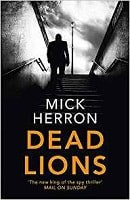
I’m very conscious of the fact that I’m effectively working in another language, though it’s one I’ve been exposed to from a young age through American TV, films and music, and so on. I’ve had to make some adjustments. I write my editorial letters and comments using American punctuation and spelling rules, and I have to use American grammar and punctuation terms when I communicate with authors. 

There are many good resources, both online and on my bookshelf, in which I can usually find clarification of specific points that relate to US English and crop up during editing. If I do get stuck – and it doesn’t really happen very often, truth be told – there are always people I know in the States I can run a colloquial expression by to check a preposition used is correct, say.

I’ve never really thought about this before, but since the US is such a vast place, maybe a New York-based copy editor has to do the same thing if he or she is working on a manuscript that uses a dialect spoken in the Midwest, for example. 

Obviously, as a copy editor you amass a big pile of language knowledge, but I think that one of the keys to editing, to paraphrase Donald Rumsfeld, is knowing what you don’t know – and to look up whatever that is. Which I don’t think Rumsfeld went on to say.

Motivations for writing

LH: We’ve primarily talked about your editing; now I’d like to focus on your writing. You post some fabulous articles on your website that are of interest to writers and editors alike. Tell us a bit more about the motivation behind that. And what kinds of things will you be posting about in the future?

MT: That’s very kind of you to say. The blog series I write, Be Your Own Copy Editor, aims to help authors, but of course I’m very flattered that fellow editors are reading it, too. Its strapline is “Self-editing advice from the front line of fiction editing”, and that’s the key to the blog for me. It developed because in my work I kept seeing – and still do, of course – the same issues crop up again and again in authors’ manuscripts. I realized that some of these subjects weren't really dealt with properly by grammar books, style manuals and books on writing fiction.

​There are a lot of resources out there that talk about things such as subject–verb agreement, say, or the difference in meaning between “compliment” and “complement”, but there isn't much guidance about things like when and how to style inner monologue using italics, which I've covered in a blog, or identifying a three-verb compound predicate and punctuating it correctly, another subject I've covered, since compound predicates with three or more verbs are common in genre fiction. 


I intend to keep posting about issues that are specific to genre fiction but don’t get much coverage, if any, and subjects that are covered elsewhere but which I think need to be both looked at in more depth than they often are and viewed specifically from the perspective of genre fiction. 

By the way, the series may be called Be Your Own Copy Editor, but I’m not suggesting authors should bypass having their work copy-edited by a professional. My thinking is that the better the shape they get their manuscript in before submitting it to an editor, the more control they have over the final version, and the fewer things there are that can potentially go wrong. I think that’s good for both editors and authors.

The books that emerged

LH: You also had a non-fiction book published by Ebury Press, The Last Wrestlers, which received some great reviews, and you said you’re writing a crime novel. The two sound a million miles apart! So how did the former come about, and where are you with the latter?

MT: They do sound far apart, however a couple of reviewers of my wrestling book were very perceptive in that they described it as being like a crime novel, which I think is true. Like a detective, I was running around the globe – I visited India, Mongolia, Nigeria, Brazil and Australia to do research – trying to discover who had murdered real wrestling and why.

​The Last Wrestlers grew out of an obsession with wrestling I had during my twenties – with doing it rather than watching it, I should add. I wanted to get to the bottom of why it meant so much to me, and also why it had declined in Britain. I thought, “Hang on. Wrestling is great. It’s a sport with real soul, dignity and history, yet it’s a laughing stock in Britain, where it’s associated with those guys prancing around in spandex on TV. What went wrong?” I spent over two years in the field, as it were, trying to answer that question and other questions. 

My crime novel is set in the underworld of Rio De Janeiro, a city where I lived for a couple of years, but actually the story sprang partly out of an interview I did with a gunda, the Indian equivalent of a mafia don, while researching my wrestling book in Varanasi. Meeting him affected me a lot.

He was young, high caste, physically slight and wore glasses, yet he had personally murdered about eight people, and he controlled elections, politicians and banks in parts of Uttar Pradesh and Bihar. In a key opening scene in my crime novel, I transpose certain elements of the meeting to a favela in Rio, and the crime king in my novel is the boss of a fictional drug-dealing crew with similarities to Red Command, which runs a lot of shanty towns in Rio.


Being published

LH: What was the experience of being published like? Again, we’re back to the point about editing versus being edited – that sense, perhaps, of handing over control to someone else. Did you find the process a comfortable one? Do you hope to go down the publisher route with the crime novel or would you consider, or even prefer, self-publishing?

MT: I put my heart and soul into my wrestling book, and the research journey I went on nearly killed me – I mean that in the literal sense. I came back from Nigeria with a very serious tropical disease that the best doctors and professors of tropical medicine in the UK couldn’t diagnose and consequently couldn’t treat properly. Fortunately, I recovered spontaneously. But anyway, the point is that my book was incredibly important to me and told a very personal story, and in some ways I paid a high price to research and write it. So yes, it is difficult to hand over a project like that to someone else.

But I was very fortunate in that I had input on the developmental editing level from John Saddler, a brilliant agent who was a creative mentor to me, too, and Hannah MacDonald, then at Ebury Press, who was very perceptive and who I felt really understood where I was coming from as an author. She’s a novelist, too, which of course must help her engage with authors. There were one or two anxious moments, such as when I was told readers were unlikely to be able to stomach a book of over 80,000 words in length from a first-time author, and I’d written over 120,000, I think it was – but I felt like I was in really good hands. And in the event the word count wasn't cut dramatically.

Picture
I was fortunate enough to be published very well indeed. Since I lived in Brazil at the time, Random House kindly let me stay at the Random House flat in central London for a few days at the time of the book launch. I was given a PR handler, who took me around various radio studios, where I gave interviews.

My book was reviewed in the Telegraph, The Sunday Times, twice by The Times, the Literary Review, The Independent, Arena, and a number of other publications. I did Excess Baggage on Radio 4. The book didn’t then go on to sell in the tens of thousands, though it had respectable sales. In hindsight, I think the title may have been a barrier to finding a readership for the book.

​Essentially, the book is about being a man in the modern world and it speaks about the topic by talking about my obsession with wrestling; it isn’t a book simply about wrestling. But if you look at the book’s cover and read its title, you probably won’t come away with that impression. 

I have to say I get a little irritated when authors who identify heavily with the self-publishing and indie publishing boom talk about agents and editors at traditional publishing houses as though they are evil incarnate. I know I had a particularly good experience when my book was published, and not everyone is as fortunate as I was, but a lot of nonsense is talked about the traditional route in publishing. A lot of the people who work in publishing or work as agents are doing it because they genuinely love books, and they love breaking new authors.

With my own crime novel, I will try to get an agent for it and then a publisher. I came very close to getting represented by a big agency in London when I submitted it to them about 18 months ago – but a miss is as good as a mile, as they say. My first thought – actually, that’s a lie; it was probably my third thought, and the first two thoughts are unprintable – was that the manuscript just wasn’t good enough to get published, and I needed to work on it further. I hope to produce another draft this year, and if the manuscript gets rejected again, no, I won’t self-publish. I’ll take it as another sign that the novel isn’t good enough and try to improve it.

However, I am thinking of revising my wrestling book and producing print-on-demand and eBook versions for sale in the States, partly because I know the book will have some appeal there, and partly because I’d like to go through the process of putting out an eBook and print-on-demand book, because that will help me understand the publishing processes involved, which will in turn help me when I work with authors who are self-publishing using print-on-demand and eBook services. 


2 Comments
Forward>>
    BLOG ALERTS
    Sign up for blog alerts!
    ALERT ME!

    NEWSLETTER
    Sign up for The Editorial Letter.
    SIGN ME UP

    AUTHOR RESOURCES
    Proofreading stamps

    EDITOR RESOURCES
    Proofreading stamps

    BOOKS FOR EDITORS AND WRITERS
    Picture
    Picture
    Picture
    Picture
    Picture
    MORE BOOKS

    TRAINING COURSES FOR EDITORS
    Picture
    Picture
    Picture
    Blogging for Business Growth course
    MORE COURSES

    TESTIMONIALS
    'I love the clean impact you've brought to my writing'
    Thomas R Weaver

    'The voyage through your edits is an intellectual and craft adventure'
    Dan Flanigan

    'I'm a better writer because you edited my book'
    Rich Leder

    'You are by far the best literary editor I've had'
    ​Nina Fitzpatrick

    'I wholeheartedly recommend her services ... Just don’t hire her when I need her'
    Jeff Carson

    'Sincere thanks for a beautiful and elegant piece of work. First class'
    ​JB Turner
    TESTIMONIALS

    CATEGORIES

    All
    AI
    Audio
    Author Interviews
    Blogging
    Branding
    Business Tips
    Choosing An Editor
    Conscious Language
    Core Editorial Skills
    Crime Writing
    Crime Writing 2
    Design And Layout
    Dialogue
    Editorial Tools
    Erotica
    Fiction Editing
    Getting Work
    Grammar Links
    Lean Writing
    Line Craft
    Macros & Word Add Ins
    Managing Emotions
    Managing Emotions Podcast
    Marketing Tips
    Money Talk
    Mood And Rhythm
    Networking
    Online Courses
    PDF Markup
    POV
    Proofreading Marks
    Punctuation
    Q&A With Louise
    Scene Craft
    Sentence Editing
    Showing And Telling
    Software
    Stamps
    Starting Out
    Story Craft
    Training
    Types Of Editing
    Using Word
    Website Tips
    Work Choices
    Working Onscreen
    Writing Tools


    ARCHIVES

    August 2026
    July 2026
    June 2026
    May 2026
    April 2026
    March 2026
    February 2026
    November 2025
    August 2025
    July 2025
    June 2025
    September 2024
    August 2024
    August 2023
    June 2023
    May 2023
    April 2023
    November 2022
    October 2022
    September 2022
    August 2022
    June 2022
    May 2022
    November 2021
    October 2021
    September 2021
    August 2021
    July 2021
    June 2021
    May 2021
    April 2021
    March 2021
    February 2021
    January 2021
    December 2020
    November 2020
    October 2020
    September 2020
    August 2020
    July 2020
    June 2020
    April 2020
    March 2020
    February 2020
    January 2020
    November 2019
    October 2019
    September 2019
    August 2019
    June 2019
    May 2019
    April 2019
    February 2019
    January 2019
    December 2018
    November 2018
    October 2018
    September 2018
    August 2018
    July 2018
    June 2018
    May 2018
    April 2018
    March 2018
    February 2018
    January 2018
    December 2017
    November 2017
    October 2017
    September 2017
    August 2017
    July 2017
    June 2017
    May 2017
    April 2017
    March 2017
    February 2017
    January 2017
    December 2016
    November 2016
    October 2016
    September 2016
    June 2016
    May 2016
    April 2016
    March 2016
    February 2016
    January 2016
    December 2015
    November 2015
    October 2015
    September 2015
    June 2015
    March 2015
    January 2015
    November 2014
    October 2014
    September 2014
    August 2014
    July 2014
    June 2014
    March 2014
    January 2014
    October 2013
    September 2013
    June 2013
    February 2013
    January 2013
    November 2012
    October 2012
    September 2012
    August 2012
    July 2012
    June 2012
    May 2012
    April 2012
    March 2012
    February 2012
    January 2012
    December 2011

    RSS Feed

Alliance of Independent Authors
Picture
Picture
CIEP Advanced Professional Member
The Publishing Training Centre

INFO ABOUT ME
About Louise
Bio page and business profile
Contact form
Louise's fiction
​Portfolio 
Privacy policy
Professional Practice Code
Qualifications
Terms and conditions
INFO FOR INDIE AUTHORS
​Why choose Louise?
Editorial services
Books and guides
Contact form
​Free resources
​Order form for books
Self-editing book
Testimonials
Transform Your Fiction series
INFO FOR EDITORS
​1:1 business consultations
Books and guides
​​Business Skills for Editors series
Free resources
Order books and courses
​The Editing Podcast
​The Editing Blog

Training courses
Transform Your Fiction series

Want to sign up to my monthly newsletter, The Editorial Letter? 
Picture
© 2011–2026 Louise Harnby
  • Home
  • Resource library
  • Services
  • Courses
  • Books
  • Podcast
  • Blog
  • Training login
  • Contact