

|
Learn about why editing and proofreading training is necessary if you want to run a professional editorial practice. Louise Harnby and Denise Cowle talk skills!
|
|
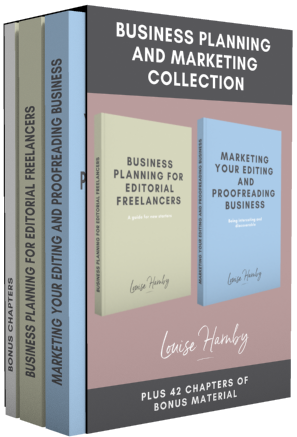
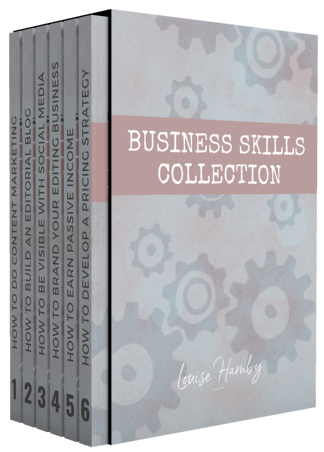
Check out these additional resources that will help you develop your fiction-editing business.
|
|
Louise Harnby is a line editor, copyeditor and proofreader who specializes in working with crime, mystery, suspense and thriller writers.
She is an Advanced Professional Member of the Chartered Institute of Editing and Proofreading (CIEP), a member of ACES, a Partner Member of The Alliance of Independent Authors (ALLi), and co-hosts The Editing Podcast.
She is an Advanced Professional Member of the Chartered Institute of Editing and Proofreading (CIEP), a member of ACES, a Partner Member of The Alliance of Independent Authors (ALLi), and co-hosts The Editing Podcast.
- Get in touch: Louise Harnby | Fiction Editor & Proofreader
- Connect: Twitter at @LouiseHarnby, Facebook and LinkedIn
- Learn: Books and courses
- Discover: Resources for authors and editors
0 Comments
6 months of editorial business marketing: Progress made and lessons learned (by Harriet Power)
16/7/2021
Editor Harriet Power discusses how moving from in-house to freelance editing meant upping her marketing game. Here's what she achieved in 6 months.
In this post
- What kickstarted the marketing focus
- Marketing activity #1: Website
- Marketing activity #2: Blogging
- Marketing activity #3: Creating a Reedsy profile
- Marketing activity #4: Social media
- Marketing activity #5: CIEP meetings
- Marketing activity #6: Emailing former contacts
- Marketing activity #7: Cold emails
- Marketing activity #8: Write Useful Books Slack group
- 6 months later: Has the marketing paid off?
- The plan for the next 6 months
- Lessons learned as a newbie marketer
What kickstarted the marketing focus
I’m not new to freelancing or editing – I spent 8 years working in-house for publishers like OUP and Pearson before going freelance 4 years ago.
However, I am new to marketing, because I spent the first 3 years of my freelance career coasting along on repeat work from a handful of former in-house contacts. That work dropped off in the summer of 2020 thanks to the pandemic.
I was happily distracted for a while by the arrival of our new lockdown puppy, but towards the end of the year I was still limping along on 2 or 3 days’ work a week. That prompted me to get serious for the first time about marketing my business.
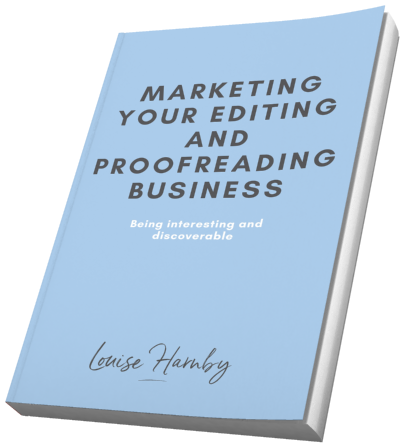
At the start of this year I read Louise’s book Marketing Your Editing and Proofreading Business, which I thought was brilliant. Of course I’m hardly going to say otherwise here, but it’s still true; I skimmed through it again this week and although bits of it feel a little dated now (it was published in 2014), it’s packed full of useful advice and ideas.
The case studies and examples are really helpful, and I love the way it moves from overarching principles (‘put yourself in the customer’s shoes’) through to specific activities (‘cold email publishers’). I’d happily recommend it.
Six months ago my immediate goal was simply to get more work. My longer-term goal is to get better-paid work, and also to carve out a niche for myself in prescriptive nonfiction, which is a fairly new area for me.
After reading Louise’s book I ended up with a 5-page list of ideas. Here’s what I’ve achieved so far.
However, I am new to marketing, because I spent the first 3 years of my freelance career coasting along on repeat work from a handful of former in-house contacts. That work dropped off in the summer of 2020 thanks to the pandemic.
I was happily distracted for a while by the arrival of our new lockdown puppy, but towards the end of the year I was still limping along on 2 or 3 days’ work a week. That prompted me to get serious for the first time about marketing my business.
At the start of this year I read Louise’s book Marketing Your Editing and Proofreading Business, which I thought was brilliant. Of course I’m hardly going to say otherwise here, but it’s still true; I skimmed through it again this week and although bits of it feel a little dated now (it was published in 2014), it’s packed full of useful advice and ideas.
The case studies and examples are really helpful, and I love the way it moves from overarching principles (‘put yourself in the customer’s shoes’) through to specific activities (‘cold email publishers’). I’d happily recommend it.
Six months ago my immediate goal was simply to get more work. My longer-term goal is to get better-paid work, and also to carve out a niche for myself in prescriptive nonfiction, which is a fairly new area for me.
After reading Louise’s book I ended up with a 5-page list of ideas. Here’s what I’ve achieved so far.

Marketing activity #1: Website
I did a full revamp of my website at the end of 2019, but after reading Louise’s book I went back and completely redid the Services for authors page in an attempt to make it more useful/persuasive.
There's probably still too much text, but I’m pleased with the ‘editor’s creed’, a summary of the principles that guide my work (in marketing-speak these are my brand values).
I doubt these principles are unique to me, but I think stating them on my website helps fill out who I am as an editor. And at least one author has commented on how they liked my editing philosophy.
There's probably still too much text, but I’m pleased with the ‘editor’s creed’, a summary of the principles that guide my work (in marketing-speak these are my brand values).
I doubt these principles are unique to me, but I think stating them on my website helps fill out who I am as an editor. And at least one author has commented on how they liked my editing philosophy.
Marketing activity #2: Blogging
So far, I’m managing about one blog post a month. Anything more would be too much because blogging is a LOT of work, a point that Louise provides a nice big warning about in her book.
I’ve concentrated on developing two series, both with a target audience of nonfiction writers:
Books that work
Each post focuses on a well-received prescriptive nonfiction book and analyses why it’s done so well. I also invite the author to contribute their thoughts. My aim with this series is twofold:
The first in the series is available here: Books that work #1: Obviously Awesome by April Dunford.
Q&A on the editing process
Each post features an author whom I’ve worked with, but I’m hoping the series will be of interest to writers more generally. You can find the first post here: Q&A on the editing process with Dietmar Sternad.
I’ve concentrated on developing two series, both with a target audience of nonfiction writers:
Books that work
Each post focuses on a well-received prescriptive nonfiction book and analyses why it’s done so well. I also invite the author to contribute their thoughts. My aim with this series is twofold:
- To gradually expand my network of interesting people.
- To hold myself accountable in regard to continuing professional development (CPD)
The first in the series is available here: Books that work #1: Obviously Awesome by April Dunford.
Q&A on the editing process
Each post features an author whom I’ve worked with, but I’m hoping the series will be of interest to writers more generally. You can find the first post here: Q&A on the editing process with Dietmar Sternad.
Marketing activity #3: Creating a Reedsy profile
I was quite leery of Reedsy before I joined, but I’ve come around to it and think it’ll be a useful backstop whenever work quietens down. It’s certainly been a good way to get more work with nonfiction indie authors, particularly while I'm waiting for my website to generate leads.
So far I’ve completed two edits, including one for an author who’s just set up his own publishing company. He's commissioned me to work on two more books.
So far I’ve completed two edits, including one for an author who’s just set up his own publishing company. He's commissioned me to work on two more books.
Marketing activity #4: Social media
I’ve started using social media. I'm here on Twitter; say hello!
I’m also on LinkedIn. I have to admit I struggle with it – it’s very motivational, and a lot of posts (even the more personal ones) are either trying to teach a lesson or sell something. But I’m going to persevere for a bit longer, mainly because I know it’s an excellent place to connect with prescriptive nonfiction (i.e. business and self-help) writers.
I’m also on LinkedIn. I have to admit I struggle with it – it’s very motivational, and a lot of posts (even the more personal ones) are either trying to teach a lesson or sell something. But I’m going to persevere for a bit longer, mainly because I know it’s an excellent place to connect with prescriptive nonfiction (i.e. business and self-help) writers.

Marketing activity #5: CIEP meetings
I’ve also taken part in a few online CIEP meetings. As a complete introvert, I’m not someone who naturally enjoys Zoom meetings with strangers, and I need to make the effort to keep going with these.
However, I do appreciate getting to know fellow editors better because it’s lovely to meet others with the same professional focus as me. Plus, from a marketing perspective, once I’ve earned their trust, they might one day even consider referring work to me.
However, I do appreciate getting to know fellow editors better because it’s lovely to meet others with the same professional focus as me. Plus, from a marketing perspective, once I’ve earned their trust, they might one day even consider referring work to me.
Marketing activity #6: Emailing former contacts
I’ve emailed old in-house contacts (or contacts of contacts). I appreciate that this is a no-go if you’ve never worked in-house, but if you have then it definitely pays off.
Just one email along the lines of ‘Hey, I used to work at OUP for a different team – hopefully they can put in a good word for me. Can I help you at all?’ has led to a considerable amount of work this year.
Just one email along the lines of ‘Hey, I used to work at OUP for a different team – hopefully they can put in a good word for me. Can I help you at all?’ has led to a considerable amount of work this year.
Marketing activity #7: Cold emails
I expected the return on my round of cold emailing to be lower. However, I had nothing to lose so I gave it a try. And just a few months after I’d sent an email to a publisher, a new project landed on my desk.
Marketing activity #8: Write Useful Books Slack group
Write Useful Books is a brilliant craft book by Rob Fitzpatrick on how to write prescriptive nonfiction. The book comes with optional access to a Slack group.
I’ve offered free short beta reads for group members. To date, two writers have taken up my offer, and one of those beta reads has led to paid work.
Plus, it’s interesting to hang out with a bunch of nonfiction writers and see what questions they have about self-publishing.
I’ve offered free short beta reads for group members. To date, two writers have taken up my offer, and one of those beta reads has led to paid work.
Plus, it’s interesting to hang out with a bunch of nonfiction writers and see what questions they have about self-publishing.
6 months later: Has the marketing paid off?
I have to keep reminding myself that some of my marketing activities probably won’t bear fruit for months, maybe longer. I haven’t had a single person contact me through my website, for example.
But I’m now fully booked for the next 3 months, and starting to turn away work – a novel experience for me. And while some of that work is probably down to publishers getting over their initial pandemic jitters, I think the marketing has made a difference.
Where’s this work coming from? A lot is from the two publishers who gave me most of my work pre-Covid, although this workstream currently feels more secure because there are now three teams at OUP who might pass jobs my way, rather than one.
Most of the rest has is coming from Reedsy authors. I’ve also had some work from a new publisher who found me through the CIEP Directory of Editorial Services.
But I’m now fully booked for the next 3 months, and starting to turn away work – a novel experience for me. And while some of that work is probably down to publishers getting over their initial pandemic jitters, I think the marketing has made a difference.
Where’s this work coming from? A lot is from the two publishers who gave me most of my work pre-Covid, although this workstream currently feels more secure because there are now three teams at OUP who might pass jobs my way, rather than one.
Most of the rest has is coming from Reedsy authors. I’ve also had some work from a new publisher who found me through the CIEP Directory of Editorial Services.
The plan for the next 6 months
Here’s what I’d like to achieve over the next 6 months, time permitting:
- Engage more on Twitter and LinkedIn; connect with more writers, rather than just editors.
- Keep blogging, and do more guest blogging.
- Learn more about self-publishing and create content to help indie authors with their publishing journey.
- Set up a monthly mailing list. The main hurdle here is convincing myself that anyone would actually want to read it.
- Add a portfolio/testimonials page to my website. I’ve definitely got better at asking authors for testimonials since reading Louise’s book, and am slowly building up a nice bank of praise.
- Do some market research with nonfiction writers to find out how they go about finding an editor, what they look for in an editor, and what they most want help with.
- Design and create a PDF that I can send out to potential clients. It will include information on the different types of editing and the blog series I’m developing.
- Join an accountability group.
- Make more of an effort to join online meetups.
- Do another round of cold emailing to nonfiction publishers.

Lessons learned as a newbie marketer
Working through the time-sink
Marketing sometimes feels like a never-ending time-sink and it requires a lot of perseverance. There’s always more to do, and that makes it hard to switch off from it.
When it feels overwhelming (and that’s often the case now that I’m busier), it helps to follow Louise and Denise’s advice to think in ones: one blog post at a time, one LinkedIn post at a time, or even one tweet at a time.
I also try to remind myself that my business isn’t going to collapse just because I didn’t go on Twitter for a week.
On the upside, being proactive about strengthening my business is satisfying. And in the long run, I hope it will lead me to a point where I can charge enough to be able to work a little less.
CPD
I’m also enjoying the creative side of marketing. It’s fun coming up with ideas for content, and I’m enjoying the writing.
I’ve found that marketing goes hand in hand with CPD. It’s forced me to do more professional development so that I have something useful to say, and has helped me get over feelings of imposter syndrome.
Specializing
Specializing definitely helps. This is an idea that Louise promotes and I completely agree with it. Focusing my marketing efforts primarily on prescriptive nonfiction indie authors has given me direction and made the marketing more manageable.
Putting yourself in the customer’s shoes.
This is another lesson I learned from Louise’s book. I worked hard on this when tweaking my website, and it’s been a useful guiding principle in deciding what to tweet or post about.
The principle links well to the concept of specializing because you can only put yourself in the customer’s shoes when you’ve identified who that customer is.
Value-based pricing
Another concept from Louise’s book that struck a chord is thinking of how I can add value to my basic service of performing an edit – either in terms of how I market myself or what I can offer to the client.
This approach has helped shift my mindset such that I hope that in the future I’ll garner the confidence to charge more.
Say hi to interesting people
My own humble piece of advice would be to say hi to interesting people that you stumble across, even if this makes you feel a bit uncomfortable, or because it takes time to sit down and write an email, or because it’s just something you’d never normally do. (All of these things apply to me.) You never know where those connections might lead you.
I was very happy to stumble across Rob Fitzpatrick and join his Slack group, for example. Another interesting person I’ve become acquainted with recently is Francis Miller, who’s helping publishers and authors create nonfiction that’s easier to learn from. It’s also been lovely to gradually get to know some fellow editors.
For better or worse, I very much identify at heart with that saying ‘Don’t talk unless you can improve the silence’. This means I struggle with adding to the general noise of social media when much of the time it feels like talking for the sake of talking.
To some extent, it helps to think of the online version of me as a different persona. I try to post things that I believe will be useful or interesting. And, again, the CPD element of this work has helped to mitigate the sense of imposter syndrome.
Marketing sometimes feels like a never-ending time-sink and it requires a lot of perseverance. There’s always more to do, and that makes it hard to switch off from it.
When it feels overwhelming (and that’s often the case now that I’m busier), it helps to follow Louise and Denise’s advice to think in ones: one blog post at a time, one LinkedIn post at a time, or even one tweet at a time.
I also try to remind myself that my business isn’t going to collapse just because I didn’t go on Twitter for a week.
On the upside, being proactive about strengthening my business is satisfying. And in the long run, I hope it will lead me to a point where I can charge enough to be able to work a little less.
CPD
I’m also enjoying the creative side of marketing. It’s fun coming up with ideas for content, and I’m enjoying the writing.
I’ve found that marketing goes hand in hand with CPD. It’s forced me to do more professional development so that I have something useful to say, and has helped me get over feelings of imposter syndrome.
Specializing
Specializing definitely helps. This is an idea that Louise promotes and I completely agree with it. Focusing my marketing efforts primarily on prescriptive nonfiction indie authors has given me direction and made the marketing more manageable.
Putting yourself in the customer’s shoes.
This is another lesson I learned from Louise’s book. I worked hard on this when tweaking my website, and it’s been a useful guiding principle in deciding what to tweet or post about.
The principle links well to the concept of specializing because you can only put yourself in the customer’s shoes when you’ve identified who that customer is.
Value-based pricing
Another concept from Louise’s book that struck a chord is thinking of how I can add value to my basic service of performing an edit – either in terms of how I market myself or what I can offer to the client.
This approach has helped shift my mindset such that I hope that in the future I’ll garner the confidence to charge more.
Say hi to interesting people
My own humble piece of advice would be to say hi to interesting people that you stumble across, even if this makes you feel a bit uncomfortable, or because it takes time to sit down and write an email, or because it’s just something you’d never normally do. (All of these things apply to me.) You never know where those connections might lead you.
I was very happy to stumble across Rob Fitzpatrick and join his Slack group, for example. Another interesting person I’ve become acquainted with recently is Francis Miller, who’s helping publishers and authors create nonfiction that’s easier to learn from. It’s also been lovely to gradually get to know some fellow editors.
For better or worse, I very much identify at heart with that saying ‘Don’t talk unless you can improve the silence’. This means I struggle with adding to the general noise of social media when much of the time it feels like talking for the sake of talking.
To some extent, it helps to think of the online version of me as a different persona. I try to post things that I believe will be useful or interesting. And, again, the CPD element of this work has helped to mitigate the sense of imposter syndrome.

Summing up
If you want more interesting work, or better-paid work, or just more work, it makes sense to take marketing seriously.
Don’t worry about being late to the party – it took me over 3 years, after all. Instead, read Louise’s book. Think long term and keep chipping away at it. And say hello if you’d like to join me on the journey!
Don’t worry about being late to the party – it took me over 3 years, after all. Instead, read Louise’s book. Think long term and keep chipping away at it. And say hello if you’d like to join me on the journey!
|
ABOUT HARRIET
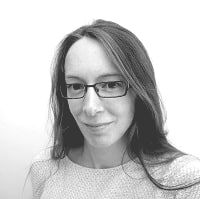
Harriet Power edits nonfiction books and educational materials for publishers and indie authors. She spent 8 years working in-house for educational publishers before going freelance in 2017. On the side, she performs in a folk music duo and enjoys walks with the lockdown puppy. |
Find out how to choose a name for your editing or proofreading business with Louise Harnby and Denise Cowle.
Listen to find out more about
- Brainstorming a list of possible business names
- Considering your target clients
- Identifying your core brand values
- Using a business name to tell the client what's on offer
- Checking the name is available
- Does the name reflect your brand identity?
- How findable and SEO-friendly is the name?
- Will the name stand the test of time?
Music credit
‘Vivacity’ Kevin MacLeod (incompetech.com). Licensed under Creative Commons: By Attribution 3.0 License. http://creativecommons.org/licenses/by/3.0/
More business-tips resources
|
Check out these additional resources that will help you make good decisions for your editorial business.
|
|
Louise Harnby is a line editor, copyeditor and proofreader who specializes in working with crime, mystery, suspense and thriller writers.
She is an Advanced Professional Member of the Chartered Institute of Editing and Proofreading (CIEP), a member of ACES, a Partner Member of The Alliance of Independent Authors (ALLi), and co-hosts The Editing Podcast.
She is an Advanced Professional Member of the Chartered Institute of Editing and Proofreading (CIEP), a member of ACES, a Partner Member of The Alliance of Independent Authors (ALLi), and co-hosts The Editing Podcast.
- Get in touch: Louise Harnby | Fiction Editor & Proofreader
- Connect: Twitter at @LouiseHarnby, Facebook and LinkedIn
- Learn: Books and courses
- Discover: Resources for authors and editors
Even if you don't specialize in your editorial practice, it's still worth using the language of specialism in your marketing. That's what Louise Harnby and Denise Cowle are chatting about in this episode of The Editing Podcast.
Listen to find out more about ...
- The different ways in which we might specialize
- Helping clients understand how we can help them
- What does the client want to know?
- Why saying we can edit 'everything' is a weak message
- Why the language of specialization is interesting
Music credit
‘Vivacity’ Kevin MacLeod (incompetech.com). Licensed under Creative Commons: By Attribution 3.0 License. http://creativecommons.org/licenses/by/3.0/
More business-growth tools
|
Discover more ways to get noticed by your ideal clients with this toolbox of resources:
|
|
Louise Harnby is a line editor, copyeditor and proofreader who specializes in working with crime, mystery, suspense and thriller writers.
She is an Advanced Professional Member of the Chartered Institute of Editing and Proofreading (CIEP), a member of ACES, a Partner Member of The Alliance of Independent Authors (ALLi), and co-hosts The Editing Podcast.
She is an Advanced Professional Member of the Chartered Institute of Editing and Proofreading (CIEP), a member of ACES, a Partner Member of The Alliance of Independent Authors (ALLi), and co-hosts The Editing Podcast.
- Get in touch: Louise Harnby | Fiction Editor & Proofreader
- Connect: Twitter at @LouiseHarnby, Facebook and LinkedIn
- Learn: Books and courses
- Discover: Resources for authors and editors

PDF MARKUP
AUTHOR RESOURCES
EDITOR RESOURCES
TESTIMONIALS
Dare Rogers
'Louise uses her expertise to hone a story until it's razor sharp, while still allowing the author’s voice to remain dominant.'
Jeff Carson
'I wholeheartedly recommend her services ... Just don’t hire her when I need her.'
J B Turner
'Sincere thanks for a beautiful and elegant piece of work. First class.'
Ayshe Gemedzhy
'What makes her stand out and shine is her ability to immerse herself in your story.'
Salt Publishing
'A million thanks – your mark-up is perfect, as always.'
CATEGORIES
All
Around The World
Audio Books
Author Chat
Author Interviews
Author Platform
Author Resources
Blogging
Book Marketing
Books
Branding
Business Tips
Choosing An Editor
Client Talk
Conscious Language
Core Editorial Skills
Crime Writing
Design And Layout
Dialogue
Editing
Editorial Tips
Editorial Tools
Editors On The Blog
Erotica
Fiction
Fiction Editing
Freelancing
Free Stuff
Getting Noticed
Getting Work
Grammar Links
Guest Writers
Indexing
Indie Authors
Lean Writing
Line Craft
Link Of The Week
Macro Chat
Marketing Tips
Money Talk
Mood And Rhythm
More Macros And Add Ins
Networking
Online Courses
PDF Markup
Podcasting
POV
Proofreading
Proofreading Marks
Publishing
Punctuation
Q&A With Louise
Resources
Roundups
Self Editing
Self Publishing Authors
Sentence Editing
Showing And Telling
Software
Stamps
Starting Out
Story Craft
The Editing Podcast
Training
Types Of Editing
Using Word
Website Tips
Work Choices
Working Onscreen
Working Smart
Writer Resources
Writing
Writing Tips
Writing Tools
ARCHIVES
July 2024
June 2024
May 2024
April 2024
March 2024
October 2023
August 2023
July 2023
June 2023
May 2023
April 2023
March 2023
January 2023
December 2022
November 2022
October 2022
September 2022
August 2022
July 2022
June 2022
May 2022
April 2022
March 2022
February 2022
January 2022
December 2021
November 2021
October 2021
September 2021
August 2021
July 2021
June 2021
May 2021
April 2021
March 2021
February 2021
January 2021
December 2020
November 2020
October 2020
September 2020
August 2020
July 2020
June 2020
May 2020
April 2020
March 2020
February 2020
January 2020
December 2019
November 2019
October 2019
September 2019
August 2019
July 2019
June 2019
May 2019
April 2019
March 2019
February 2019
January 2019
December 2018
November 2018
October 2018
September 2018
August 2018
July 2018
June 2018
May 2018
April 2018
March 2018
February 2018
January 2018
December 2017
November 2017
October 2017
September 2017
August 2017
July 2017
June 2017
May 2017
April 2017
March 2017
February 2017
January 2017
December 2016
November 2016
October 2016
September 2016
June 2016
May 2016
April 2016
March 2016
February 2016
January 2016
December 2015
November 2015
October 2015
September 2015
July 2015
June 2015
May 2015
March 2015
February 2015
January 2015
November 2014
October 2014
September 2014
August 2014
July 2014
June 2014
March 2014
January 2014
November 2013
October 2013
September 2013
August 2013
June 2013
February 2013
January 2013
November 2012
October 2012
September 2012
August 2012
July 2012
June 2012
May 2012
April 2012
March 2012
February 2012
January 2012
December 2011
 RSS Feed
 |

|
|
|

|
|
|
|
© 2011–2024 Louise Harnby