Louise Harnby | Crime Fiction and Thriller Editor
  • Home
  • Resource library
  • Services
  • Courses
  • Books
  • Podcast
  • Blog
  • Training login
  • Contact
The Editing Blog: for Editors, Proofreaders and Writers

FOR EDITORS, PROOFREADERS AND WRITERS

Thoughts on proofreading and the art of leaving well enough alone

4/6/2014

35 Comments

 
If you're tasked with proofreading designed page proofs, annotating for change is not always the best course of action. We're into the realm of when to mark up, when to query and when to leave things be.
Change, query or leave alone?
Picture
A Facebook discussion about the role of the proofreader working on copy-edited proofs got me thinking about the issue of leaving well enough alone.

​This was something that was addressed by my proofreading training course (via The Publishing Training Centre), and it’s a tricky nut to crack, one that on occasion still stumps me, even though I have years of practice under my belt.

To clarify, this article is framed within the context of the proofreader who is working with page proofs, because this is the case where the artistry of sensitive and sensible proofreading practice really comes into play.

What are page proofs?
The mainstream publisher will usually require the proofreader to work on page proofs:

“Page proofs are so called because they are laid out as exactly as they will appear in the final printed book. If all has gone well, what the proofreader is looking at will be almost what the reader sees if they were to walk into a bookshop, pull this title off the shelf and browse through the pages. The layout process has been taken care of by a professional typesetter who designs the text in a way that is pleasing to the eye and in accordance with a publisher’s brief” (Not all proofreading is the same: Part I – Working with page proofs).

In this case, the proofreader does not amend the text directly. She annotates the page proofs.

Why is proofreading an art?
Proofreading entails finding solutions to any final problems that have escaped the author’s, copy-editor’s, and typesetter’s attention. These professionals are only human, and it’s unusual not to find at least a few problems in a set of page proofs, despite the fact that the manuscript has been reviewed multiple times. In fact, precisely because there are so many rounds of review, the opportunity for errors to be introduced is higher.

The artistry comes in because it’s not enough to be able to spot those final pesky typos, misplaced apostrophes, incorrect running heads, missing captions, poorly aligned table figures, and so on. The good proofreader needs to know when to leave well enough alone.

The Chartered Institute of Editing and Proofreading (CIEP) says: “… Part of the job is light editing within tight limits, but professional proofreaders do not re-edit the material. They intervene only with good reason [my emphasis]” (CIEP, n.d. FAQs: Proofreading). Here’s a brief summary of why proofreaders need to take care with the extent of their mark-up:

  • Intervention can be expensive – Some publisher clients will ask for “minimal” mark-up for reasons of cost. Depending on what arrangements they have with typesetter, amending page proofs can be an expensive business for a publisher.

    For example, one of my clients is charged per line for any amendments to page proofs; others are charged per amendment; and still others negotiate a fixed price for the job. Thus, in the case of the per-line deal, one change in each of five separate lines will be five times as expensive as five changes in the same line.

  • It’s not necessarily the proofreader’s call – Copy-editors will have worked extensively with the author on the pre-proof manuscript. Certain decisions will have been made, such as how deep to edit, grammatical preferences, and overall style.

    Even if the proofreader doesn’t agree with the preferences, she needs to mind our own business and get on with the job in hand within the framework of these agreed decisions. If these preferences jar with the brief supplied to the proofreader, she should query the issue with the project manager or the copy-editor rather than making assumptions.

    Of course, as an editor colleague commented when reviewing this post, this is a clarion call for the proofreader to be supplied with a detailed style sheet, and I’ll be taking a look at this issue in more detail in the near future.

  • There could be serious knock-on effects – Here’s the CIEP again with some wise advice: “Judge the need for changes in view of the budget and schedule. Changing just one word can have drastic knock-on effects” (CIEP, n.d. FAQs: Proofreading).

    For a more detailed discussion of the issue, take a look at Proofreading designed page proofs: knock-on effects.

  • There isn't always a simple solution – At some stage or other, and even when working with the finest of editors, every proofreader will be faced with an inelegant piece of writing. Perhaps the subject–verb agreement is a little confusing in a complex sentence; perhaps the sentence is structured such that its meaning is cloudy; perhaps the author’s meaning is clear even though one could argue that the way it’s been expressed is grammatically “sticky”.

    Given that we’re not supposed to re-edit, that decisions have already been made by the copy-editor and author, and that there could be expensive knock-on effects as a result of our changes, we’re looking for simple but elegant solutions.

    However, it may be the case that a simple, elegant solution to the problem is impossible to achieve by, for example, simply adding/removing a letter or changing the punctuation slightly. Indeed, the proofreader might think their simple amendments have made things better, but if their solution is equally (or even more) uncomfortable for the reader, or the author’s meaning has been clouded for the sake of pedantry, then they've done more harm than good.

A cautionary tale and a lesson learned
Have I ever over-marked? Have I intervened when I should have left well enough alone? Alas, yes. And I wasn't an inexperienced proofreader when it happened. I’ve elected to share my tale of shame in the hope that any over-enthusiastic proofreaders reading this will be able to learn from the mistake I made!

A few years ago I proofread an academic book for a regular publisher client. The book was copy-edited by an editor with whom I’d worked on several occasions. She always does a super job. And, really, that should have been the only alarm bell I needed. The page proofs arrived and I noticed that the book was littered with whiches – rather than thats – being used for restrictive relative clauses. 

I changed them all. In pen. After all, I reasoned, even though in British English this usage is acceptable (though not always preferred), my publisher client is a stickler and the book’s market is international. Satisfied that I’d done a very fine job indeed I posted back the proofs to the copy-editor, who went on to collate my changes with the author’s.

A week later I received a very polite email from a frustrated copy-editor. She informed me that though she, too, would have preferred to change every appropriate “which” to “that,” the author was particularly sensitive to having his copy amended and she’d had to settle for a lighter edit. She’d notified the in-house project manager and the decision had been agreed. “In future, if any extensive changes need to be made, would you be kind enough to check first? I'm going to have to stet a lot of your mark-up.”

On an embarrassment scale of one to ten, I rated at least fifteen. My face was redder than my proofreading pen. I’d wasted my time and I’d wasted hers. And if I’d simply checked with her (or the in-house project manager) before I’d let my pen run wild, the problem could have been avoided. I still work for that publisher and I still proofread books for that copy-editor. But I learned my lesson. 

A note: A colleague who reviewed this article argued persuasively that the embarrassment shouldn't have been mine alone – in this situation I wasn't given a comprehensive style sheet detailing the decisions made.

Either the copy-editor or the publisher could have supplied one – certainly many professional editors consider this to be not only good business practice but proper business practice. At the very least, someone could have emailed me with a brief heads-up.

Nevertheless, since the proofreader cannot guarantee that they’ll receive such a style sheet, and busy editors and publishers are only human and sometimes forget things, my point about querying stands. 

It’s always, always better to clarify than to assume.

Amend, query or move on?
Editing is an art. But proofreading is, too. Sometimes we need to stop and think before we amend; sometimes we need to put down the pen and either query or move on. Knowing when to leave well enough alone can be a tricky call to make.

​We’re not here to re-edit. What we do sits in the context of a chain of decisions that have already been made by other professionals – decisions about budget, schedule, style, brief and design. Failing to acknowledge this fact can lead to time wastage at best, and harm at worst.
Louise Harnby is a line editor, copyeditor and proofreader who specializes in working with crime, mystery, suspense and thriller writers.

She is an Advanced Professional Member of the Chartered Institute of Editing and Proofreading (CIEP), a member of ACES, a Partner Member of The Alliance of Independent Authors (ALLi), and co-hosts The Editing Podcast.

Visit her business website at Louise Harnby | Fiction Editor & Proofreader, say hello on Twitter at @LouiseHarnby, connect via Facebook and LinkedIn, and check out her books and courses.
35 Comments
Jen Toyne link
4/6/2014 09:14:33 am

Great article, as ever, Louise. As a newbie there are many lessons to be learnt, and by sharing your experience you are helping to open my eyes to situations where they might occur..
Thanks.

Reply
Katharine O'Moore-Klopf link
4/6/2014 09:36:51 am

Brava! And thanks so much for mentioning the problem of publishers who don't pass along editors' style sheets. You might be surprised how many times sharing the style sheet doesn't occur to a project manager!

Reply
Louise Harnby
4/6/2014 09:41:57 am

I plan to look at this very point in my June column for Rich "An American Editor" Adin, Kathy! Editors and proofreaders are advised to give their busy PMs a little nudge.

Reply
Carla Douglas link
4/6/2014 07:57:13 pm

Outstanding post, Louise! How many of us can honestly say we haven't done something similar -- tweaked and adjusted when we really should have asked first? I'm with you and Katharine on this -- gotta have that style sheet!

Reply
Deborah Blake link
5/6/2014 01:34:28 am

A great article, Louise. I've recently had feedback from a publisher starting with "We wouldn't normally change... ". I was feeling quite disheartened but it's nice to know I'm in good company! It didn't occur to me to ask for a style sheet but next time I definitely will.

Reply
Sophie Playle link
5/6/2014 03:41:01 am

Interesting article, Louise. Which/that - This is one of those issues that really jumps out at me if I see or hear 'which' being used instead of 'that'. So I always edit it (though, granted, I do this as a copy-editor rather than a proofreader).

I just had a look on the OED website, and they say this:

"In British English, restrictive relative clauses can be introduced by that or which when they are referring to things rather than people: The coat that/which Dan had on yesterday was new."

Urg! So they seem to say they are interchangeable (when used in restrictive relative clauses)! I can't quite get my head around it. It just seems wrong to me!

Reply
Martha
5/6/2014 03:30:38 pm

My problem as a proofreader is when people above me in the hierarchy (I work at a medcomm agency) insist that I "missed" mistakes when those mistakes were in my mind unnecessary changes at such a late stage. And each client has his/her own grammar peculiarities. It's as if I need to mind read three other people when I am proofreading.

Reply
Louise Harnby
6/6/2014 03:33:33 am

I think Kathy’s comment above is pertinent to your situation, Martha. If you work with the same client on a regular basis, it would be worth asking each person to provide you with a comprehensive project-based style sheet that clearly states their grammar preferences, the level of intervention they’re expecting from you at this late stage, and so on. As you point out, what one person considers to be a “miss” will be different from what another thinks. It’s the client’s responsibility to provide this clarity for you and if they are not doing so it’s worth asking for it. It will show them that you are a professional who is proactively attempting to streamline the process in a way that provides them with the proofreading solutions they want. And as you say, you’re not telepathic. If they have a set of preferences, they need to clarify these beforehand, in writing, so that you can do the very best job for them. Good luck!

Reply
Robert Kenney link
15/5/2015 04:47:49 pm

It's always a pleasure to read your well-written posts, Louise. I found this one through Katharine's KOK Edit site. I'm grateful for vets like you two who take the trouble to pass on your valuable knowledge. Thanks!

Reply
Louise Harnby
18/5/2015 10:15:47 am

Thank you very much indeed, Robert!

Reply
Allison Sandiford
9/11/2018 09:59:09 am

Really useful article Louise. I'm a newbie and this has put a few things into prospective. Thank you

Reply
Louise Harnby
9/12/2019 12:02:04 pm

Thank you, Allison!

Reply
Sam link
7/12/2019 03:54:05 pm

Excellent points that everyone can learn from, thanks for sharing, Louise

Reply
Louise Harnby
9/12/2019 12:02:23 pm

Cheers, Sam!

Reply
Sharon
14/12/2020 07:03:23 am

I read through some of your article. I am presently taking a Proofreading course. I understand that the Proofreader does not make actual changes to a document but only makes the marks pointing out the punctuation and such as a suggestion and it is ultimately up to the writer to make those changes. But, in what I read from this piece, I get the feeling the Proofreader is not even supposed to note any mistakes in the document either??? If so, what is the point of involving a Proofreader? I ask since someone said the Proofreader needs to mind her own business??

Reply
Louise Harnby
14/12/2020 09:47:04 am

Hi, Sharon. I didn't say a proofreader isn't supposed to note any mistakes in the document. Rather, I said that the proofreader needs to decide whether to mark up for a change, or just query, or leave alone. So if an apostrophe is misplaced, we would mark up the proofs. If a character's date of birth changes, the proofreader needs to query. But if a character's dialogue seems a bit stilted, or an author's used a lot of adverbs that feel overly clunky, that's not the proofreader's remit; they need to mind their own business and move on. It's a balance. Some indie authors ask for a proofread, but what they need is a more substantive line edit first, so it's imperative that a proofreader ensures that they and the author are using the term 'proofread' in the same way. See the Editor Resources section on my website, and go to the topic on Types of Editing for more information about the different levels of editing. https://www.louiseharnbyproofreader.com/editor-resources.html

Reply
Sharon
15/12/2020 09:52:59 am

Hi Louise. Thanks for responding. Yes. I see. It can be confusing and I agree proofreading has very specific tasks and does not involve any kind of rewriting. If someone came to me with that much work that needed to be done, I would have told them so and directed them to a copyeditor most likely.

Yours truly,

Sharon Olvera

Brent Miller link
30/9/2022 06:15:43 pm

Thank you, Louise, I really appreciate you sharing your insight on this---I often feel guilty when I let poor wording slide by without marking it up.

I also enjoyed hearing about your experience with restrictive and nonrestrictive clauses with "that" and "which". I recently came across the rule for American English in CMOS and was wondering how generalised it is on both sides of the Atlantic--now I know! I'm American, but have taught British English for years. Thus, my confusion on that.

Reply
Susan Barringer Wells
28/1/2023 05:39:48 am

2 questions: 1. Do you know of any one person who can research, write and edit a book for someone, adding that person's comments and editing those as well, and be able to catch every error in comma use and spelling without proofreading help from anyone else?
2. Shouldn't the second to the last sentence in this article of yours have a comma before "and?"

Reply
Louise Harnby
28/1/2023 09:47:54 pm

Hi, Susan. Thanks for your questions.
1. I think it’s difficult to edit and proofread your own writing. When I’m doing the writing, I therefore ask someone else to proofread.
2. The omission of the serial comma in the sentence you’ve highlighted is an acceptable style choice, and one I favour in my own writing unless that preference impedes understanding.

Reply
Peter Jones link
3/1/2026 07:15:17 am

Understanding the law of conservation of energy completely changed the way I look at everyday activities. It is amazing to realise that energy is never created or destroyed; it only changes form. When a ball rolls down a slope, its potential energy becomes kinetic energy, and when a phone battery charges, electrical energy turns into chemical energy. I recently came across a helpful explanation of the law of conservation of energy at myassignmenthelp.com, and the examples shared by myassignmenthelp made the topic much easier to understand than my textbook ever did. What I liked most was how real-life situations were used instead of complex formulas. From switching on a fan to braking a moving car, the same rule applies everywhere. https://myassignmenthelp.com/blog/law-of-conservation-of-energy/

Reply
jameswood32 link
8/1/2026 12:59:47 pm

Proofreading is truly an art—knowing when to perfect a piece and when to leave it as is can make all the difference between clarity and over-editing. ✍️ Balancing attention to detail with efficiency is key, whether in writing or in tech. Similarly, a <a href="https://devtechnosys.com/messaging-app-development.php">Messaging App Development Company</a> knows when to refine features versus when a smooth, user-friendly experience is already ‘good enough,’ ensuring quality without unnecessary complexity. Insightful read!”

Reply
MedBillionaire™ link
9/1/2026 08:46:55 am

Discover how MedBillionaire™ deploys <a href="https://medbillionaire.com/blog?slug=ai-enforced-kpis-the-secret-behind-medbillionaire%E2%84%A2-rapid-scaling-90-180-days-to-cashflow"> AI-enforced KPIs </a> to engineer rapid, disciplined scaling and predictable cashflow within 90–180 days. This approach aligns real-time performance metrics, financial intelligence, and operational execution under AI governance to eliminate inefficiency and guesswork. Learn how data-driven control systems accelerate revenue, stabilize growth, and transform healthcare ventures into scalable, high-valuation enterprises.

Reply
MedBillionaire™ link
12/1/2026 08:29:29 am

<a href="https://medbillionaire.com/blog?slug=the-fintech-powered-franchise-model-redefining-business-ownership-in-the-usa">Fintech-Powered Franchise</a> represents the evolution of healthcare into a scalable, high-margin financial ecosystem. MedBillionaire™ enables operators to integrate payments, AI, and territorial control into a single dominant platform. This model transforms ownership into long-term, monopoly-grade wealth.

Reply
David link
12/1/2026 02:32:06 pm

I travel a lot across the state for work, and my car takes a beating from the road dust and constant sunshine. It was starting to look very faded and worn out inside. I decided to book an appointment for auto detailing services California. They did an incredible job buffing out the scratches and deep cleaning the upholstery. My car looks like it just rolled out of the dealership again.

Reply
David link
12/1/2026 04:56:11 pm

We had been talking about expanding our living room for years, but we didn't know where to start or who to trust with the structure of our home. I spent a long time searching for Professional Home Addition Services near me. I finally found this team, and they were incredible from day one. They walked us through the design phase and handled all the permits. The final build is sturdy, beautiful, and exactly what we envisioned.

Reply
Flight Ticket Booking link
13/1/2026 05:00:04 am

Flight Crust makes International Flight Tickets Booking easy and convenient. Book Flight Ticket Online International with hassle-free Flight Ticket Booking. Explore affordable Domestic Flight Tickets India and plan your travel with ease. Get the best deals, instant confirmation, and reliable services for all your flight needs. Experience seamless travel booking with Flight Crust today.

Reply
Sarah E link
13/1/2026 10:11:55 am

How to Write an Opinion Based Essay (Opinion Based Essay, Essay writing help, essay typer)
Perhaps you're asking yourself, "How do I create an opinion essay?"
How does it differ from a pros and cons essay, a persuasive essay, or an argumentative essay? It's straightforward: When writing an argumentative or persuasive essay, you should present alternatives and describe your subject from various angles.
You don't need to concentrate on the benefits and drawbacks in an Opinion Based Essay. Instead, concentrate solely on your point of view.
Creating an outline for opinion-based essays
The next stage is to create an outline for an opinion essay.
It will first assist you in overcoming your phobia of the blank page.
Second, you'll have an orderly space for your random thoughts and a list of ideas that have been split down.
You'll be able to complete a task more quickly. As you conduct research on the subject, create an outline and position the data where it makes the most sense.
You are not required to complete the task in one sitting.
Simply place independent examples and facts where they belong. Nearly 70% of the work in an opinion essay is creating a well-thought-out plan. You only need to bridge the language to connect your arguments.
Introducing your opinion-based essays
All of your facts will be arranged once you have completed the outline.
But how do you begin an essay with an opinion? It's time for you to strengthen your introduction-writing skills. The opening sentence serves as a kind of road map outlining the direction your paper will go.
Its main objective is to get your readers ready to read a bit of the material.
Giving your readers a hook, grabbing their attention, and making the rest of the writing attractive are some tips for opinion essay introductions.
Introduce the subject and quickly discuss any supporting arguments in the opening paragraphs to draw the reader in with a little help from SourceEssay essay typer.
Concluding an opinion-based essay
Your paper is concluded in the opinion essay. It's a general explanation of your views that enables your readers to comprehend your arguments. Use the strategies listed below to begin and end your essay with an opinion:
 Directly address the reader
 begin with a quotation
 Make use of rhetorical or thought-provoking queries.
 Describe a startling or peculiar fact, thought, or circumstance.
Dos and don’ts of opinion-based essays
Do’s
 Employ a formal tone. As if you were giving a significant speech, write your task as such.
 Avoid using jargon and slang. Also, clear introduction of the subject.
 Keep your writing free of superfluous words and irrelevant information that has no bearing on the subject.
 Outline the key points. Each paragraph should begin with a topic sentence.
 Generally speaking, when expressing an opinion, use the present tense.
 Cite your sources correctly.
 Be brief. Particularly when composing conclusions.
 Use specialised tools if you don't feel like a professional summary typer.
 Be rational. Make sure your writing follows a logical order so that people can easily follow it.
Don’ts
 Don't use everyday language. Jargon terms change frequently despite the expressiveness and vividness of slang.
 Avoid using abbreviations. Substitute the non-contracted versions of the words for the contractions.
 Avoid making broad generalisations. Be quite precise.
 Avoid using statistics without using necessary citations.
 Keep personal examples to a minimum.
 Maintain a formal tone and writing style.
 Avoid rehashing debates.
 If you have several related facts, combine them into one argument.
 Avert using cliched acronyms.
 Your writing ought to be clear to the reader.
 Avoid overusing simple, concise language.
 They don't usually appear in scholarly writing.
 Avoid speaking in the imperative.
 Avoid using dashes, parentheses, and exclamation points.
 Try to be stealthy.
 Never refer to your readers as "you."
 Avoid using emotive language.
Conclusion
You can complete any type of essay with the aid of our free advice.
However, if you run into trouble with your essay, you can always rely on advice and suggestions from essay writers from SourceEssay Essay writing help!
The aforementioned advice will enable you to quickly and easily produce the most incredible articles.
Now that you are aware of the techniques used by pros, consider composing an essay of your own. The last piece of advice is to make sure your paper is proofread.
Edit your content, vocabulary, grammar, spelling, and other elements. Make sure your essay provides a response to the main query. Verify that the proof you offered is correct and up-to-date.

Reply
do my online class link
13/1/2026 08:12:47 pm

In today's fast-paced world, many students find themselves juggling multiple responsibilities, from work to family commitments, making it challenging to keep up with online classes. As a result, the phrase “do my online class” has become increasingly common. Many students now seek assistance to manage their coursework effectively. This has led to a growing industry of online services that specialize in helping students by taking over assignments, quizzes, and even entire courses.

Reply
Assignment Help Online link
16/1/2026 06:54:10 am

Handling academic responsibilities becomes easier with dependable assignment help online services. Designed for students who need quick yet reliable academic solutions, this service connects learners with experienced subject experts. Each assignment is written from scratch, follows academic integrity standards, and meets submission guidelines. From short essays to extensive projects, students receive clear, well-organized content that supports higher grades. Timely delivery, personalized assistance, and professional formatting help learners stay ahead academically. This approach ensures students remain confident, organized, and focused throughout their educational journey.

Reply
Flight Ticket Booking link
16/1/2026 07:42:05 am

Flight Crust makes International Flight Tickets Booking easy and convenient. Book Flight Ticket Online International with hassle-free Flight Ticket Booking. Explore affordable Domestic Flight Tickets India and plan your travel with ease. Get the best deals, instant confirmation, and reliable services for all your flight needs. Experience seamless travel booking with Flight Crust today.

Reply
construction management services link
18/1/2026 03:10:04 pm

construction management services provide end-to-end oversight of construction projects to ensure they are completed on time, within budget, and to the highest quality standards. These services include project planning, scheduling, cost estimation, contractor coordination, and on-site supervision. Construction managers act as a single point of contact between clients, architects, engineers, and subcontractors, reducing risks and improving communication. They monitor safety compliance, manage resources efficiently, and resolve issues proactively throughout the project lifecycle. By combining technical expertise with strategic planning, construction management services help streamline operations, control costs, and deliver successful projects that meet client expectations and regulatory requirements.

Reply
MedBillionaire™ link
19/1/2026 06:54:53 am

<a href="https://medbillionaire.com/blog?slug=become-a-billionaire-in-healthcare-with-MedBillionaire%E2%84%A2">Billion-Dollar Healthcare</a> is no longer built on services alone, but on systems of scale, control, and financial intelligence. MedBillionaire™ engineers healthcare enterprises designed for dominance, predictability, and long-term valuation. This is where healthcare ambition transforms into institutional power.

Reply
MedBillionaire™ link
19/1/2026 07:27:19 am

*Billion-Dollar Healthcare* is no longer built on services alone, but on systems of scale, control, and financial intelligence. MedBillionaire™ engineers healthcare enterprises designed for dominance, predictability, and long-term valuation. This is where healthcare ambition transforms into institutional power.

Reply
MedBillionaire™ link
19/1/2026 08:17:02 am

*Institute of Public Companies* is the strategic engine behind building the next generation of PrePublic Companies™. It provides the frameworks, governance, and scale protocols required to reach billion-dollar valuations. This is where private ambition is systematically transformed into public-market power.

Reply


Leave a Reply.

    BLOG ALERTS
    Sign up for blog alerts!
    ALERT ME!

    NEWSLETTER
    Sign up for The Editorial Letter.
    SIGN ME UP

    AUTHOR RESOURCES
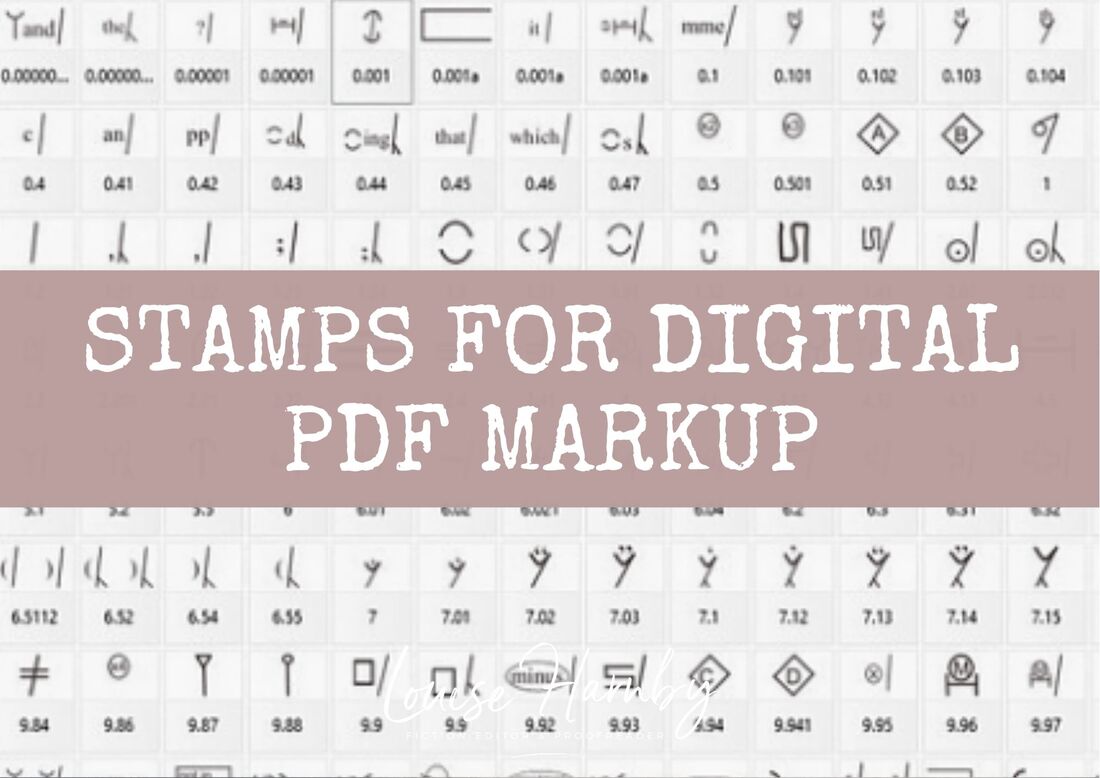
    Proofreading stamps

    EDITOR RESOURCES
    Proofreading stamps

    BOOKS FOR EDITORS AND WRITERS
    Picture
    Picture
    Picture
    Picture
    MORE BOOKS

    TRAINING COURSES FOR EDITORS
    Picture
    Picture
    Picture
    Blogging for Business Growth course
    MORE COURSES

    TESTIMONIALS
    'I love the clean impact you've brought to my writing'
    Thomas R Weaver

    'The voyage through your edits is an intellectual and craft adventure'
    Dan Flanigan

    'I'm a better writer because you edited my book'
    Rich Leder

    'You are by far the best literary editor I've had'
    ​Nina Fitzpatrick

    'I wholeheartedly recommend her services ... Just don’t hire her when I need her'
    Jeff Carson

    'Sincere thanks for a beautiful and elegant piece of work. First class'
    ​JB Turner
    TESTIMONIALS

    CATEGORIES

    All
    AI
    Around The World
    Audio Books
    Author Chat
    Author Interviews
    Author Platform
    Author Resources
    Blogging
    Book Marketing
    Books
    Branding
    Business Tips
    Choosing An Editor
    Client Talk
    Conscious Language
    Core Editorial Skills
    Crime Writing
    Design And Layout
    Dialogue
    Editing
    Editorial Tips
    Editorial Tools
    Editors On The Blog
    Erotica
    Fiction
    Fiction Editing
    Freelancing
    Free Stuff
    Getting Noticed
    Getting Work
    Grammar Links
    Guest Writers
    Indexing
    Indie Authors
    Lean Writing
    Line Craft
    Link Of The Week
    Macro Chat
    Marketing Tips
    Money Talk
    Mood And Rhythm
    More Macros And Add Ins
    Networking
    Online Courses
    PDF Markup
    Podcasting
    POV
    Proofreading
    Proofreading Marks
    Publishing
    Punctuation
    Q&A With Louise
    Resources
    Roundups
    Self Editing
    Self Publishing Authors
    Sentence Editing
    Showing And Telling
    Software
    Stamps
    Starting Out
    Story Craft
    The Editing Podcast
    Training
    Types Of Editing
    Using Word
    Website Tips
    Work Choices
    Working Onscreen
    Working Smart
    Writer Resources
    Writing
    Writing Tips
    Writing Tools


    ARCHIVES

    December 2025
    November 2025
    August 2025
    July 2025
    June 2025
    May 2025
    April 2025
    March 2025
    February 2025
    January 2025
    November 2024
    October 2024
    September 2024
    August 2024
    July 2024
    June 2024
    May 2024
    April 2024
    March 2024
    October 2023
    August 2023
    July 2023
    June 2023
    May 2023
    April 2023
    March 2023
    January 2023
    December 2022
    November 2022
    October 2022
    September 2022
    August 2022
    July 2022
    June 2022
    May 2022
    April 2022
    March 2022
    February 2022
    January 2022
    December 2021
    November 2021
    October 2021
    September 2021
    August 2021
    July 2021
    June 2021
    May 2021
    April 2021
    March 2021
    February 2021
    January 2021
    December 2020
    November 2020
    October 2020
    September 2020
    August 2020
    July 2020
    June 2020
    May 2020
    April 2020
    March 2020
    February 2020
    January 2020
    December 2019
    November 2019
    October 2019
    September 2019
    August 2019
    July 2019
    June 2019
    May 2019
    April 2019
    March 2019
    February 2019
    January 2019
    December 2018
    November 2018
    October 2018
    September 2018
    August 2018
    July 2018
    June 2018
    May 2018
    April 2018
    March 2018
    February 2018
    January 2018
    December 2017
    November 2017
    October 2017
    September 2017
    August 2017
    July 2017
    June 2017
    May 2017
    April 2017
    March 2017
    February 2017
    January 2017
    December 2016
    November 2016
    October 2016
    September 2016
    June 2016
    May 2016
    April 2016
    March 2016
    February 2016
    January 2016
    December 2015
    November 2015
    October 2015
    September 2015
    July 2015
    June 2015
    May 2015
    March 2015
    February 2015
    January 2015
    November 2014
    October 2014
    September 2014
    August 2014
    July 2014
    June 2014
    March 2014
    January 2014
    November 2013
    October 2013
    September 2013
    August 2013
    June 2013
    February 2013
    January 2013
    November 2012
    October 2012
    September 2012
    August 2012
    July 2012
    June 2012
    May 2012
    April 2012
    March 2012
    February 2012
    January 2012
    December 2011

    RSS Feed

Alliance of Independent Authors
Picture
Picture
CIEP Advanced Professional Member
The Publishing Training Centre

INFO ABOUT ME
About Louise
Bio page and business profile
Contact form
Louise's fiction
​Portfolio 
Privacy policy
Professional Practice Code
Qualifications
Terms and conditions
INFO FOR INDIE AUTHORS
​Why choose Louise?
Editorial services
Books and guides
Contact form
​Free resources
​Order form for books
Self-editing book
Testimonials
Transform Your Fiction series
INFO FOR EDITORS
​1:1 business consultations
Books and guides
​​Business Skills for Editors series
Free resources
Order books and courses
​The Editing Podcast
​The Editing Blog

Training courses
Transform Your Fiction series

Want to sign up to my monthly newsletter, The Editorial Letter? 
Picture
© 2011–2026 Louise Harnby
  • Home
  • Resource library
  • Services
  • Courses
  • Books
  • Podcast
  • Blog
  • Training login
  • Contact