

|
Words are the professional editor’s business, yet the ones we use in the course of discussing how we apply our craft are all too often prescriptive.
This post looks at problematic language, the messages it might unintentionally convey, and how we can talk about the editorial conundrums we come across without judgement. 
|



|
I don’t mean it as joke ting, but like as a thing to shake you up. You never knew that I could speak like a professor is it? But I just wanted you to know that there’s more than just that one side to me that you lot saw when I was giving evidence.
[…] |
|
Like I’ll give you an example. You remember when I gave my evidence a couple of days back? Well that was one of them things we had opinions about. He wanted me to tell you what he called ‘plausible story’. ‘Give them what they need to hear,’ he goes to me. So I go to him, ‘Nah bruv, I want to give them what they don’ want to hear from me, the truth.’
[…]
He don’t know what I know. The problem for me was that although I know what I know, I don’t know what he knows. Do I let him speak to you in your language but telling only half the story, or do I do it myself and tell the full story with the risk that you won’t understand none of it?
[…]
He don’t know what I know. The problem for me was that although I know what I know, I don’t know what he knows. Do I let him speak to you in your language but telling only half the story, or do I do it myself and tell the full story with the risk that you won’t understand none of it?
Are the words I placed in bold ‘incorrect’ or ‘wrong’? That’s a judgemental approach that implies there’s a single perfect, right way to write and speak English. There isn’t.
Are the terms ‘non-standard’? To my ear, yes, some of them are, but that’s because I’m a 54-year-old middle-class white woman raised in Buckinghamshire, England, who was taught how to write and speak according to a standard dreamt up by … actually, I’m not sure who dreamt up the standard but it was probably someone who looked, spoke and was educated quite a lot like me and had the advantages I have.
Rather than thinking about these excerpts in terms of whether some of the words are non-standard or standard, instead we can evaluate them in terms of voice. Rich, evocative voice.
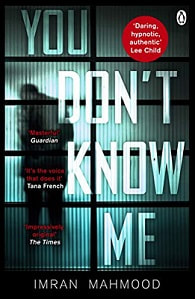
Our first-person narrator has been accused of murder and has elected to defend himself. As the blurb on the back cover says: ‘He now stands in the dock and wants to tell you the truth. He needs you to believe him. Will you?’
Actually, it’s his authentic voice that draws me – a 54-year-old middle-class white woman raised in Buckinghamshire, England – deep into his psyche so that I can see and hear him as if we are one. And that means I can root for him, invest in him, care about him, believe him.
Thinking about that narrative in terms of whether it’s ‘correct’ or ‘right’ would be butchery. To apply a digital red pen to it would be a crime.
And even those of us who might apply the term ‘non-standard’ to the emboldened words must acknowledge that such prescription is based purely on our own lived experience of English – how we write, how we speak, and what we were taught. That doesn’t make our way of speaking and writing better or worthier.
When story and characters drive language, readers will come along for the ride, regardless of their lived experience. When prescriptivism is behind the wheel, readers will disengage and find a different journey to take.
Framing errors in terms of author intention and reader expectation
An error is a mistake. We all make them when we’re writing – because we don’t know what the conventions are, because we’re focusing on meaning rather than mechanics, or because our fingers are typing so fast.
Regardless, the focus here is on intention, and for that reason there are times when it’s appropriate for the editor to use the term ‘error’.
When editors are tasked with finding errors, they’re looking for what wasn’t intended in that particular project. Take a look at these four examples:
We can say without judgement that there are four ‘errors’ in the above examples because in each case the author likely made a mistake – they meant to use a consistent style of speech marks in the first example, meant the pronouns to be consistent in the second, meant to use ‘they’re' in the third, and meant to use an alternative style for the nested quotation marks in the fourth.
When we’re querying potential errors, however, we can still use the language of intention and reader expectation in our comments, thereby avoiding a more critical tone:
Regardless, the focus here is on intention, and for that reason there are times when it’s appropriate for the editor to use the term ‘error’.
When editors are tasked with finding errors, they’re looking for what wasn’t intended in that particular project. Take a look at these four examples:
- “Are the autopsy results in yet?’ Milburn asked.
- Xe put xyr pen on the table and frowned. No way was he letting that one pass.
- She hears him clearly – banging on again about how their from out of town and don’t know their way around.
- ‘I wanted to call the police but Johnny ‘One Sock’ Swainston wasn’t having any of it.’
We can say without judgement that there are four ‘errors’ in the above examples because in each case the author likely made a mistake – they meant to use a consistent style of speech marks in the first example, meant the pronouns to be consistent in the second, meant to use ‘they’re' in the third, and meant to use an alternative style for the nested quotation marks in the fourth.
When we’re querying potential errors, however, we can still use the language of intention and reader expectation in our comments, thereby avoiding a more critical tone:
- Did you mean to write […] here or is this a typo?
- How about [...] instead? This would be less likely to distract the reader, who might be more used to seeing [...] and therefore misinterpret what you've written.
- The grammar in this section doesn’t align with your usual narrative voice, and reads more like something Character Y would say. Is this intentional? If not, how about trying [...]?
Summing up
As professional editors, we need to think about the language we use about language!
Instead, we can frame our discussions and queries around meaning, author intention and reader experience. That way, we’re putting the prose where it belongs – front and centre.
- Saying something’s ‘right’ might imply that all alternatives are wrong when they aren’t.
- Defining something as a ‘rule’ might imply that breaking it is non-conformist, eccentric, non-compliant, even disobedient.
- Referring to something as ‘standard’ normalizes the preferences of those who have the power to make that decision in the first place.
Instead, we can frame our discussions and queries around meaning, author intention and reader experience. That way, we’re putting the prose where it belongs – front and centre.
Louise Harnby is a line editor, copyeditor and proofreader who specializes in working with crime, mystery, suspense and thriller writers.
She is an Advanced Professional Member of the Chartered Institute of Editing and Proofreading (CIEP), a member of ACES, a Partner Member of The Alliance of Independent Authors (ALLi), and co-hosts The Editing Podcast.
She is an Advanced Professional Member of the Chartered Institute of Editing and Proofreading (CIEP), a member of ACES, a Partner Member of The Alliance of Independent Authors (ALLi), and co-hosts The Editing Podcast.
- Get in touch: Louise Harnby | Fiction Editor & Proofreader
- Connect: Twitter at @LouiseHarnby, Facebook and LinkedIn
- Learn: Books and courses
- Discover: Resources for authors and editors
0 Comments
Leave a Reply.

PDF MARKUP
AUTHOR RESOURCES
EDITOR RESOURCES

TESTIMONIALS
Dare Rogers
'Louise uses her expertise to hone a story until it's razor sharp, while still allowing the author’s voice to remain dominant.'
Jeff Carson
'I wholeheartedly recommend her services ... Just don’t hire her when I need her.'
J B Turner
'Sincere thanks for a beautiful and elegant piece of work. First class.'
Ayshe Gemedzhy
'What makes her stand out and shine is her ability to immerse herself in your story.'
Salt Publishing
'A million thanks – your mark-up is perfect, as always.'
CATEGORIES
All
Around The World
Audio Books
Author Chat
Author Interviews
Author Platform
Author Resources
Blogging
Book Marketing
Books
Branding
Business Tips
Choosing An Editor
Client Talk
Conscious Language
Core Editorial Skills
Crime Writing
Design And Layout
Dialogue
Editing
Editorial Tips
Editorial Tools
Editors On The Blog
Erotica
Fiction
Fiction Editing
Freelancing
Free Stuff
Getting Noticed
Getting Work
Grammar Links
Guest Writers
Indexing
Indie Authors
Lean Writing
Line Craft
Link Of The Week
Macro Chat
Marketing Tips
Money Talk
Mood And Rhythm
More Macros And Add Ins
Networking
Online Courses
PDF Markup
Podcasting
POV
Proofreading
Proofreading Marks
Publishing
Punctuation
Q&A With Louise
Resources
Roundups
Self Editing
Self Publishing Authors
Sentence Editing
Showing And Telling
Software
Stamps
Starting Out
Story Craft
The Editing Podcast
Training
Types Of Editing
Using Word
Website Tips
Work Choices
Working Onscreen
Working Smart
Writer Resources
Writing
Writing Tips
Writing Tools
ARCHIVES
July 2024
June 2024
May 2024
April 2024
March 2024
October 2023
August 2023
July 2023
June 2023
May 2023
April 2023
March 2023
January 2023
December 2022
November 2022
October 2022
September 2022
August 2022
July 2022
June 2022
May 2022
April 2022
March 2022
February 2022
January 2022
December 2021
November 2021
October 2021
September 2021
August 2021
July 2021
June 2021
May 2021
April 2021
March 2021
February 2021
January 2021
December 2020
November 2020
October 2020
September 2020
August 2020
July 2020
June 2020
May 2020
April 2020
March 2020
February 2020
January 2020
December 2019
November 2019
October 2019
September 2019
August 2019
July 2019
June 2019
May 2019
April 2019
March 2019
February 2019
January 2019
December 2018
November 2018
October 2018
September 2018
August 2018
July 2018
June 2018
May 2018
April 2018
March 2018
February 2018
January 2018
December 2017
November 2017
October 2017
September 2017
August 2017
July 2017
June 2017
May 2017
April 2017
March 2017
February 2017
January 2017
December 2016
November 2016
October 2016
September 2016
June 2016
May 2016
April 2016
March 2016
February 2016
January 2016
December 2015
November 2015
October 2015
September 2015
July 2015
June 2015
May 2015
March 2015
February 2015
January 2015
November 2014
October 2014
September 2014
August 2014
July 2014
June 2014
March 2014
January 2014
November 2013
October 2013
September 2013
August 2013
June 2013
February 2013
January 2013
November 2012
October 2012
September 2012
August 2012
July 2012
June 2012
May 2012
April 2012
March 2012
February 2012
January 2012
December 2011
 RSS Feed
 |

|

|

|

|
|
|
|

© 2011–2024 Louise Harnby