

|
There are different types of novel editing: developmental editing, line editing, copyediting and proofreading. Revising in the right order is essential if you want your book to be in the best shape possible.
Feel free to enjoy this blog, and watch the complementary webinar or download the free ebook too.
Developmental editing Developmental editing comes first. This is big-picture work that involves looking at the story as a whole. You’ll also hear it called structural editing, perhaps even content editing, and the base components always include plot, structure, characterization, pace, viewpoint, narrative style, and tense.
3 things you should know about developmental editing
Line editing
Line editing is the next step in the revision process and it is stylistic work. A strong sentence elevates story; a poorly crafted one can bury it. This level of editing revises for style, sense, and flow. You might also hear line editing referred to as substantive editing or stylistic editing. Editors will be addressing the following:
3 things you should know about line editing
Copyediting
Copyediting is the technical side of sentence-level work. Editors will be addressing the following:
3 things you should know about copyediting
Proofreading
Proofreading is the last stage of the editing process prior to publication. Every novel, whether it’s being delivered in print or digitally, requires a final quality-control check. A proofreader looks for literal errors and layout problems that slipped through previous rounds of revision or were introduced at design stage. Authors preparing for print can ask a proofreader to annotate page proofs. These are almost what a reader would see if they pulled the novel off the shelf. Others ask proofreaders to amend the raw text, either because they’re preparing for epublication or for audiobook narration. Proofreaders are more than typo hunters. They check for consistency of spelling, punctuation and grammar, but also for layout problems such as (but not limited to) indentation, line spacing, inconsistent chapter drops, missing page numbers, and font and heading styles. The remit is extensive (download a free checklist). The art of good proofreading lies in knowing when to change and when to leave well enough alone. A good proofreader should understand the impact of their revisions—not only in relation to the knock-on effect on other pages but also to the cost if a third-party designer/formatter is part of the team.
3 things you should know about proofreading
Which type of editing do you need? Authors need to take their books through all the types of editing. That doesn’t mean hiring third party professionals for each stage. Writing groups, self-study courses, how-to books, and self-publishing organizations are all great sources of editorial support. If you decide to work with a professional, invest in one who can help you where you’re weakest. You might be a great structural self-editor but prone to overwriting. Or you might have nailed line craft but need help with story development. And pay attention to the order of play when it comes to revision. Fixing plot holes at proofreading stage might damage previous rounds of editing. That’s a waste of time and money that every writer wants to avoid!
Louise Harnby is a line editor, copyeditor and proofreader who specializes in working with independent authors of commercial fiction, particularly crime, thriller and mystery writers.
She is an Advanced Professional Member of the Chartered Institute of Editing and Proofreading (CIEP), a member of ACES, a Partner Member of The Alliance of Independent Authors (ALLi), and co-hosts The Editing Podcast. Visit her business website at Louise Harnby | Fiction Editor & Proofreader, say hello on Twitter at @LouiseHarnby, connect via Facebook and LinkedIn, and check out her books and courses.
3 Comments
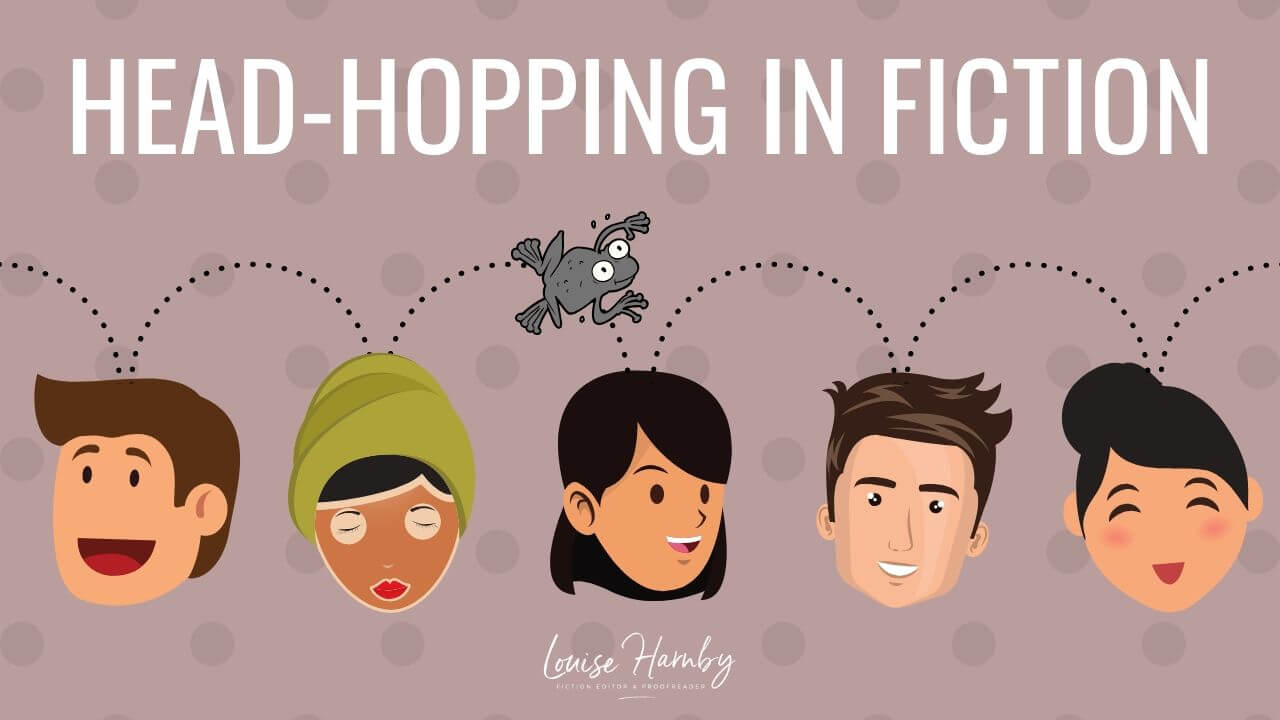
Are your readers bouncing from one character’s head to another in the same scene? You might be head-hopping. This article shows you how to spot it in your fiction writing, understand its impact, and fix it.
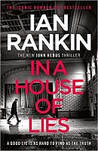
Rebus pushed open the wrought-iron gate. No sound from its hinges, the garden to either side of the flagstone path well tended. Two bins – one landfill, one garden waste – had already been placed on the pavement outside. None of the neighbours had got round to it yet. Rebus rang the doorbell and waited. The door was eventually opened by a man the same age as him, though he looked half a decade younger. Bill Rawlston had kept himself trim since retirement, and the eyes behind the half-moon spectacles retained their keen intelligence.
‘John Rebus,’ he said, a sombre look on his face as he studied Rebus from top to toe. ‘Have you heard?’ Rawlston’s mouth twitched. ‘Of course I have. But nobody’s saying it’s him yet.’ ‘Only a matter of time.’ ‘Aye, I suppose so.’ Rawlston gave a sigh and stepped back into the hall. ‘You better come in then. Tea or something that bit stronger?’ […] ‘Sugar?’ Rawlston asked. ‘I can’t remember.’ ‘Just milk, thanks.’ Not that Rebus was planning on drinking the tea; he was awash with the stuff after his trip to Leith. But the making of the drinks had given him time to size up Bill Rawlston. And Rawlston, too, he knew, would have been using the time to do some thinking. Anaylsis: Tight third-person limited narration Rebus is the viewpoint character. That means the internal experiences we access are limited to his. For example:
We cannot get in Rawlston’s head. All we can do is consider his internal experiences via his observable and audible behaviour, and his dialogue. For example:
What head-hopping would look like Here’s what that excerpt might look like if there was head-hopping going on:
Rebus pushed open the wrought-iron gate. No sound from its hinges, the garden to either side of the flagstone path well tended. Two bins – one landfill, one garden waste – had already been placed on the pavement outside. None of the neighbours had got round to it yet. Rebus rang the doorbell and waited.
Bill Rawlston walked down the hall and peered through the peephole. Rebus. Same age as him, though he looked half a decade older. He opened the door. Rawlston had kept himself trim since retirement, and the eyes behind the half-moon spectacles retained their keen intelligence. ‘John Rebus,’ he said, a knot forming in his stomach as he studied Rebus from top to toe. ‘Have you heard?’ The question riled him. Was Rebus stupid? ‘Of course I have. But nobody’s saying it’s him yet.’ ‘Only a matter of time.’ ‘Aye, I suppose so.’ Rawlston begrudged letting Rebus in but stepped back into the hall. ‘You better come in then. Tea or something that bit stronger?’ […] ‘Sugar?’ Rawlston asked. ‘I can’t remember.’ ‘Just milk, thanks.’ Not that Rebus was planning on drinking the tea; he was awash with the stuff after his trip to Leith. But the making of the drinks had given him time to size up Bill Rawlston. Rawlston had used the time to do some thinking, too. Rebus turning up here after all those years – it pissed him off. Analysis: Confused narration Notice how we bounce between the heads of Rebus and Rawlston. Now we have access to the internal experiences of both.
In that butchered version, the reader is forced to play a game of ping-pong on the page. Why head-hopping spoils fiction Here are 4 reasons to hold viewpoint rather than head-hopping:
1. Head-hopping renders a story less immersive
In Rankin’s original prose, we are limited to the world of the novel as Rebus experiences it. That’s powerful because every word on the page is a step we take with Rebus, as Rebus. I get to be a male, Scottish detective for a few hours rather than a female, English book editor! In my butchered version, I take that first step with Rebus but then trip and fall into Rawlston. Because I’m bouncing between those characters’ internal experiences, I don’t have time to invest in either. And so I stay as lil’ ol’ me. I do like being me, but when I buy one of Rankin’s books I want to immerse myself in its world for a few hours at a time and dig deep under the skin of the viewpoint character. I can be me without paying fifteen quid for the privilege!
2. Head-hopping diminishes suspense
In the original text, Rankin keeps the suspense tight by allowing us to access only Rebus’s senses. Rawlston’s sombre expression, twitching mouth and curt responses make Rebus (and us) think, Does he want me here? Does he begrudge my presence? What’s going on in his head? Those questions demand answers and we seek them in the clues offered by the limited narrative. Because the limited viewpoint requires Rebus and the reader to make assumptions based on what’s observable and audible, there’s uncertainty. That’s what provides the suspense, and it compels us to keep reading in the hope that the truth will be unveiled. In my head-hopping version, the prose is flat. There are no questions. We know what everyone’s thinking because we’re in everyone’s head. Readers aren’t called upon to use their imagination – both characters’ internal experiences are spoon-fed to us.
3. Head-hopping is less authentic
Head-hopping reminds readers that they are in a story written by an author. We don’t get to suspend belief because the writing won’t allow us to immerse ourselves that deeply. In Rankin’s original prose, we walk through the world as if we are Rebus, and Rebus alone. That’s what happens in real life. I know only what I’m thinking, feeling, seeing and hearing. I can’t be sure than another’s perception is the same. Audio-visual signals help me make reasonable assumptions but I’m only ever in my own head … or Rebus’s if I’m reading a story about him because Rankin knows how to hold viewpoint. In my mangled version of the excerpt, there’s a reality flop. Now I’m everyone, which is ridiculous of course. Authenticity has fallen off a cliff.
4. Head-hopping can be confusing
When a writer head-hops, the reader has to keep track of whose thoughts and emotions are being experienced. When a reader doesn’t know where they are in a novel for even a few seconds, that’s a literary misfire. This is what happens in the head-hopping excerpt. For example, Rawlston walks down the hall and identifies Rebus through the peephole. We’re right with him, in his head. But what follows is jarring. That he reports on his spectacles sitting in front of keenly intelligent eyes is oddly self-aware. Of course, it’s not Rawlston’s perception; it’s Rebus’s. And once we realize that, the prose makes sense. But working that out is not where Rankin wants the reader’s attention. He’s telling us a story and he wants us to read it. That’s why he holds a tight limited viewpoint throughout. Head-hop check Make a list of the characters in a chapter or scene. Identify the viewpoint character. There can be more than one viewpoint character in a book but most commercial fiction authors separate them by chapters or sections. Here’s a quick way to check whether you’re holding viewpoint. Viewpoint characters: What the reader can access
Non-viewpoint characters: What the reader can access
Some examples to show you the way
Summing up Even if your readers don’t know what head-hopping is, by removing it from your novel you’ll give them a more immersive, suspenseful and authentic journey through the world you’ve built. Plus, you’ll ensure they’re reading your story, not trying to work out who’s telling it.
Louise Harnby is a line editor, copyeditor and proofreader who specializes in working with independent authors of commercial fiction, particularly crime, thriller and mystery writers.
She is an Advanced Professional Member of the Chartered Institute of Editing and Proofreading (CIEP), a member of ACES, a Partner Member of The Alliance of Independent Authors (ALLi), and co-hosts The Editing Podcast. Visit her business website at Louise Harnby | Fiction Editor & Proofreader, say hello on Twitter at @LouiseHarnby, connect via Facebook and LinkedIn, and check out her books and courses.
This post helps less experienced authors and editors understand how a third-person narrative viewpoint works in fiction, and the differences between objective and limited.
What is narrative point of view?
Point of view (POV) describes whose head we’re in when we read a book ... from whose perspective we discover what’s going on – and the smells, sounds, sights and emotions involved. Third-person limited POV Along with third-person objective, this viewpoint is the one that most writers find easiest to master at the beginning of their journey. Furthermore, readers are used to encountering it in contemporary fiction. The pronouns of choice are ‘she’, ‘he’, ‘it’ and ‘they’. Third-person limited is so called because it’s a deeper viewpoint that limits readers to a single character’s experience – what they see, hear, feel and think. Readers get to sit in their skin and that provides an immersive experience. It’s as if we’re them. Example: Intimacy and getting under the character’s skin Here are some examples from Mick Herron, Harry Brett and Louise Penny that demonstrate an intimate third-person limited narrative:
The voices are distinctive. It’s not just dialogue that conveys how the viewpoint characters speak and think; it’s the narrative too. However, it’s called third-person limited for a reason. Strictly speaking, what that character can’t see or know shouldn’t be reported. In the above examples, we’re left with questions – of destination in the first, of the origin of a smell in the second, and of the nature of the journey – because we don’t know any more than the viewpoint characters. Third-person limited is effective because an author doesn’t want to give everything away at once. The limitations over what can be known, and therefore divulged, allow the writer to control the unveiling of information via the viewpoint character. Recommendation I recommend you stick to a single character’s POV per chapter or section to avoid confusion or interruption. Mittelmark and Newman (p. 159) offer this wisdom:
Sometimes an author slips into a different point of view for the space of a single paragraph, or even a sentence. This is especially jarring when the remaining novel is given from the point of view of a single character, whom we have come to regard as our second self. It gives the feeling of a fleeting and unexplained moment of telepathy, an uncomfortable intrusion of somebody else’s thoughts. When the protagonist’s point of view resumes, we move forward into the narrative warily, ready at any moment for a fresh assault on our minds.
That’s worth heeding. It means the reader’s trust has been lost, that they’ve been pulled out of the story rather than drawn further into it. Trickier still is narrative ping pong, where within one section we bounce back and forth between the POVs of Character X and Character Y. Here’s a made-up example that demonstrates how things can go wrong.
Jan ran down the road, her lungs screaming for air. She snatched a glance over her shoulder, hoping to Christ Melody was behind.
‘You okay, Jan?’ said Melody. She’d barely got the words out – her throat was on fire. All she wanted to do was stop, breathe, devour that bottle of water in her backpack bouncing hard against her spine. ‘We’re here,’ Jan said. Thank God. Tears of relief stung her eyes. She’d been worried Mel wouldn’t keep up. Guilt niggled. Would she have gone back for her? She wasn’t sure. The problem with this kind of setup is that it ‘alienates the reader from both perspectives. She is unable to identify with either because there’s no telling when it will be yanked away’ (Mittelmark and Newman, p. 161). In other words, the reader has been prevented from immersing themselves in the character’s version of the story. When you stay in the head of one character per chapter or section, you make your writing life and your reader’s journey easier. Third-person objective POV If third-person limited provides intimacy – allowing us to explore a character’s emotions and hear their voice – third-person objective offers a more neutral flexibility when we need some distance to look around and beyond objectively. Like its limited sister, writers find this easiest to master and readers are used to encountering it. The pronouns too are ‘she’, ‘he’, ‘it’ and ‘they’. It’s a useful viewpoint for the author who wants to convey descriptive information – height, weight, facial expression, environment. If you’re using this POV, practice your observation skills so that you understand how people move from place to place, what they wear, where they live, how they gesture, so that you can show what might be going on in their heads through what can be observed. The same can be said of the objects in your novel. How does light play on water or a brick building at various times of the day? What sounds might be audible in your environment? How do the seasons affect the flora and fauna? Third-person objective viewpoints are powerful because they force a writer to show rather than tell what’s being seen. That’s because we don’t have access to the internal thoughts of a character. Example: A more distant and descriptive narrative Here’s an example from David Baldacci’s The Fix (p. 3) that demonstrates third-person narration as observable description.
Example: Shown-not-told in action Here are some excerpts from Stephen King’s The Stand that demonstrate a close attention to the way things and people behave when observed.
Objectivity allows the writer to explore in detail what would be unnatural for a character to report directly. Remember, we’re not accessing thoughts, opinions and emotions with an objective POV, just the stuff that any onlooker could see, hear or smell. Objective is the key word here. Third-person objective viewpoints should focus on what could be known by a narrator witnessing that scene. When information is reported that moves beyond a floating camera that’s tracking the immediate environs and into a space where the narrator knows more than could possibly be witnessed by the character or the onlooker, omniscience is in play (more on that below). In some genres – crime fiction for example – this can be useful because the reader will be forced to reach their own conclusions as to the reasons for, or motivations behind, a particular event or behaviour. In other words, it’s mysterious. However, it can be distancing if overused and as a result contemporary commercial fiction writers rarely write entire novels from an objective POV because it’s reportage and we can’t get into the characters’ heads. It’s harder to understand what motivates them unless they express it through dialogue. A blend of limited and objective is a more likely choice. Recommendation Use third-person objective POV to create suspense, to make your reader wonder, and ask their own questions, and to provide scene-setting information, but blend with a limited viewpoint for deeper emotional engagement. In the first paragraph of the example below, Baldacci (The Fix, p. 3) uses third-person objective to give us background facts. In the second, he switches to limited to explain the character’s feelings. It’s a lovely fusion:
Cited sources and related reading
Louise Harnby is a line editor, copyeditor and proofreader who specializes in working with crime, mystery, suspense and thriller writers.
She is an Advanced Professional Member of the Chartered Institute of Editing and Proofreading (CIEP), a member of ACES, a Partner Member of The Alliance of Independent Authors (ALLi), and co-hosts The Editing Podcast. Visit her business website at Louise Harnby | Fiction Editor & Proofreader, say hello on Twitter at @LouiseHarnby, connect via Facebook and LinkedIn, and check out her books and courses. The impact of ‘before’ and ‘after’ in fiction writing: Tacit and explicit chronology of action17/2/2020
When the order of characters’ movements is told with the words ‘before’ and ‘after’, there’s a risk that readers will focus on timeline rather than story. That distraction can reduce engagement and dumb down the writing.
Here’s what to look out for and how to fix the problem. 
In this article, we’ll look at tacit and explicit chronologies of action, and assess which style of writing is more immersive and why.
Why writers include ‘before’ and ‘after’ The inclusion of ‘before’ and ‘after’ to tell the order of play is not an indication of poor grammar – not at all. There’s nothing grammatically wrong with these constructions. 
More usually, it’s an indication of insecurity. The author hasn’t learned to trust the power of their words on the page, or the ability of their readers to perceive the meaning behind those words.
It’s also why writers sometimes use several adjectives with similar meanings rather than one strong one, or an adverbial phrase to fortify a weak verb. Some authors also fear that their writing will come across as too ‘plain’ or ‘simple’. Chronological nudges are an attempt to ornament the prose. Tacit chronology of action The things that we do occur in a sequence; they have a chronology. This is as much the case in real life as it is on the screen, in an audiobook and in the pages of a novel. That chronology is tacit – we don’t need to explain it because it’s understood. Take a look at this excerpt from The Devil’s Dice by Roz Watkins (p. 79, HQ, 2019):
Watkins doesn’t tell us explicitly that the shuddering occurred before the laptop was put down, or that the laptop was moved before the character shifted the cat onto their knee. And yet we know. The sequence of events is implied by the order in which she places each clause. It’s tacit.
And that’s the thing with strong line craft – it allows the reader to immerse themselves in the chronology of action by showing us, clause by clause, what’s transpiring, instead of tapping us on the shoulder and telling us. Explicit chronology of action Let’s recast the Watkins excerpt with some explicit taps on the shoulder:
I shuddered before putting the laptop down, then manoeuvred Hamlet onto my knee. After leaning in, I breathed in his subtle, nutty cat smell.
I see this use of timeline nudges frequently in the fiction writing of less experienced authors, and it’s problematic when overused. Here’s why. 1. Some readers might feel patronized Not every reader will notice the use of chronology nudges. But some will, and since no author wants to alienate a chunk of their readership, why push the story over a cliff when we can work out the sequence of events from the order of the words? Telling readers that X was done before doing Y, or after doing Z, is akin to saying: ‘Hey, just in case you’re not clever enough, let me spell it out for you.’ It’s a dumbing-down that readers in the know won’t appreciate. 2. The inclusion is unnecessary If you’re still not convinced, ask yourself whether the inclusion of ‘before’ or ‘after’ as timeline nudges is necessary. It often isn’t. If a character’s shuddering occurs at the beginning of a sentence, the reader will assume that shuddering is what’s happening right now. If a new action follows that shuddering, the reader will assume that – just like in real life – the moment has passed and something else is happening in the new now of the novel. 3. The reader is focused on the wrong thing When writers create immersive fiction, the reader feels as if they are in the moment – this is happening, now that, now the other. ‘Before’ and ‘after’ are distractions that focus the reader on when rather than what’s happening. The former is telling; the latter is showing. 4. There are more words than are necessary Not enough words leaves readers hungry for clarity. Too many gives them indigestion. The artistry comes in the form of balance. As long as the sequence of events can be understood by the reader, consider whether timeline nudges such as ‘before’ and ‘after’ are cluttering your prose. 
The power of tacit chronology – more examples
Take a look at these pairs of narrative text, each of which has a shown tacit chronology and an alternative told explicit sequence. Which versions are more suspenseful? Which are most immediate? Which flow better when you read them out loud? I’ve used examples from published fiction for the tacit versions, and taken a little artistic licence – altering them in ways their authors never intended – for the explicit chronologies.
In the original version, the ‘and’ between the initial breath and the walk into the kitchen is a fine example of the power of a conjunction. It’s almost invisible, which gives us the space to take that breath with the viewpoint character. And having taken it, we’re ready to go into the kitchen with them. In the edited version, ‘before’ pulls us away from that moment. The tension has fallen out of the sentence.
In the original version, it’s as if we’re in the room, watching the man as he smiles and leans back. There is space for that action to have its moment. Then he blows the smoke – that’s the new moment; we’ve left the other behind. In the edited version, ‘after’ shoves us past the leaning back and smiling before we’ve had a chance to savour it. It’s already gone, even though we’re still reading about it.
In the original version, Crichton shows us the action. Perhaps, like me, you can hear the chunter of the helicopter blades in the air. Who’s in this helicopter? Men in uniform. They jump out. What will happen next? We’re shown: they fling open the door. There’s a sense of order, of clandestine and militaristic precision. In the edited version, ‘before’ saps the suspense from the final sentence. We’re focused on the timeline rather than the action. Summing up The table below summarizes the impact of tacit and explicit chronology on prose.
Take a look at your narrative. If ‘before’ and ‘after’ are telling rather than showing, recast gently and reread out loud. Is the order of play still clear? Is the prose more immersive? If so, there’ll be fewer words but what’s there will be all the richer.
And if you’re worried that your prose will be too plain, think again. Immersive writing allows the reader to decorate the story with their own imagination.
Louise Harnby is a line editor, copyeditor and proofreader who specializes in working with crime, mystery, suspense and thriller writers.
She is an Advanced Professional Member of the Chartered Institute of Editing and Proofreading (CIEP), a member of ACES, a Partner Member of The Alliance of Independent Authors (ALLi), and co-hosts The Editing Podcast.
Flat chapter finales are a fast track to reader disappointment. Here’s how to nail those last few lines so that readers can’t wait to turn the page.
Readers turn the page to find answers to questions. Why did that happen? Who’s responsible? What will happen next?
Unanswered questions at the end of chapters place us in a state of suspense. We’ll try to predict the answers based on the information we’ve been given. We might be proved right. I thought so! We might be proved wrong. I didn’t see that coming! Either way, as long as there’s suspense, we’ll turn the page. Here are some ideas, with examples from published fiction, about how to do it, so that even predictable outcomes are structured line by line such that readers are itching with anticipation. 1. Wrap up the chapter in the middle of something interesting There are two people in a bedroom. They’ve survived a harrowing encounter. And there’s oodles of sexual tension between them. A less confident writer might wrap up the chapter as follows:
‘I’m sorry I shot you,’ she said, and slipped into the bed. ‘But I did it to save your life.’
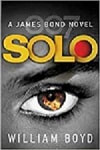
Mark pulled off his tie and began to undo the buttons on his shirt. They made love, then ordered food and drink – two omelettes and fries and a bottle of champagne – and, after they’d eaten, and drunk, they made love again. [CHAPTER ENDS] The problem here is that the suspense dissipates. Mark begins to undress but we don’t bother to wonder what will happen next – whether he and the woman will have sex, or try to but be interrupted, or do the deed and grab some food. We don’t need to – we’re told. Fear not! This is actually a tweaked version of an excerpt from Solo by William Boyd, Vintage, 2014 (pp. 259–60). Boyd is cannier. This is what it really looks like:
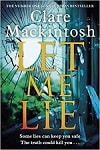
In the real version, we do ask those questions. The artistry lies in the fact that we have to turn the page to find the answers and relieve our suspense. They’re given in the next chapter. A sex scene follows. It’s an interlude – a chance to breathe, for them and us – before Bond leaves and sets up a diversion that will confuse the CIA’s surveillance of him. 2. Wrap up the chapter with foreshadowing Chapter endings that tell of incoming storms are powerful. When they’re short and taut, even better! Take a look at this super example from p. 210 of Clare Mackintosh’s Let Me Lie (Sphere, 2019):
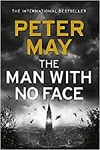
That final line is like a punch in the gut. It begs us to ask: When will he come? What will he do? And how will she protect herself? It’s six words of masterful suspense. 3. Wrap up the chapter with emotional reflection In the The Man with No Face by Peter May (Riverrun, 1981), the protagonist, a journalist called Neil Bannerman, walks into a restaurant and alerts a minister that he has evidence about a government cover-up. That’s the juicy bit. Bannerman then exits, leaving the minister to mull over the revelation. That’s the mundane bit and May needs a way to close the chapter with a pop. Emotional reflection is the tool of choice. Here’s the excerpt from p. 233:
The journos and minister won’t be enjoying their meal but this isn’t an exercise in gastronomy. The end-of-chapter suspense comes in the form of questions: Will there be consequences for Bannerman? How will those play out? Will the minister get his just deserts? 4. Wrap up the chapter with a surprise interruption Another way of wrapping up a chapter when the big stuff has already played out is to introduce some sort of surprise interruption. Perhaps there’s a knock on the door from an unexpected visitor, or an odour that forces the viewpoint character to direct their attention elsewhere. Here’s another excerpt from Let Me Lie (p. 226). Murray, the viewpoint character, has just had a telephone call with Anna, during which he told her that her parents had indeed been murdered. She becomes emotional and commands him to drop the investigation, despite her bringing the case to him in the first place.
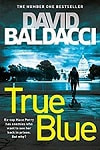
What would ordinarily be a domestic mundanity serves to show his mood; his shock is so immersive that he’s forgotten everything around him until the alarm goes off. We leave the chapter imagining the shrill noise, the odour of burnt food, the smoke in the kitchen, and wondering what on earth has happened to make Anna change her mind. 5. Wrap up the chapter with a shocking last line There’s nothing better than a final line that the reader doesn’t see coming. Here’s a magnificent example from David Baldacci’s True Blue (Kindle edition, Macmillan, 2009). In Chapter 4, we meet Roy, a young lawyer. He finishes a game of basketball and slopes back to the office where, we learn, he earns a healthy pay cheque by plea-bargaining on behalf of mostly guilty defendants.
Baldacci sets up the whole chapter as just another day at the office. We should know better than to be lulled into this false sense of security, but Baldacci’s narrative is strong enough from the start to convince us this might go in another direction. Maybe Roy is crooked. Perhaps he’s about to be fired. Maybe he’s going to get a phone call telling him he has to go to court and represent someone he’d rather not. What we don’t expect is the wallop when a body falls out of the fridge. And now we have a ton of suspenseful questions. Who is she? How did she get in the fridge? Why was she killed? To find out, we’ll have to turn the page. 6. Wrap up the chapter with dialogue that demands answers One great line of dialogue can close a chapter beautifully. No action beats, no narrative, no response – just the spoken word. It works as an outro when the speech leaves us with questions, and therefore in suspense. Here's an example from New Tricks by David Rosenfelt (2009, Grand Central Publishing, pp. 215–16):
The dialogue forces us to wonder: Why has Richard not carried out the redirect? Has some new evidence come to light? How will this affect the case? Rosenfelt doesn’t dampen the suspense by cluttering his prose with the detail of what came next – maybe people in the courtroom looked surprised or confused; perhaps there was an objection, and the judge banged their gavel and announced a recess. Instead, all that stuff is left unwritten – we just imagine it. It’s one line of dialogue and the chapter’s done. 7. Wrap up the chapter in the middle of one character’s speech Here’s Rosenfelt again in Dog Tags (Grand Central Publishing, 2010, pp. 28–9). Unlike in the example above where there’s a natural chapter break because of a shift from the courtroom to the chambers, this time he inserts the chapter break in the middle of one person’s speech. Less experienced authors might shy away from this, but it can work – if it’s an appropriate suspense point that leaves the reader reeling with questions.
That final line is a shock, for lawyer Andy Carpenter and us. Why would a dog need a lawyer? How can such an absurd conversation be happening? We learn the answers to these questions in the next chapter, and that’s exactly where they should be because ‘The government’ is the suspense point that grabs us by the scruff of the neck and demands we keep reading. Do you know when it’s closing time? Like artists who can’t put down a paintbrush, less confident writers sometimes lack the courage to end with one line that evokes questions rather than solutions. Yet that’s what the authors in all the examples above have done, and that’s why their outros are suspenseful and page-turning. If your chapters have a saggy bottom, maybe you haven’t identified closing time. I line edit for an author who writes knockout chapter endings … he just places them 10 lines further up the page than they should be to create a suspenseful finale! When you find yourself stuck, look up the page to find the point that will make the reader think How’s that going to play out? or Why did she do that? or That was a surprise! or Ha! You deserved that. … those few lines that will kick them up the backside and push them forward. If those lines are already there, think about whether they should be moved to the end of the chapter, or whether the prose after them should be shifted (or even deleted). If they’re not there, write them. Think about the very last sentence in your chapter too. How long is it? Your writing style and genre might dictate the style of your final lines but notice how lean the word count is in most of the examples above. The brevity acts like a command: Read me. Pay attention. Turn the page. Summing up Every chapter should end with a pop, regardless of genre. Those last few lines are what the reader remembers before they pause. An otherwise beautifully crafted chapter can be ruined if it flops at the finishing line. Find the suspense point – the lines that make readers ask questions – and use them to wrap up your chapter. And pay attention to the very last sentence. Sometimes less is more. Related resources
Louise Harnby is a line editor, copyeditor and proofreader who specializes in working with crime, mystery, suspense and thriller writers.
She is an Advanced Professional Member of the Chartered Institute of Editing and Proofreading (CIEP), a member of ACES, a Partner Member of The Alliance of Independent Authors (ALLi), and co-hosts The Editing Podcast.
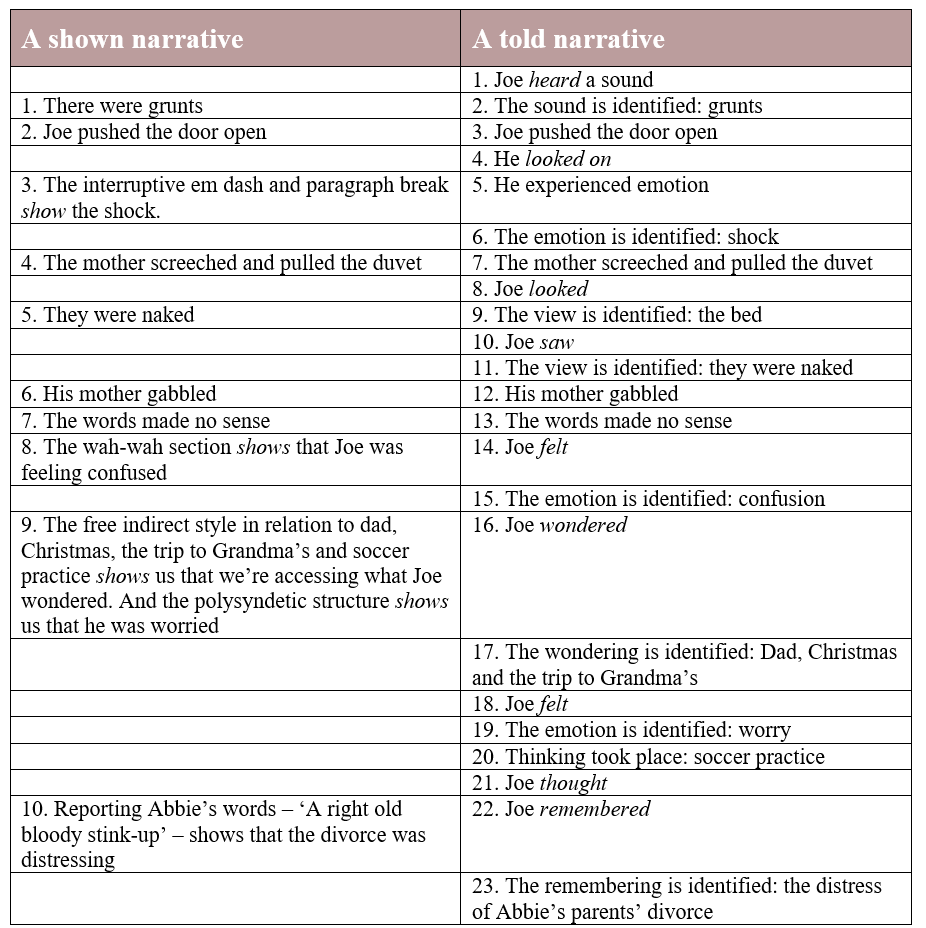
Are you storytelling-telling? Too much told narrative can force the reader to experience a story through extraneous layers that add clutter rather than clarity. Here’s how to identify one type of told prose and write with more immediacy.
|



|
Her eyes flash with hatred. I go to speak, to defend myself, but no words will come. Instead I let Sonia guide me away, Barbara’s venom ringing in my ears.
|
|
Here are some additional (made-up) examples of where motivation is the order of the day. The character does X for the purpose of achieving Y, and the infinitive is effective.
- I take deep breaths to calm myself.
- He’d worked his backside off with this parole officer to stay out of trouble.
- Arthur went to pull Excalibur from the stone but Merlin’s scream stopped him in his tracks.
- I’ve made a decision. I’ll fill up her petrol tank with diesel to trash the engine. That’ll teach her.
Summing up
If you want your characters to act, show those actions in your prose rather than telling readers about intention. Replace the infinitives with a conjunction and modify how the verb’s conjugated. Or, for a more staccato feel, try commas, or closing the sentence with a full point and starting a new one.
If it’s motivation you want, a ‘to’ plus a verb has the right to stand.
Louise Harnby is a line editor, copyeditor and proofreader who specializes in working with crime, mystery, suspense and thriller writers.
She is an Advanced Professional Member of the Chartered Institute of Editing and Proofreading (CIEP), a member of ACES, a Partner Member of The Alliance of Independent Authors (ALLi), and co-hosts The Editing Podcast.
Visit her business website at Louise Harnby | Fiction Editor & Proofreader, say hello on Twitter at @LouiseHarnby, connect via Facebook and LinkedIn, and check out her books and courses.
She is an Advanced Professional Member of the Chartered Institute of Editing and Proofreading (CIEP), a member of ACES, a Partner Member of The Alliance of Independent Authors (ALLi), and co-hosts The Editing Podcast.
Visit her business website at Louise Harnby | Fiction Editor & Proofreader, say hello on Twitter at @LouiseHarnby, connect via Facebook and LinkedIn, and check out her books and courses.
In this episode of The Editing Podcast, Denise and Louise discuss em dashes, or em rules, and how to use them in fiction and non-fiction writing.
Click to listen to Season 3, Episode 9
Listen To Find Out More About:
Editing Bites
Music credit
‘Vivacity’ Kevin MacLeod (incompetech.com). Licensed under Creative Commons: By Attribution 3.0 License.
- Parenthetical use
- Indicating a new speaker
- Indicating omission
- Profanity
- Showing faltering speech
- Conveying end-of-line interruptions
Editing Bites
- The Magic of Fiction, Beth Hill
- ‘Start here: How to self-publish your book’, Jane Friedman
Music credit
‘Vivacity’ Kevin MacLeod (incompetech.com). Licensed under Creative Commons: By Attribution 3.0 License.
Louise Harnby is a line editor, copyeditor and proofreader who specializes in working with crime, mystery, suspense and thriller writers.
She is an Advanced Professional Member of the Chartered Institute of Editing and Proofreading (CIEP), a member of ACES, a Partner Member of The Alliance of Independent Authors (ALLi), and co-hosts The Editing Podcast.
Visit her business website at Louise Harnby | Fiction Editor & Proofreader, say hello on Twitter at @LouiseHarnby, connect via Facebook and LinkedIn, and check out her books and courses.
She is an Advanced Professional Member of the Chartered Institute of Editing and Proofreading (CIEP), a member of ACES, a Partner Member of The Alliance of Independent Authors (ALLi), and co-hosts The Editing Podcast.
Visit her business website at Louise Harnby | Fiction Editor & Proofreader, say hello on Twitter at @LouiseHarnby, connect via Facebook and LinkedIn, and check out her books and courses.
In this episode of The Editing Podcast, Denise and Louise explain what a comma splice is, why you should usually avoid it, and how it can add clarity.
Click to listen to Season 3, Episode 8
Music credit
‘Vivacity’ Kevin MacLeod (incompetech.com). Licensed under Creative Commons: By Attribution 3.0 License.
What is a comma splice?
When two independent clauses – which could stand on their own as sentences and make perfect sense – are separated by a comma, the sentence is said to contain a comma splice. For example:
Those two sentence above could be separated by a semi-colon, a dash, or a full stop and no one would be breathing grammar rules down your neck:
Standard punctuation
However, if you use a comma to separate them, that heavy breathing will come from some quarters:
Non-standard: comma splice
Why comma splices trip up readers
Some people don’t know what a comma splice is and don’t care. But plenty do, and even if they don’t know what’s it called, they trip up. For those in the know, comma spliced sentences (sometimes) scream off the page for precisely that reason.
That's because when readers see a comma they're inclined to think, This is the start of a list.
A standard method for showing a reader that they’re coming to the end of a list is to incorporate a coordinating conjunction such as ‘and’, ‘but’, ‘though’ and ‘or’. It acts as shorthand for One more item’s coming. Then there’ll be a full stop.
And so when only two items are separated by a comma, the reader’s expecting at least one more item in that list. When that third item doesn’t appear and the sentence finishes, the reader is jolted because they've placed the emphasis in the wrong place. Try reading these examples out loud:
Your intonation likely changed as you read the words 'but I think oranges are okay' because you knew you were finishing a sentence. In the second example, you were left hanging after 'hate pears' and likely hadn't placed the stress correctly.
These kinds of stumbles are a distraction that, even if only for a split second, pulls the reader out of the writing. Now they’re thinking about where they placed the emphasis, not about our fabulous learning tool, enthralling plot line or groundbreaking academic research.
When comma splices can work: fiction
Comma splices are probably more prevalent in published fiction, and more acceptable. Sometimes, and with good reason. The comma doesn't always trip up readers.
The key is to allow splices to stand when they serve a purpose.
Narrative and rhythm
Take this example from A Tale of Two Cities by Charles Dickens: ‘It was the best of times, it was the worst of times, it was the age of wisdom, it was the age of foolishness, it was the epoch of belief, it was the epoch of incredulity’ and so on.
This prose is an experiment in rhythm. The splices work. But something else is going on too – the anaphora.
Anaphora is a literary device that uses repetition for rhythmic effect. In the Dickens example, the repetition of 'it was' pulls us along on a beautiful booky wave. Editing in semi-colons or full points would destroy the rhythm and would qualify as an example of editorial hypercorrection.
For a more detailed examination of anaphora, read: What is anaphora and how can you use it in fiction writing?
Dialogue and mood
While a comma splice will stick out like a sore thumb in a piece of academic research or an education textbook, that’s not always the case in dialogue.
If the speech is truncated, or there's anaphora in play, a comma might well work. Imagine this scenario in a novel: two characters are having an argument. One says, ‘It’s not me, it’s you’.
Strictly speaking, that's a comma splice. There are two independent clauses with a comma. Would it bother you? Probably not. The speech looks and sounds natural to the mind's ear. Changing the comma to a full stop would slow down the rhythm of the character’s speech and affect the emotionality in the dialogue.
But most important, readers won't trip up; they'll place the emphasis correctly. And so while emotion and mood have been respected, this hasn't been at the expense of clarity.
Summing up
‘Vivacity’ Kevin MacLeod (incompetech.com). Licensed under Creative Commons: By Attribution 3.0 License.
What is a comma splice?
When two independent clauses – which could stand on their own as sentences and make perfect sense – are separated by a comma, the sentence is said to contain a comma splice. For example:
- I love tomatoes.
- Red and yellow ones are my favourites.
Those two sentence above could be separated by a semi-colon, a dash, or a full stop and no one would be breathing grammar rules down your neck:
Standard punctuation
- I love tomatoes; red and yellow ones are my favourites.
- I love tomatoes – red and yellow ones are my favourites.
- I love tomatoes—red and yellow ones are my favourites.
- I love tomatoes. Red and yellow ones are my favourites.
However, if you use a comma to separate them, that heavy breathing will come from some quarters:
Non-standard: comma splice
- I love tomatoes, red and yellow ones are my favourites.
Why comma splices trip up readers
Some people don’t know what a comma splice is and don’t care. But plenty do, and even if they don’t know what’s it called, they trip up. For those in the know, comma spliced sentences (sometimes) scream off the page for precisely that reason.
That's because when readers see a comma they're inclined to think, This is the start of a list.
A standard method for showing a reader that they’re coming to the end of a list is to incorporate a coordinating conjunction such as ‘and’, ‘but’, ‘though’ and ‘or’. It acts as shorthand for One more item’s coming. Then there’ll be a full stop.
And so when only two items are separated by a comma, the reader’s expecting at least one more item in that list. When that third item doesn’t appear and the sentence finishes, the reader is jolted because they've placed the emphasis in the wrong place. Try reading these examples out loud:
- Let me tell you about fruit: I like apples, I hate pears but I think oranges are okay. Are we clear now?
- Let me tell you about fruit: I like apples, I hate pears. Are we clear now?
Your intonation likely changed as you read the words 'but I think oranges are okay' because you knew you were finishing a sentence. In the second example, you were left hanging after 'hate pears' and likely hadn't placed the stress correctly.
These kinds of stumbles are a distraction that, even if only for a split second, pulls the reader out of the writing. Now they’re thinking about where they placed the emphasis, not about our fabulous learning tool, enthralling plot line or groundbreaking academic research.
When comma splices can work: fiction
Comma splices are probably more prevalent in published fiction, and more acceptable. Sometimes, and with good reason. The comma doesn't always trip up readers.
The key is to allow splices to stand when they serve a purpose.
Narrative and rhythm
Take this example from A Tale of Two Cities by Charles Dickens: ‘It was the best of times, it was the worst of times, it was the age of wisdom, it was the age of foolishness, it was the epoch of belief, it was the epoch of incredulity’ and so on.
This prose is an experiment in rhythm. The splices work. But something else is going on too – the anaphora.
Anaphora is a literary device that uses repetition for rhythmic effect. In the Dickens example, the repetition of 'it was' pulls us along on a beautiful booky wave. Editing in semi-colons or full points would destroy the rhythm and would qualify as an example of editorial hypercorrection.
For a more detailed examination of anaphora, read: What is anaphora and how can you use it in fiction writing?
Dialogue and mood
While a comma splice will stick out like a sore thumb in a piece of academic research or an education textbook, that’s not always the case in dialogue.
If the speech is truncated, or there's anaphora in play, a comma might well work. Imagine this scenario in a novel: two characters are having an argument. One says, ‘It’s not me, it’s you’.
Strictly speaking, that's a comma splice. There are two independent clauses with a comma. Would it bother you? Probably not. The speech looks and sounds natural to the mind's ear. Changing the comma to a full stop would slow down the rhythm of the character’s speech and affect the emotionality in the dialogue.
But most important, readers won't trip up; they'll place the emphasis correctly. And so while emotion and mood have been respected, this hasn't been at the expense of clarity.
Summing up
- Understand what a comma splice is. Only then can you make an informed decision about whether to let it stand or fix it.
- Read the sentence aloud, tor ask someone else to. If you or they stumble over what you’ve written, so might your reader.
- Just because Woolf, McCarthy and Dickens use comma splices doesn't mean every writer should. There may be other literary devices in play or narrative motivations affecting their choices.
- There is a grammatical standard for how commas are handled between two independent clauses, but even so, we can’t prescribe for always right or always wrong. Sometimes it’s about style, rhythm and flow.
Louise Harnby is a line editor, copyeditor and proofreader who specializes in working with crime, mystery, suspense and thriller writers.
She is an Advanced Professional Member of the Chartered Institute of Editing and Proofreading (CIEP), a member of ACES, a Partner Member of The Alliance of Independent Authors (ALLi), and co-hosts The Editing Podcast.
Visit her business website at Louise Harnby | Fiction Editor & Proofreader, say hello on Twitter at @LouiseHarnby, connect via Facebook and LinkedIn, and check out her books and courses.
She is an Advanced Professional Member of the Chartered Institute of Editing and Proofreading (CIEP), a member of ACES, a Partner Member of The Alliance of Independent Authors (ALLi), and co-hosts The Editing Podcast.
Visit her business website at Louise Harnby | Fiction Editor & Proofreader, say hello on Twitter at @LouiseHarnby, connect via Facebook and LinkedIn, and check out her books and courses.
In this episode of The Editing Podcast, Denise and Louise discuss en dashes, or en rules, and how to use them in fiction and non-fiction writing.
Click to listen to Season 3, Episode 7
Find out more about ...
Editing bites
Music credit
‘Vivacity’ Kevin MacLeod (incompetech.com). Licensed under Creative Commons: By Attribution 3.0 License.
Find out more about ...
- Parenthetical use
- Indicating number spans
- Placement in dialogue interrupted by narrative description
- Linking in adjectival compounds
- Showing faltering speech
- Indicating a relationship/alternative
- Profanity
Editing bites
Music credit
‘Vivacity’ Kevin MacLeod (incompetech.com). Licensed under Creative Commons: By Attribution 3.0 License.
Louise Harnby is a line editor, copyeditor and proofreader who specializes in working with crime, mystery, suspense and thriller writers.
She is an Advanced Professional Member of the Chartered Institute of Editing and Proofreading (CIEP), a member of ACES, a Partner Member of The Alliance of Independent Authors (ALLi), and co-hosts The Editing Podcast.
Visit her business website at Louise Harnby | Fiction Editor & Proofreader, say hello on Twitter at @LouiseHarnby, connect via Facebook and LinkedIn, and check out her books and courses.
She is an Advanced Professional Member of the Chartered Institute of Editing and Proofreading (CIEP), a member of ACES, a Partner Member of The Alliance of Independent Authors (ALLi), and co-hosts The Editing Podcast.
Visit her business website at Louise Harnby | Fiction Editor & Proofreader, say hello on Twitter at @LouiseHarnby, connect via Facebook and LinkedIn, and check out her books and courses.
In this episode of The Editing Podcast, Louise and Denise demystify (and stand up for) one of the most misunderstood pieces of punctuation – the semi-colon.
Click to listen to Season 3, Episode 5
Find out more about ...
- What the semi-colon looks like
- Separating two independent clauses
- Subjects and predicates
- Weighting and parallelism
- Comma splices
- Separating items in a list
- Emojis
- Objections to the semi-colon
Resources
- National Centre for Writing’s podcast
- Semicolon: How a misunderstood punctuation mark can improve your writing, enrich your reading and even change your life, by Cecilia Watson
- How to use semi-colons in fiction writing
Music credit
‘Vivacity’ Kevin MacLeod (incompetech.com). Licensed under Creative Commons: By Attribution 3.0 License.
Louise Harnby is a line editor, copyeditor and proofreader who specializes in working with crime, mystery, suspense and thriller writers.
She is an Advanced Professional Member of the Chartered Institute of Editing and Proofreading (CIEP), a member of ACES, a Partner Member of The Alliance of Independent Authors (ALLi), and co-hosts The Editing Podcast.
Visit her business website at Louise Harnby | Fiction Editor & Proofreader, say hello on Twitter at @LouiseHarnby, connect via Facebook and LinkedIn, and check out her books and courses.
She is an Advanced Professional Member of the Chartered Institute of Editing and Proofreading (CIEP), a member of ACES, a Partner Member of The Alliance of Independent Authors (ALLi), and co-hosts The Editing Podcast.
Visit her business website at Louise Harnby | Fiction Editor & Proofreader, say hello on Twitter at @LouiseHarnby, connect via Facebook and LinkedIn, and check out her books and courses.
In this episode of The Editing Podcast, Denise and Louise chat with Tim Storm about the concept of unearned writing, and how to craft prose that's authentic and plausible.
Click to listen to Season 3, Episode 4
Find out more about
Resources related to the show
Music credit
‘Vivacity’ Kevin MacLeod (incompetech.com). Licensed under Creative Commons: By Attribution 3.0 License.
Find out more about
- The writer’s responsibility to the reader and the story
- Story events and character reactions in relation to plausibility and authenticity
- Salvation events
- Unnatural character realizations
- Contrived plot turns
- Thematic insertions or digressions
- Turning unearned writing into earned prose
- Idea flow in non-fiction
Resources related to the show
- Title Case Converter
- The Allusionist podcast
- Storm Writing School
- Free course from Tim: The Gold Standard Scene: Analyses of Near-Perfect Scenes in Prose Fiction
- Storm Writing School on Twitter
- Storm Writing School on Facebook
- Storm Writing School on Pinterest
- Writing resources from Louise
Music credit
‘Vivacity’ Kevin MacLeod (incompetech.com). Licensed under Creative Commons: By Attribution 3.0 License.
Louise Harnby is a line editor, copyeditor and proofreader who specializes in working with crime, mystery, suspense and thriller writers.
She is an Advanced Professional Member of the Chartered Institute of Editing and Proofreading (CIEP), a member of ACES, a Partner Member of The Alliance of Independent Authors (ALLi), and co-hosts The Editing Podcast.
Visit her business website at Louise Harnby | Fiction Editor & Proofreader, say hello on Twitter at @LouiseHarnby, connect via Facebook and LinkedIn, and check out her books and courses.
She is an Advanced Professional Member of the Chartered Institute of Editing and Proofreading (CIEP), a member of ACES, a Partner Member of The Alliance of Independent Authors (ALLi), and co-hosts The Editing Podcast.
Visit her business website at Louise Harnby | Fiction Editor & Proofreader, say hello on Twitter at @LouiseHarnby, connect via Facebook and LinkedIn, and check out her books and courses.
Denise and Louise talk about how to use question marks in fiction and non-fiction according to convention.
Listen here ...
Find out more about
- Direct questions
- Indirect questions
- How-to statements
- Idiomatic phrases and question marks
- Double punctuation
- Uncertain dates and date ranges
- Indicating uncertainty
Mentioned in the show
- But Can I Start A Sentence With “But”? by Carol Saller
- Making a Point: The Pernickety Story of English Punctuation by David Crystal
Music credit
‘Vivacity’ Kevin MacLeod (incompetech.com). Licensed under Creative Commons: By Attribution 3.0 License.
Louise Harnby is a line editor, copyeditor and proofreader who specializes in working with crime, mystery, suspense and thriller writers.
She is an Advanced Professional Member of the Chartered Institute of Editing and Proofreading (CIEP), a member of ACES, a Partner Member of The Alliance of Independent Authors (ALLi), and co-hosts The Editing Podcast.
Visit her business website at Louise Harnby | Fiction Editor & Proofreader, say hello on Twitter at @LouiseHarnby, connect via Facebook and LinkedIn, and check out her books and courses.
She is an Advanced Professional Member of the Chartered Institute of Editing and Proofreading (CIEP), a member of ACES, a Partner Member of The Alliance of Independent Authors (ALLi), and co-hosts The Editing Podcast.
Visit her business website at Louise Harnby | Fiction Editor & Proofreader, say hello on Twitter at @LouiseHarnby, connect via Facebook and LinkedIn, and check out her books and courses.
Here's how to use quote marks (or speech marks) according to publishing convention in your fiction writing. The guidance covers both US English and UK English conventions.
In this post, I cover the following:
What quote marks are used for
Quote marks are used in 3 ways in fiction:
Character dialogue
Quote marks show that we’re reporting what someone else is saying or said.
Each new speaker's dialogue should appear on a new line and include opening and closing quote marks.
- What quote marks are used for
- Omitting a closing quote mark in dialogue
- Whether to use single or double quote marks
- Whether to use straight or curly quote marks
- Where the closing quote mark goes in relation to other punctuation
- When not to use quote marks
What quote marks are used for
Quote marks are used in 3 ways in fiction:
- Character dialogue
- To distance the narrator from what's being reported
- To denote song titles and other works
Character dialogue
Quote marks show that we’re reporting what someone else is saying or said.
Each new speaker's dialogue should appear on a new line and include opening and closing quote marks.
|
That puzzled me. ‘What do they need them for?’ I asked Hawthorne.
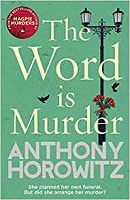
‘Latent footprints,’ he replied. ‘They need to eliminate you from the enquiry.’ The Word is Murder (p. 208), Anthony Horowitz, Arrow 2018 |
|
To distance the narrator from what's being reported
The tone of the distancing rendered by the quote marks will depend on narrative intent. Perhaps the voice is sarcastic. Or the author might want the reader to suspend belief by indicating that a character considers a word or phrase unreliable.
Imagine the character is saying so-called or supposed or allegedly before the word in quotes.
'What about your friends? Didn't they help?' Molly said.
Peter almost laughed. The last time his 'friends' had phoned or visited had been over six months ago. Two had wanted money, Another needed business advice. A fourth had spent the evening flirting with his now ex-wife.
Peter almost laughed. The last time his 'friends' had phoned or visited had been over six months ago. Two had wanted money, Another needed business advice. A fourth had spent the evening flirting with his now ex-wife.
A word of caution: Don't be tempted to differentiate distancing terms in the narrative from dialogue by using an alternate style. If there are double speech marks around the dialogue, there should be double marks around the distancing words.
NON-STANDARD (USING DOUBLES AS BASE STYLE)
"What about your friends? Didn't they help?" Molly said.
Peter almost laughed. The last time his 'friends' had phoned or visited had been over six months ago. Two had wanted money, Another needed business advice. A fourth had spent the evening flirting with his now ex-wife.
STANDARD (USING DOUBLES AS BASE STYLE)
"What about your friends? Didn't they help?" Molly said.
Peter almost laughed. The last time his "friends" had phoned or visited had been over six months ago. Two had wanted money, Another needed business advice. A fourth had spent the evening flirting with his now ex-wife.
"What about your friends? Didn't they help?" Molly said.
Peter almost laughed. The last time his 'friends' had phoned or visited had been over six months ago. Two had wanted money, Another needed business advice. A fourth had spent the evening flirting with his now ex-wife.
STANDARD (USING DOUBLES AS BASE STYLE)
"What about your friends? Didn't they help?" Molly said.
Peter almost laughed. The last time his "friends" had phoned or visited had been over six months ago. Two had wanted money, Another needed business advice. A fourth had spent the evening flirting with his now ex-wife.
To denote song titles and other works
Quote marks are also used to identify certain published works such as song titles and book chapter titles.
So, for example, if a writer is referring to an album or book title, this is rendered in italic. However, when it comes to a song on an album, or a chapter in a book, it's conventional to use quote marks.
Jamie pulled the vinyl from its sleeve. The White Album. His favourite. Well, 'Back in the USSR' anyway. He'd never admit it but he didn't much care for the other songs.
Omitting a closing quote mark in dialogue
There's one occasion where it's acceptable to omit the closing speech mark in dialogue: same speaker, new paragraph.
So, if you want your dialogue to take a new paragraph while retaining the current speaker, use a quotation mark at start of the new line but omit the closing one at the end of the previous paragraph.
|
‘[…] My father described the regular pom-pom-pom of the cannons and the increasingly high-pitched wails of the planes as they dived. He said he’d heard them every night since.
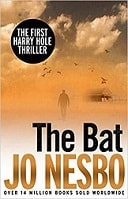
‘The last day of the battle he was standing on the bridge when they saw a plane emerging. […] Then he jumped overboard and was gone.’ The Bat (p. 251), Jo Nesbo, Vintage, 2013 |
|
Single versus double quote marks
There’s no rule, just convention.
There are lots of Englishes: US, UK, Canadian, Australian, New Zealand, South African, Indian, etc. Each has its own preferences and idiosyncrasies.
Focus on which English your audience will expect, and punctuate your writing accordingly. Whichever style you choose, the main thing is be consistent.
- In the UK, it’s more common to use single quote marks. And if there’s a quote within the quote, that’s a double. You might hear quotes within quotes called nested quotes.
- In US English it’s conventional to use double quote marks with nested singles.
|
Ray studied his drink and narrowed his eyes. ‘You can be cruel sometimes, you know. I don’t know where you got it from. “How sharper than a serpent’s tooth …” Your mother didn’t have a cruel bone in her body.’
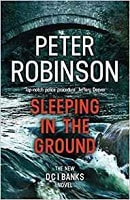
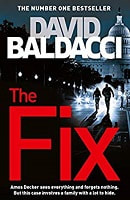
Sleeping in the Ground (p. 261), Peter Robinson, Hodder & Stoughton, 2017 “I had no idea why he was bringing that up now. So when I asked him he said, ‘Remember when the going got tough, who was there for you. Remember your old man was right there holding your hand. Always think of me trying to do the right thing, honey. Always. No matter what.’” The Fix (p. 428), David Baldacci, Pan Books, 2017 |
|
If you choose double quote marks, use the correct symbol, not two singles.
Straight versus curly quote marks
Curly quote marks are more conventionally known as smart quotes.
It’s conventional in mainstream publishing to use smart or curly quotation marks, not unidirectional ones.

Changing straight quotes to smart quotes is one of the initial clean-up jobs an editor will carry out when they start work on a file. To prevent the problem occurring from the minute you begin typing:
If you’ve pasted material into your book from elsewhere, or you didn’t check autocorrect options before you began typing, there might be some rogue unidirectional marks in your file. To change them quickly, do a global find/replace:
The closing quote mark in relation to other punctuation
In fiction, punctuation related to dialogue is placed similarly whether you're writing in US or UK style: within the quote marks.
Here are some examples:
- Go to FILE and select OPTIONS
- Select PROOFING, then click on the AUTOCORRECT OPTIONS button
- Choose the AUTOFORMAT AS YOU TYPE tab
- Make sure there’s a tick in the "STRAIGHT QUOTES" WITH “SMART QUOTES” box
- Click on OK
If you’ve pasted material into your book from elsewhere, or you didn’t check autocorrect options before you began typing, there might be some rogue unidirectional marks in your file. To change them quickly, do a global find/replace:
- Select CTRL+H on your keyboard to open FIND AND REPLACE
- Type a quotation mark into the FIND WHAT box
- Type the same quotation mark into the REPLACE WITH box
- Click on the REPLACE ALL button
The closing quote mark in relation to other punctuation
In fiction, punctuation related to dialogue is placed similarly whether you're writing in US or UK style: within the quote marks.
Here are some examples:
- "Don't move a muscle," Stephen said.
- "My God! Is that Jonathan? He looks fabulous."
- “Maybe you don't think we've met but I can assure—”
- Dave glanced at the signature tattoo on the Matt’s hand. ‘That looks familiar. Who inked you?’
- ‘Never.’ I sized up the door and the window. ‘I love you ...'
However, there's a difference when it comes to distancing or cited works. Note the different placement of the commas and full stops in the US and UK examples. In US English, the commas come before the closing quotation marks; in UK English, they come after.
- US English convention: Peter's "friends," the ones who hadn't bothered to find out if he was okay after his wife ditched him, seemed oddly keen to get in touch now that he'd won the lottery.
- UK English convention: Peter's 'friends', the ones who hadn't bothered to find out if he was okay after his wife ditched him, seemed oddly keen to get in touch now that he'd won the lottery.
- US English convention: "Favourite Jimi Hendrix songs? 'Foxy Lady,' 'Hey Joe,' and 'Purple Haze.'"
- UK English convention: 'Favourite Jimi Hendrix songs? "Foxy Lady", "Hey Joe", and 'Purple Haze".'
When not to use quote marks
There are 2 issues to consider here:
- Thoughts
- Emphasis
Thoughts
CMOS at section 13.43 says you can use quote marks to indicate thought, imagined dialogue and other internal discourse if you want to. However, I recommend you don't. For one thing, I can’t remember the last time I saw this approach used in commercial fiction coming out of a mainstream publisher’s stable.
But the best reason for not putting thoughts in quote marks is because it might confuse your reader. The beauty of quote marks – or speech marks – is that they indicate speech. Let them do their job!
Emphasis
It can be tempting to use quote marks in your writing to draw attention to a word or phrase, but it’s rarely necessary and could even have the opposite effect to what you intended. It works instead as a distancing tool, as discussed above.
If you’re tempted to use quote marks for emphasis, imagine saying the sentence out loud, and making air quotes with your fingers as you speak. Would your character/narrator say it like that? If the answer's no, leave out the quote marks. Italic will work better. Or recast your dialogue so that the reader can work out where to place the stress themselves.
Summing up
If in doubt about how to use quote marks for your book, consult a style manual. I recommend the Chicago Manual of Style, the Penguin Guide to Punctuation and New Hart’s Rules, all of which offer industry-standard guidance.
Fancy listening instead?
If you'd prefer to listen to the advice offered here, Denise Cowle (a non-fiction editor) and I chat about how to use quote marks in all types of writing on The Editing Podcast. You can listen right here or via Apple Podcasts, Spotify or your favourite podcast platform
If you'd prefer to listen to the advice offered here, Denise Cowle (a non-fiction editor) and I chat about how to use quote marks in all types of writing on The Editing Podcast. You can listen right here or via Apple Podcasts, Spotify or your favourite podcast platform
Louise Harnby is a line editor, copyeditor and proofreader who specializes in working with crime, mystery, suspense and thriller writers.
She is an Advanced Professional Member of the Chartered Institute of Editing and Proofreading (CIEP), a member of ACES, a Partner Member of The Alliance of Independent Authors (ALLi), and co-hosts The Editing Podcast.
She is an Advanced Professional Member of the Chartered Institute of Editing and Proofreading (CIEP), a member of ACES, a Partner Member of The Alliance of Independent Authors (ALLi), and co-hosts The Editing Podcast.
- Get in touch: Louise Harnby | Fiction Editor & Proofreader
- Connect: Twitter at @LouiseHarnby, Facebook and LinkedIn
- Learn: Books and courses
- Discover: Resources for authors and editors
Story-level critiques focus on the big picture – plot, pace, characterization, voice. Line critiques evaluate a book at a micro level, focusing on sentence construction, word choice, and readability. Here’s an overview of what to expect.
Story first ...
Think of your book as a construction project.
First you lay the foundations and build the walls – writing and redrafting to ensure the structure of your storytelling is sound. It’s where you and your editor (if you have one) focus on the big-picture stuff such as:
At this macro stage, you might end up adding, deleting or shifting sections of your prose.
Some authors do their own structural editing because they’re good at it and have studied story craft via writing courses, groups or books. Others seek professional help, either because they’re at an earlier stage of their authorial journey or because they feel they’re too close to the book to see the problems.
One thing’s for sure – there’s no right or wrong way. Every writer has to make their own choices.
If a full, done-for-you developmental (or structural) edit isn’t the path you take, you might still decide to work with a specialist editor who analyses your book and provides a detailed report on its strengths and weaknesses at story level, and offers suggestions about how to improve your writing.
That’s where story-level critiques come into play. You might also hear them called manuscript evaluations and manuscript assessments.
Think of your book as a construction project.
First you lay the foundations and build the walls – writing and redrafting to ensure the structure of your storytelling is sound. It’s where you and your editor (if you have one) focus on the big-picture stuff such as:
- Plot
- Pace
- Characterization
- Voice
- Tense choices
- Viewpoint decisions
At this macro stage, you might end up adding, deleting or shifting sections of your prose.
Some authors do their own structural editing because they’re good at it and have studied story craft via writing courses, groups or books. Others seek professional help, either because they’re at an earlier stage of their authorial journey or because they feel they’re too close to the book to see the problems.
One thing’s for sure – there’s no right or wrong way. Every writer has to make their own choices.
If a full, done-for-you developmental (or structural) edit isn’t the path you take, you might still decide to work with a specialist editor who analyses your book and provides a detailed report on its strengths and weaknesses at story level, and offers suggestions about how to improve your writing.
That’s where story-level critiques come into play. You might also hear them called manuscript evaluations and manuscript assessments.
Line level second ...
Once the foundations and walls are in place, it’s plastering time – smoothing at sentence level to ensure that a reader’s journey through the pages is satisfying. In a sense, it’s still structural work but at a micro level. This is where you (and your editor if you have one) focus on nuances such as:
Again, some authors do their own line editing because they’re good at it and have studied line craft via writing courses, groups or books. Others seek help.
If a full, done-for-you line- and copyedit isn’t an option, a line critique could be just the ticket.
A line critique, like its story-level sister, is an assessment or evaluation of your story but at sentence level. Your report will include examples from your novel that show what’s holding you back.
You’ll also be offered suggestions on how you can fix any problems identified. Then you can implement what you learn throughout the rest of your book.
Once the foundations and walls are in place, it’s plastering time – smoothing at sentence level to ensure that a reader’s journey through the pages is satisfying. In a sense, it’s still structural work but at a micro level. This is where you (and your editor if you have one) focus on nuances such as:
- Viewpoint
- Spelling, grammar, syntax and punctuation
- Dialogue
- Narrative readability
- Character description
- Thoughts
- Action beats
- Shown and told prose
- Tenses
- Formatting
Again, some authors do their own line editing because they’re good at it and have studied line craft via writing courses, groups or books. Others seek help.
If a full, done-for-you line- and copyedit isn’t an option, a line critique could be just the ticket.
A line critique, like its story-level sister, is an assessment or evaluation of your story but at sentence level. Your report will include examples from your novel that show what’s holding you back.
You’ll also be offered suggestions on how you can fix any problems identified. Then you can implement what you learn throughout the rest of your book.
Critiques are about learning, not criticizing
Some authors are nervous about critiques. Pro editors get it – it can be tough to put your book in the hands of another and ask them to tell you what’s working and what’s not, especially when you’ve put in so much hard work.
The thing to remember is that a critique (whether at sentence or story level) is not about criticism. It’s about identifying strengths and weaknesses, and offering solutions so that you can move forward to the next stage of your publishing journey with confidence.
And critiques are a long-term investment. They enable you to improve your self-editing skills. That’ll save you time and money further down the line because anyone else you commission will have less to do.
The line critique: the process and the report
What follows is an overview of the way I handle line critiques. Every editor has their own process, but the basic principles will be similar.
1. The service: Mini line critique
Authors email a Word file comprising, say, 5K words of their novel. It’s in a writer’s best interest to include a section that includes both narrative and dialogue. That way we can assess whether both are working effectively.
Furthermore, if there are multiple viewpoint characters in the novel, and different viewpoint styles and tenses have been used, a sample that represents these choices will enable us to provide a report that evaluates the success of those decisions.
2. First readthrough
The first stage of the process is a complete readthrough of the 5K words. It’s not about micro-level reporting, not yet. Rather, we’re getting a sense of the author’s writing style, the characters’ voices, and the flow of the narrative.
3. Second pass: Identification tagging
We go back to the beginning and start the analytical process, identifying the strengths and weaknesses of the author’s line craft.
We work through the sample, tagging sections of the text with Word’s commenting tool. The author won’t see these tags – they’re just a tool that allow us to locate the sections we’ll pull from the text and into the report for demonstration.
The text in the image below has been blurred in order to respect confidentiality, but you can see the tagging process in the margins of just one page of one of my reports.
Some authors are nervous about critiques. Pro editors get it – it can be tough to put your book in the hands of another and ask them to tell you what’s working and what’s not, especially when you’ve put in so much hard work.
The thing to remember is that a critique (whether at sentence or story level) is not about criticism. It’s about identifying strengths and weaknesses, and offering solutions so that you can move forward to the next stage of your publishing journey with confidence.
And critiques are a long-term investment. They enable you to improve your self-editing skills. That’ll save you time and money further down the line because anyone else you commission will have less to do.
The line critique: the process and the report
What follows is an overview of the way I handle line critiques. Every editor has their own process, but the basic principles will be similar.
1. The service: Mini line critique
Authors email a Word file comprising, say, 5K words of their novel. It’s in a writer’s best interest to include a section that includes both narrative and dialogue. That way we can assess whether both are working effectively.
Furthermore, if there are multiple viewpoint characters in the novel, and different viewpoint styles and tenses have been used, a sample that represents these choices will enable us to provide a report that evaluates the success of those decisions.
2. First readthrough
The first stage of the process is a complete readthrough of the 5K words. It’s not about micro-level reporting, not yet. Rather, we’re getting a sense of the author’s writing style, the characters’ voices, and the flow of the narrative.
3. Second pass: Identification tagging
We go back to the beginning and start the analytical process, identifying the strengths and weaknesses of the author’s line craft.
We work through the sample, tagging sections of the text with Word’s commenting tool. The author won’t see these tags – they’re just a tool that allow us to locate the sections we’ll pull from the text and into the report for demonstration.
The text in the image below has been blurred in order to respect confidentiality, but you can see the tagging process in the margins of just one page of one of my reports.
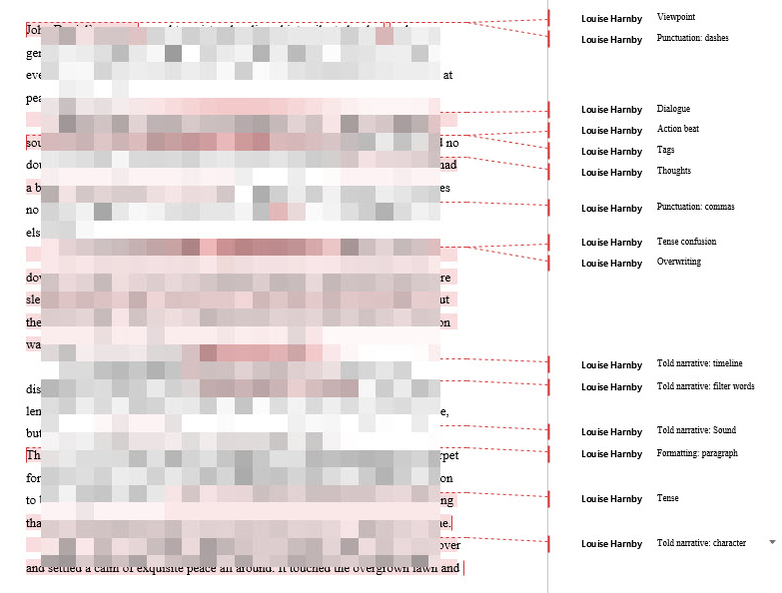
TAGGING IN A MINI FICTION LINE CRITIQUE
4. Writing the report
Now that we’ve tagged the sample, we can create a report. Line critiques are usually between 20 and 30 pages long, depending on the length of the text samples the editor is pulling in and offering recasts for.
Each report is divided into sections that address the strengths and weaknesses of the following:
NARRATIVE
DIALOGUE AND THOUGHTS
TECHNICAL ELEMENTS
FORMATTING
The tags in the sample allow editors to search for and locate the text we want to use as examples of good practice and to highlight areas with improvement potential.
Here’s an example of one of those sections (I’ve disguised the identifying traits of the original in order to respect the author’s confidentiality):
Now that we’ve tagged the sample, we can create a report. Line critiques are usually between 20 and 30 pages long, depending on the length of the text samples the editor is pulling in and offering recasts for.
Each report is divided into sections that address the strengths and weaknesses of the following:
NARRATIVE
- Clarity of narrative viewpoint
- Tense choice
- Showing and telling
- Character description
- Filter words
- Action beats
- Sentence length, flow and rhythm
- Adverbs and adverbial phrases
- Tentative language in relation to a told narrative
DIALOGUE AND THOUGHTS
- Voice, mood and intention
- Dialogue layout
- Dialogue punctuation
- Effectiveness of dialogue tags
- How thoughts are styled
TECHNICAL ELEMENTS
- Spelling
- Punctuation
- Grammar
- Syntax
FORMATTING
- Pre-proof layout recommendations
- Using Word’s styles tool
The tags in the sample allow editors to search for and locate the text we want to use as examples of good practice and to highlight areas with improvement potential.
Here’s an example of one of those sections (I’ve disguised the identifying traits of the original in order to respect the author’s confidentiality):
CLARITY OF NARRATIVE VIEWPOINT
What worked
You held narrative viewpoint well and I commend your decision to separate the two viewpoint characters with chapters. This ensured the narrative voices remained distinct.
Using a present-tense second-person POV for your transgressor and a past-tense first-person POV for your protagonist worked extremely well. Have you read Complicity by Iain Banks? He does the same thing! It’s effective because it makes us wonder whether that first-person narrative is reliable, though you don’t give the game away until the denouement, which I loved.
The second-person POV also lent a rather creepy voyeurism to the transgressor chapters, and though these were demanding to read, you did give your readers plenty of breathing space with the contrasting protagonist chapters. Nicely done!
What could be improved
Your protagonist narrative was laboured at times because of the abundance of ‘I’. Overusing this pronoun can lead to an overly told narrative in which the reader is forced to experience everything via the character’s experience of it. This can be distancing. I’m not suggesting you remove every instance of ‘I’ plus the verb – not at all. Instead, consider toning it down and removing some of the filter words so that the reader can experience some of the doing with the character rather than through the character. Here are two examples and suggested fixes:
Notice how I’ve suggested removing ‘I saw’, which feels redundant given that we already know that Marcus is looking up, and only tells us of more seeing being done. Instead, you can focus the reader’s attention on the immediacy of what’s seen once the looking up’s happened: the movement of the shooting star. That allows you to show readers what Marcus sees rather than telling them.
Notice how in the original there’s a lot of telling of what ‘I’ did. I like your use of a strong verb to introduce tension – ‘scuttled’ – but that tension dissipates with the more distant told narrative that follows. There’s telling of sound, smell, and realization. I’ve suggested you tighten up the paragraph by retaining the original anchor in which Marcus hides; perhaps follow that with a shown narrative that, again, allows the reader to experience the sounds and smells at the same time as Marcus rather than through his ears, nose and brain’s doing hearing, smelling and realizing.
Recommendation
Bear in mind that a first-person narrative, by definition, puts the reader in the character’s head. If you keep that in mind, you’ll save yourself a lot of work because you’ll need fewer words on the page.
Have a read through all the protagonist chapters and consider where you can tighten up the prose in order to limit some of the telling of doing being done. You can still anchor the first-person viewpoint with ‘I’ in places, of course, but you might recast some of writing that follows with shown action.
What worked
You held narrative viewpoint well and I commend your decision to separate the two viewpoint characters with chapters. This ensured the narrative voices remained distinct.
Using a present-tense second-person POV for your transgressor and a past-tense first-person POV for your protagonist worked extremely well. Have you read Complicity by Iain Banks? He does the same thing! It’s effective because it makes us wonder whether that first-person narrative is reliable, though you don’t give the game away until the denouement, which I loved.
The second-person POV also lent a rather creepy voyeurism to the transgressor chapters, and though these were demanding to read, you did give your readers plenty of breathing space with the contrasting protagonist chapters. Nicely done!
What could be improved
Your protagonist narrative was laboured at times because of the abundance of ‘I’. Overusing this pronoun can lead to an overly told narrative in which the reader is forced to experience everything via the character’s experience of it. This can be distancing. I’m not suggesting you remove every instance of ‘I’ plus the verb – not at all. Instead, consider toning it down and removing some of the filter words so that the reader can experience some of the doing with the character rather than through the character. Here are two examples and suggested fixes:
- ORIGINAL (p. 14): I looked up and saw a shooting star zipping through the night sky.
- SUGGESTED EDIT: I looked up. A shooting star zipped through the night sky.
Notice how I’ve suggested removing ‘I saw’, which feels redundant given that we already know that Marcus is looking up, and only tells us of more seeing being done. Instead, you can focus the reader’s attention on the immediacy of what’s seen once the looking up’s happened: the movement of the shooting star. That allows you to show readers what Marcus sees rather than telling them.
- ORIGINAL (p. 24): I scuttled towards the garage and hid behind a large oak tree. I heard the sound of Phil’s boots on the gravel underfoot and smelled the sharp aroma of his awful aftershave. I realized he was close, about two feet away from me.
- SUGGESTED EDIT: I scuttled towards the garage and hid behind a large oak. Gravel crunched. Rank aftershave tickled my nose. Phil was close, a couple of feet at most.
Notice how in the original there’s a lot of telling of what ‘I’ did. I like your use of a strong verb to introduce tension – ‘scuttled’ – but that tension dissipates with the more distant told narrative that follows. There’s telling of sound, smell, and realization. I’ve suggested you tighten up the paragraph by retaining the original anchor in which Marcus hides; perhaps follow that with a shown narrative that, again, allows the reader to experience the sounds and smells at the same time as Marcus rather than through his ears, nose and brain’s doing hearing, smelling and realizing.
Recommendation
Bear in mind that a first-person narrative, by definition, puts the reader in the character’s head. If you keep that in mind, you’ll save yourself a lot of work because you’ll need fewer words on the page.
Have a read through all the protagonist chapters and consider where you can tighten up the prose in order to limit some of the telling of doing being done. You can still anchor the first-person viewpoint with ‘I’ in places, of course, but you might recast some of writing that follows with shown action.
5. Wrapping up and emailing the report
When the report is complete, we save it as a PDF and email it to the author. PDF is the tool of choice for many editors because it can’t be edited. If the client wishes to refer back to it during future writing projects, they can do so safe in the knowledge that nothing’s been accidentally removed.
Summing up
If you want to hone your line craft and polish your book at sentence level, but a full line- and copyedit is beyond your budget, consider a more affordable alternative: the line critique.
Think of a critique as another form of authorial development, of book-craft study. And what you learn from your critique won’t be something you can apply just to the current book. It’s a tool you can use with every story you write thereafter.
And here’s a free booklet that outlines the various levels of editing. Just click on the cover to get your copy (and, no, you don’t have to give me your email address!).
Louise Harnby is a line editor, copyeditor and proofreader who specializes in working with crime, mystery, suspense and thriller writers.
She is an Advanced Professional Member of the Chartered Institute of Editing and Proofreading (CIEP), a member of ACES, a Partner Member of The Alliance of Independent Authors (ALLi), and co-hosts The Editing Podcast.
Visit her business website at Louise Harnby | Fiction Editor & Proofreader, say hello on Twitter at @LouiseHarnby, connect via Facebook and LinkedIn, and check out her books and courses.
She is an Advanced Professional Member of the Chartered Institute of Editing and Proofreading (CIEP), a member of ACES, a Partner Member of The Alliance of Independent Authors (ALLi), and co-hosts The Editing Podcast.
Visit her business website at Louise Harnby | Fiction Editor & Proofreader, say hello on Twitter at @LouiseHarnby, connect via Facebook and LinkedIn, and check out her books and courses.
It doesn’t matter a jot to me which kind of English an author wants to write in. What does matter is their readers' expectations and perceptions, and being consistent.
This free booklet shows you how to stay on track. To get it, head over to the Grammar and Spelling section of my Resource Centre.
This free booklet shows you how to stay on track. To get it, head over to the Grammar and Spelling section of my Resource Centre.
Louise Harnby is a line editor, copyeditor and proofreader who specializes in working with crime, mystery, suspense and thriller writers.
She is an Advanced Professional Member of the Chartered Institute of Editing and Proofreading (CIEP), a member of ACES, a Partner Member of The Alliance of Independent Authors (ALLi), and co-hosts The Editing Podcast.
She is an Advanced Professional Member of the Chartered Institute of Editing and Proofreading (CIEP), a member of ACES, a Partner Member of The Alliance of Independent Authors (ALLi), and co-hosts The Editing Podcast.
- Get in touch: Louise Harnby | Fiction Editor & Proofreader
- Connect: Twitter at @LouiseHarnby, Facebook and LinkedIn
- Learn: Books and courses
- Discover: Resources for authors and editors
If your characters seem or appear to be doing or feeling something – probably, maybe, perhaps – then you might be using half measures to express a good chunk of that action or emotion. Uncertainty can drag a story down. Here’s how to edit for it at line level.
In fiction, tentative language can lead to the following:
Authors sometimes introduce tentative language into a novel because:
Tentative language: words to watch out for
I’m not suggesting you remove every tentative word; some might be deliberate and necessary. More likely, you’ll be checking that your prose isn’t rife with them.
Still, these little blighters can slip in accidentally and it’s worth taking the time to root them out and decide whether to give them space on your page or remove them.
Here are some of the words (or word groups) to watch out for:
When there’s a problem, it can sometimes be fixed with a simple deletion, or a stronger verb.
When viewpoint, tension and reader immersion are at stake, more intervention might be required.
How to fix it without dropping viewpoint
I see the likes of seemed, appeared, and looked as if creeping frequently into line editing projects for less experienced authors because they want to hold viewpoint.
Hats off to them – I’ll take a seemed over a head-hop any day of the week! Still, there might be a better fix.
Here’s a framework you can use to recast in a way that removes the uncertainty but keeps the narrative alive.
- Flatness: Tension and dynamism are reduced
- Woolliness: The narrative voice can’t make its mind up
- Distance: The reader is pulled away from the story
Authors sometimes introduce tentative language into a novel because:
- They’re afraid of dropping viewpoint
- Their narrative voice lacks confidence
- They think it’s appropriate
Tentative language: words to watch out for
I’m not suggesting you remove every tentative word; some might be deliberate and necessary. More likely, you’ll be checking that your prose isn’t rife with them.
Still, these little blighters can slip in accidentally and it’s worth taking the time to root them out and decide whether to give them space on your page or remove them.
Here are some of the words (or word groups) to watch out for:
- as if to
- almost as if
- appeared to
- considered
- could
- hoped
- looked as if/looked like
- maybe
- might
- perhaps
- presumably
- probably
- seemed
- thought
- wondered
When there’s a problem, it can sometimes be fixed with a simple deletion, or a stronger verb.
When viewpoint, tension and reader immersion are at stake, more intervention might be required.
How to fix it without dropping viewpoint
I see the likes of seemed, appeared, and looked as if creeping frequently into line editing projects for less experienced authors because they want to hold viewpoint.
Hats off to them – I’ll take a seemed over a head-hop any day of the week! Still, there might be a better fix.
Here’s a framework you can use to recast in a way that removes the uncertainty but keeps the narrative alive.
|
Fixing framework that holds viewpoint
|
|
In the examples below, I’ve used this framework to craft a shown narrative rather than an assumed one. The original text is based on real examples that have been adapted to respect confidentiality.
EXAMPLE 1
Luke peeked around the headstone. The hooded man seemed frustrated.
Luke can’t know for sure how the other character is feeling, and the author covers this with seemed. That’s all well and good; removing it would flip the reader from Luke’s internal experience to the hooded man’s.
The sentence is flat though. Yes, we readers are still in Luke’s head but it’s not a particularly interesting space. There’s no tension in our observations from his hiding place.
Here’s how the fixing framework helped me recast in a way that shows readers the hooded man’s assumed frustration, as seen by Luke:
The sentence is flat though. Yes, we readers are still in Luke’s head but it’s not a particularly interesting space. There’s no tension in our observations from his hiding place.
Here’s how the fixing framework helped me recast in a way that shows readers the hooded man’s assumed frustration, as seen by Luke:
Luke peeked around the headstone. The hooded man glanced at his watch and swore under his breath. His foot lashed out, knocking over a grave vase. The stagnant water stunk and Luke wrinkled his nose.
In the revised version, we see the hooded man’s emotion through his action. That helps with the flatness but also with narrative distance; we stay close to Luke because we experience not only what he sees but also what he smells. It’s more immersive.
EXAMPLE 2
Thom turned and tripped over the blind guy’s white stick – Mikey, someone had called him. He looked at Mikey, who seemed almost to be picking out Thom’s facial features in his mind.
Thom is the viewpoint character so we can’t know what’s going on in Mikey’s head. And that means we can’t just remove the tentative words and change the verb to picked.
But there’s a problem. If Mikey were the viewpoint character, his imagining Thom’s face would make for an interesting narrative. However, it’s Thom’s head we’re in. In this case, the assumption seems off, too big to believe.
When I listen to someone speaking, I tend to use my eyes to focus on their mouths; my friend with restricted vision tends to move his head so that his ears are more in play. Sighted people in his company need to be aware that his eyes don’t focus directly on a speaker even though he’s fully engaged.
If we place this experience within the fixing framework, we can imagine Mikey’s physicality and the effect on Thom, the viewpoint character.
But there’s a problem. If Mikey were the viewpoint character, his imagining Thom’s face would make for an interesting narrative. However, it’s Thom’s head we’re in. In this case, the assumption seems off, too big to believe.
When I listen to someone speaking, I tend to use my eyes to focus on their mouths; my friend with restricted vision tends to move his head so that his ears are more in play. Sighted people in his company need to be aware that his eyes don’t focus directly on a speaker even though he’s fully engaged.
If we place this experience within the fixing framework, we can imagine Mikey’s physicality and the effect on Thom, the viewpoint character.
Thom turned and tripped over the blind guy’s white stick – Mikey, someone had called him. Mikey tilted his head, gaze off-centre, ear trained on Thom’s blustered apology.
In the revised version, the assumption is gone. Instead, readers are shown what Mikey does and what Thom experiences. Viewpoint is intact, and the clunk has gone.
How to fix an insecure narrative voice
In the examples below, the tentative words have crept in because the authors are still developing the confidence to make every word count.
Useful tools of the trade include deletion, stronger verbs, smoother recasts, and free indirect style.
The fixes below are suggestions only, offered so you have an idea of what to look out for and how you might tackle the solution. The approach you use will depend on your writing style and the mood of the scene.
When tentative language creates a flat sentence
In these examples, the tentative mood is justified but the sentences are rather flat. We need to inject tension.
|
Original
|
Tamsin Johns came to mind. He wondered what her story was.
|
|
Free indirect style
|
Tamsin Johns came to mind. What the hell was her story?
|
|
Original
|
Confused, Ava wondered if he’d thought she was going to rob him.
|
|
Recast
|
Ava shook her head. It was odd, like the guy had thought she was going to rob him.
|
|
Original
|
Arty thought the new door seemed not to fit the others in the old house.
|
|
Recast
|
Arty touched the cherrywood door. It was different to the others, the grain fine and straight, the lacquer smooth under his fingertips.
|
When tentative language creates a woolly sentence
In these examples, the tentative words relate to viewpoint characters’ experiences. The uncertainty introduces distance because it pulls the reader out of their experience. It makes us say, ‘Why the lack of commitment? Doesn’t the viewpoint character know?’
Once more, I’ve used real examples and adapted them to disguise the originals.
In these examples, the tentative words relate to viewpoint characters’ experiences. The uncertainty introduces distance because it pulls the reader out of their experience. It makes us say, ‘Why the lack of commitment? Doesn’t the viewpoint character know?’
Once more, I’ve used real examples and adapted them to disguise the originals.
|
Original
|
Her body appeared to hum with fear.
|
|
Deletion
|
Her body hummed with fear.
|
|
Original
|
Eleanor gasped as the craft shot into the air and was gone in what seemed like an instant.
|
|
Deletion
|
Eleanor gasped as the craft shot into the air and was gone in an instant.
|
|
Stronger verb
|
Eleanor gasped as the craft shot into the air and vanished.
|
|
Original
|
Debs scrolled through her contacts, found his name and hit DELETE. Hilary probably thought she could do better, and Debs agreed.
|
|
Deletion
|
Debs scrolled through her contacts, found his name and hit DELETE. Hilary had said she could do better, and Debs agreed.
|
When tentative language works
In these examples, the tentative words work. They show the reader that the viewpoint character is guessing.
In these examples, the tentative words work. They show the reader that the viewpoint character is guessing.
She glowered as if to say, You really think there’s enough meat on that plate?
Mark glanced at the blue car. There were two people inside, neither familiar. Might be undercover cops, but he legged it anyway … just in case.
Mark glanced at the blue car. There were two people inside, neither familiar. Might be undercover cops, but he legged it anyway … just in case.
A haze hung in the air – maybe brick dust from the fallen building or ash from the fire. It stung his eyes and irritated his throat.
The news knocked the breath out of her. Jamie had seemed happy the last time they’d met. Ecstatic even, what with the new job, the kayaking holiday, that girl he’d met the week before.
She combed the beach for Ben’s blue sun hat, pushing the unthinkable to the back of her mind. Thought it through. Probably with Mark at the rockpool. The café maybe. Or the groyne or the dunes. Her head spun left, right, left again.
Summing up
As soon as a writer or editor begins line editing fiction, subjectivity comes into play. It’s rare that there’s a right or a wrong way.
With that in mind, don’t ban tentative language in your prose; just watch out for it. It may well have the right to be there, though it shouldn’t trump tension or add clunk.
If removing it messes with viewpoint, use the fixing framework to craft an alternative shown narrative.
Louise Harnby is a line editor, copyeditor and proofreader who specializes in working with crime, mystery, suspense and thriller writers.
She is an Advanced Professional Member of the Chartered Institute of Editing and Proofreading (CIEP), a member of ACES, a Partner Member of The Alliance of Independent Authors (ALLi), and co-hosts The Editing Podcast.
She is an Advanced Professional Member of the Chartered Institute of Editing and Proofreading (CIEP), a member of ACES, a Partner Member of The Alliance of Independent Authors (ALLi), and co-hosts The Editing Podcast.
- Get in touch: Louise Harnby | Fiction Editor & Proofreader
- Connect: Twitter at @LouiseHarnby, Facebook and LinkedIn
- Learn: Books and courses
- Discover: Resources for authors and editors
You have a choice when it comes to tense in your fiction’s narrative. Here’s an overview of the tenses you’ll most likely be working with, and some guidance on the benefits and challenges of each.
The present tense
Here’s an overview of the present tense, with basic examples:
The present is immediate, and that right-nowness forces the reader to stick close to the viewpoint character. We’re in the moment with them. That’s why it appeals to some fiction authors, and why others find it restrictive.
With second-person viewpoints, the present tense is intensely voyeuristic, invasive even. Here’s an excerpt from Iain Banks’s Complicity (p. 60). This is a transgressor narrative with a difference – the narrator is anonymous, at least until later in the novel:
Here’s an overview of the present tense, with basic examples:
- Simple present: I write a novel; he writes a novel
- Present progressive (also called present continuous): I am writing a novel; he is writing a novel
- Present perfect: I have written a novel; he has written a novel
- Present perfect progressive: I have been writing a novel; he has been writing a novel
The present is immediate, and that right-nowness forces the reader to stick close to the viewpoint character. We’re in the moment with them. That’s why it appeals to some fiction authors, and why others find it restrictive.
With second-person viewpoints, the present tense is intensely voyeuristic, invasive even. Here’s an excerpt from Iain Banks’s Complicity (p. 60). This is a transgressor narrative with a difference – the narrator is anonymous, at least until later in the novel:
|
You stand up, reach forward and take the neatly folded handkerchief out of the breast pocket of his jacket, flick it open and wipe the blade of the Marttiini on it until the knife is clean. The knife comes from Finland; that’s why the name has such a strange spelling. It hasn’t occurred to you before, but its nationality seems appropriate now and even funny in a grim sort of way; it’s Finnish and you’ve used it to finish Mr Persimmon.
|
|
And in this example from a later chapter (p. 90), we’re back with the protagonist. Here, the main narrative tense is present. The viewpoint is first-person:
The next day I scrounge a Lambert & Butler off Rose in the Foreign News section, smoke it at my desk and get a real hit off it, then feel disgusted with myself and vow that’s the last one I’m going to smoke.
RECOMMENDATION
The present tense is great if you want to shorten the distance between the reader and the viewpoint character.
Present tense works particularly well for short fiction because space is limited. I use it often in my own shorts and flashes because it enables me to pack an immersive punch quickly.
However, it’s tricky to manage if there are multiple viewpoint-character chapters or sections, all operating in the present tense. You’ll need to keep a close eye on the timelines so that the reader’s clear on what ‘now’ really means. If your plot twist hinges on deliberately duping them via your use of tense rather than story craft, you’ll break their trust.
The present tense can also be tiring for readers because it’s emotionally immersive. If you’re writing a novel, you might consider using it only for certain viewpoint characters – your transgressor or victim, for example.
In Let Me Lie, Clare Mackintosh mixes it up: the Anna-viewpoint chapters are set in first-person present; the Murray-viewpoint chapters are third-person past.
The past tense
Now let’s turn to the past tense, starting with some basic examples:
- Simple past: I wrote a novel; he wrote a novel
- Past progressive: I was writing a novel; he was writing a novel
- Past perfect: I had written a novel; he had written a novel
- Past perfect progressive: I had been writing a novel; he had been writing a novel
- Habitual past: I would write a chapter every week; he would write a chapter every week; I used to write a chapter every week; he used to write a chapter every week
The past tense is the choice of most contemporary commercial fiction writers. What’s interesting is that readers are so used to this style that they can still immerse themselves in a past-tense narrative as though the story is unfolding now.
Here’s an excerpt from T. M. Logan’s 29 Seconds (p. 73). We’re given a past-tense narrative with a third-person limited viewpoint (Sarah’s):
|
At the last moment, just as Sarah thought he was going to tear open her door and attack her, he turned and bent down to his injured friend. |
|
WHEN PAST TENSE FLOPS – UNDERSTANDING PAST PERFECT
Less experienced writers can end up in a pickle when referencing events that happened earlier than their novel’s now.
The crucial thing to remember is that when we set a novel in the past tense, anything that happens in the story’s past will likely need the past perfect, at least when the action is introduced.
|
What you want the reader to experience
|
What tense you should write in
|
|
Now – the present of your novel
|
Simple past or past progressive
(she stood; she was standing) |
|
Something that happened before now (i.e. in the novel’s past)
|
Past perfect
(she had stood; she had been standing) |
Here’s an excerpt from The Wife Between Us (p. 57) by Greer Hendricks and Sarah Pekkanen. This chapter’s primary narrative tense is past (see underlined verb):
|
She stood there for a moment, taking in the white Christmas lights Samantha had wound through the slats of her bed’s headboard, and the fuzzy green-and-blue rug the two of them had found rolled up by the curb of a posh apartment building on Fifth Avenue. “Is someone actually throwing this out?” Samantha had asked.
|
|
When we’re told that ‘She stood’, that’s the novel’s now. But when the narrator recalls events that happened further back in time (bold) – Samantha’s decorating her bed, and the two women’s procuring a rug – these need to be anchored in the past-perfect tense: had, had been.
When authors fail to anchor past events in a novel whose now is already set in the past tense, the reader will be confused.
RENDERING BYGONE ROUTINE – UNDERSTANDING HABITUAL PAST
Now and then, you might want to reference events from your novel’s past that happened routinely or habitually. This is where the habitual past tense comes into play, and the tools are would and used to.
This excerpt from The Templar's Garden by Catherine Clover illustrates the usage. The narrative is set in third-person past but the viewpoint character is recalling regular journeys taken earlier in her life:
|
Sometimes Père Charles would accompany me and we would explore the countryside around Brill or the wooded depths of Bernwood Forest. But lately the bookkeeping necessary for managing the Boarstall estate kept him occupied, and I was often unaccompanied on my frequent rides.
|
|
And in Time To Win (p. 62), Harry Brett uses the simple past and past progressive for the most part, but then Frank, the viewpoint character, recalls something he’d done habitually in former times:
|
Tatty was talking to Simon. Frank couldn’t hear what they were saying. He looked down the road, towards the harbour and the dead end, the industrial buildings laid low by the unexpected weight of late summer sun, and somewhere over to his left the top of Nelson’s Monument, clear of cloud for once. He used to enjoy driving down South Denes Road and curving back round onto South Beach Parade, accelerating past the old Pleasure Beach and into a different era.
|
|
Like the past perfect, the habitual past acts as an anchor, so that readers don’t mix up the reminiscence of a routine event with the novel’s now.
To see that confusion in action, replace ‘used to enjoy’ with the simple past: ‘enjoyed’. It reads as if Frank is enjoying driving down South Denes Road right now.
If you don’t want to use the habitual past, then an alternative anchor is necessary. Here I’ve added an anchoring clause and changed the tense to past perfect (he’d, or he had):
- Back in the day, he’d enjoyed driving down [...]
RECOMMENDATION
The past tense is flexible; it’s easier to shift narrative distance (the distance between the reader and the narrator) than is the case with the present tense, though this does increase the risk of flatter writing. Dramatic scenes – fights, escapes, arguments – could end up laboured if the writing isn’t lean and rich.
Still, it’s traditional and readers are used to it. No one will get tired of reading in the past as long as the line craft is strong.
Do take care, however, with rendering events that have taken place in your novel’s past. Use the past perfect or the habitual past when necessary to ensure your readers know what happened when.
Summing up
Write in the tense you feel most comfortable with, and that you think readers of your genre will be most comfortable reading. The past and the present both have their challenges and their advantages. The most important thing is that readers know where and when they are in the story.
Cited sources
- 29 Seconds, T. M. Logan, Zaffre, 2018
- Complicity, Iain Banks, Abacus, 1994
- The Templar’s Garden, Catherine Clover, The Holywell Press, 2017
- The Wife Between Us, Greer Hendricks and Sarah Pekkanen, Pan, 2018
- Time to Win, Harry Brett, Corsair, 2017
Louise Harnby is a line editor, copyeditor and proofreader who specializes in working with crime, mystery, suspense and thriller writers.
She is an Advanced Professional Member of the Chartered Institute of Editing and Proofreading (CIEP), a member of ACES, a Partner Member of The Alliance of Independent Authors (ALLi), and co-hosts The Editing Podcast.
She is an Advanced Professional Member of the Chartered Institute of Editing and Proofreading (CIEP), a member of ACES, a Partner Member of The Alliance of Independent Authors (ALLi), and co-hosts The Editing Podcast.
- Get in touch: Louise Harnby | Fiction Editor & Proofreader
- Connect: Twitter at @LouiseHarnby, Facebook and LinkedIn
- Learn: Books and courses
- Discover: Resources for authors and editors
Round brackets, or parentheses, crop up less frequently than many punctuation symbols in fiction writing, but that doesn’t mean we must ban them. This post explores two ways to make them work effectively.
What are round brackets?
This is what they look like: ( )
They always come in pairs, and act as alternatives to paired dashes or commas in fiction. They have other functions in non-fiction writing but I’ll leave that discussion to a non-fiction editor!
Compare these examples:
- The red-nosed reindeer (Rudolph was his name) had a very shiny nose.
- The red-nosed reindeer, Rudolph was his name, had a very shiny nose.
- The red-nosed reindeer – Rudolph was his name – had a very shiny nose.
- The red-nosed reindeer—Rudolph was his name—had a very shiny nose.
All of the above are grammatically correct, though paired brackets (like dashes) are stronger than commas, and more interruptive to the eye than both commas and dashes, probably because they’re used less frequently and associated more with non-fiction work.
Every writer will do well to ask themselves how their choice of parenthetical styling will affect the rhythm and clarity of their prose.
Every writer will also do well to ask themselves whether readers will be annoyed by them. Like serial commas, adverbs and the singular they, round brackets rarely pass a reader or an editor without evoking opinion. More on that later.
Brackets, full points and capitalization
Regardless of which English you’re using – British or American, for example – the rule is the same:
- If the bracketed information is included as part of a sentence, the full point comes after the closing bracket. The bracketed clause takes a lower-case initial letter unless it starts with a proper noun.
Detective Harnby typed up the report and dumped it on the desk in the chief-super’s office (and what a sty that was).
- If the bracketed information stands as a sentence in its own right, the full point comes before the closing bracket. The bracketed sentence takes an initial capital.
Detective Harnby typed up the report and dumped it on the desk in the chief-super’s office. (And what a sty that was.)
Danger, Will Robinson!
Round brackets in fiction garner strong opinion, usually negative.
The most-cited reason I’ve seen – and it’s a valid one – is that they pull readers out of a story. Given that there’s no reason on earth why you’d want to pull a reader out of a story, tread carefully.
Still, given that they’re not grammatically wrong, it’s only right that we should consider the ways in which round brackets might work in your fiction. The two I’ve seen most often are as follows:
- Satire – narrators poking fun
- Viewpoint shifts – narrators interrupting
Round brackets in fiction: Satire
For an example of how round brackets can be used for satirical purposes, we need look no further than Dickens.
In Our Mutual Friend (Wordsworth Editions, 1997), the viewpoint is omniscient. The scene is an ostentatious banquet hosted by the Veneerings. Dickens uses round brackets to set off narrative asides that poke fun at the guests and show them as the bumptious fools he believes them to be – and wants us to.
Here’s an excerpt from p. 11:
A mirror reflects the Veneering crest, in gold and eke in silver, frosted and also thawed, a camel-of-all-work. The Heralds’ College found out a crusading ancestor for Veneering, who bore a camel on his shield (or might have done it if he had thought of it),
In other words, the crest is a farce.
And one of the diners, a Mr Twemlow, is obsessed over whether he is Veneering’s ‘oldest friend’, though he would never admit to being bothered by such a thing.
Dickens’s bracketed snipe (p. 12) leaves us in no doubt about the man’s snobbery; it interrupts the dialogue of Lady Tippins, a frightful show-off whose ‘my dear’ sends Twemlow into a tizzy:
|
‘I assure you, my dear Veneering – ’
(Poor Twemlow’s hand approaches his forehead, for it would seem, now, that Lady Tippins is going to be his oldest friend.) ‘I assure you, my dear Veneering, that it is the oddest affair!’ |
|
This approach is unlikely to find favour with readers who bought your high-octane thriller expecting a rollercoaster ride. The external narrator’s voice is overwhelming, and in most contemporary commercial fiction it will slow readers down, drag them out of the story, and infuriate them.
Round brackets in fiction: Viewpoint shifts
Take a look at this example from Stephen King’s The Outsider (p. 252; Hodder, 2018):
|
With that taken care of, Holly went down to the hotel restaurant and ordered a light meal (she never even considered room service, which was always ridiculously expensive). She found a Mel Gibson film she hadn’t seen on the in-room movie menu, and ordered it – $9.99, which she would deduct from her report of expenses when she filed it.
|
|
The brackets are effective here precisely because they’re interruptive. The narrative viewpoint in this section is third-person; we see the world as Holly, the private investigator, experiences it.
Given that it’s third-person, our finding out something that Holly hasn’t considered shifts the narrative distance. Such a shift might jar under other circumstances because it yanks us out of Holly’s head.
King, however, is a master of viewpoint, and he writes his characters with a rich immediacy. Still, he finds ways to introduce flexibility seamlessly, and in this case it’s with round brackets to introduce his omniscient narrator.
The parentheses allow an external narrator to enter the story just for a moment – an all-seeing eye that tells us what Holly didn’t think – but that voice is cocooned safely within those round brackets, and is gone as soon as the reader’s eye passes over the closing symbol.
King’s an experienced writer. If you’re not, I recommend holding a single character viewpoint and steering clear of bracketed interruptions from another narrator.
Here are four ways we could recast the King excerpt:
Spaced en dash
With that taken care of, Holly went down to the hotel restaurant and ordered a light meal – no way was she paying room-service prices.
Closed-up em dash
With that taken care of, Holly went down to the hotel restaurant and ordered a light meal—no way was she paying room-service prices.
Semicolon
With that taken care of, Holly went down to the hotel restaurant and ordered a light meal; no way was she paying room-service prices.
Full point
With that taken care of, Holly went down to the hotel restaurant and ordered a light meal. No way was she paying room-service prices.
With that taken care of, Holly went down to the hotel restaurant and ordered a light meal – no way was she paying room-service prices.
Closed-up em dash
With that taken care of, Holly went down to the hotel restaurant and ordered a light meal—no way was she paying room-service prices.
Semicolon
With that taken care of, Holly went down to the hotel restaurant and ordered a light meal; no way was she paying room-service prices.
Full point
With that taken care of, Holly went down to the hotel restaurant and ordered a light meal. No way was she paying room-service prices.
Round brackets in fiction: Dialogue
In Fix Your Damn Book! How to Painlessly Self-Edit Your Novels & Stories (Gift Horse Productions, 2016), James Osiris Baldwin advises never using round brackets in dialogue because they break ‘the fourth wall’.
What’s the fourth wall? It’s originally a theatrical term but in our case refers to ‘The conceptual barrier between any fictional work and its viewers or readers’ (Lexico/Oxford Dictionaries).
It’s good advice. It makes no sense to give an external narrator space inside a character’s speech. That’s why in the earlier Dickens example, the interruption comes between the speech-marked dialogue rather than within it.
Summing up
There’s nothing grammatically wrong with using round brackets. Stylistically, however, they could be a misfire. If you use them in your fiction, think care and rare: understand the impact they have on story and viewpoint, and use them infrequently.
Louise Harnby is a line editor, copyeditor and proofreader who specializes in working with crime, mystery, suspense and thriller writers.
She is an Advanced Professional Member of the Chartered Institute of Editing and Proofreading (CIEP), a member of ACES, a Partner Member of The Alliance of Independent Authors (ALLi), and co-hosts The Editing Podcast.
She is an Advanced Professional Member of the Chartered Institute of Editing and Proofreading (CIEP), a member of ACES, a Partner Member of The Alliance of Independent Authors (ALLi), and co-hosts The Editing Podcast.
- Get in touch: Louise Harnby | Fiction Editor & Proofreader
- Connect: Twitter at @LouiseHarnby, Facebook and LinkedIn
- Learn: Books and courses
- Discover: Resources for authors and editors
Are your hyphens, en dashes and em dashes giving you the run-around? Here’s a guide to conventional usage in UK and US fiction publishing.
Terminology
Dashes are sometimes referred to as ‘rules’, especially in the UK. Oxford’s New Hart’s Rules (NHR) refers to the ‘en rule’ and the ‘em rule’ whereas The Chicago Manual of Style (CMOS) discusses ‘en dashes’ and ‘em dashes’.
Both terms are acceptable but I’ll use ‘dash’ in this article.
A word on exceptions
Take a look at the likes of CMOS and you’ll see plenty of exceptions to the rules, which is why I don’t much like rules when it comes to fiction editing! What I’ve given you here is what I think you’ll need to know most of the time for most of your novel writing.
What do the dashes look like?
There are four dashes you’re most likely to use in fiction:
Dashes that set off text and replace alternative punctuation
The EN DASH and the EM DASH can be used to set off an augmenting or explanatory word or phrase in a sentence that could stand alone without the insertion.
Brackets, commas and colons can act as alternative forms of punctuation. Here are some examples that demonstrate how it could be done:
Dashes are sometimes referred to as ‘rules’, especially in the UK. Oxford’s New Hart’s Rules (NHR) refers to the ‘en rule’ and the ‘em rule’ whereas The Chicago Manual of Style (CMOS) discusses ‘en dashes’ and ‘em dashes’.
Both terms are acceptable but I’ll use ‘dash’ in this article.
A word on exceptions
Take a look at the likes of CMOS and you’ll see plenty of exceptions to the rules, which is why I don’t much like rules when it comes to fiction editing! What I’ve given you here is what I think you’ll need to know most of the time for most of your novel writing.
What do the dashes look like?
There are four dashes you’re most likely to use in fiction:
- Hyphen: -
- En dash: –
- Em dash: —
- 2em dash: ⸺
Dashes that set off text and replace alternative punctuation
The EN DASH and the EM DASH can be used to set off an augmenting or explanatory word or phrase in a sentence that could stand alone without the insertion.
Brackets, commas and colons can act as alternative forms of punctuation. Here are some examples that demonstrate how it could be done:
That old dog (the black one) is as sweet as they come.
That old dog, the black one, is as sweet as they come.
That old dog – the black one – is as sweet as they come.
That old dog—the black one—is as sweet as they come.
She knew the name of that old dog – everyone did.
She knew the name of that old dog—everyone did.
That sweet old dog had a name – Patch.
That sweet old dog had a name: Patch.
That old dog, the black one, is as sweet as they come.
That old dog – the black one – is as sweet as they come.
That old dog—the black one—is as sweet as they come.
She knew the name of that old dog – everyone did.
She knew the name of that old dog—everyone did.
That sweet old dog had a name – Patch.
That sweet old dog had a name: Patch.
In the UK, it’s conventional to use a SPACED EN DASH. This is not the law, not a rule, not the only way or the right way. It’s just the style that many UK publishers choose, though not all.
Here’s an example from my version of Stephen King’s The Outsider (p. 171):
The yard – every single blade of grass seeming to cast a shadow in the moonlight – was empty.
In the US, it’s conventional to use a CLOSED-UP EM DASH. Again, this is not the law, not a rule, not the only way or the right way. It’s just the style that many US publishers choose, though not all.
Here’s what King’s sentence looks like when amended according to US convention:
The yard—every single blade of grass seeming to cast a shadow in the moonlight—was empty.
Some style guides even ask for SPACED EM DASHES, though I see this usage less frequently:
The yard — every single blade of grass seeming to cast a shadow in the moonlight — was empty.
I recommend you stick to spaced en dashes or closed-up em dashes in fiction because that’s what your readers will be most familiar with. As for which style you should choose, think about:
- where your target audience is based
- what they’re used to seeing
If you’re publishing internationally, pick one style and be consistent.
Dashes in number spans
In fiction, number spans are often written out, though again this is convention rather than a rule that must be adhered to. Number ranges might make their way into emails, texts, letters and reports in your story, and they’re perfect for date ranges.
A CLOSED-UP EN DASH between number spans is standard in publishing, whether you’re writing in British English or US English:
Morning registration: 9.30–11.30 (full stops more often used in time styles in UK English)
Morning registration: 9:30–11:30 (colons more often used in time styles in US English)
See pp. 86–95
The 1914–18 war was the war to end all wars
07/03/1967–26/06/2019 (day/month/year; standard in UK English)
03/07/1967–06/26/2019 (month/day/year; standard in US English)
Morning registration: 9:30–11:30 (colons more often used in time styles in US English)
See pp. 86–95
The 1914–18 war was the war to end all wars
07/03/1967–26/06/2019 (day/month/year; standard in UK English)
03/07/1967–06/26/2019 (month/day/year; standard in US English)
Note that the en dash means up to and including (or through in US English).
CMOS and NHR both recommend using EITHER the closed-up en dash in a number range OR a from/to or between/and construction, but not a mixture of the two:
Read from p. 86 to p. 95 (standard)
Read pp. 86–95 (standard)
Read from p. 86–95 (non-standard)
The war lasted from 1914 to 1918 (standard)
The war lasted from 1914–18 (non-standard)
I’ll be there between 9:30 and 11:30 (standard)
I’ll be there between 9:30–11:30 (non-standard)
Read pp. 86–95 (standard)
Read from p. 86–95 (non-standard)
The war lasted from 1914 to 1918 (standard)
The war lasted from 1914–18 (non-standard)
I’ll be there between 9:30 and 11:30 (standard)
I’ll be there between 9:30–11:30 (non-standard)
Dashes as alternative speech marks
The CLOSED-UP EM DASH can act as an alternative to speech marks (or quotation marks) in dialogue in both UK English and US English.
Sylvain Neuvel uses this technique in Sleeping Giants and it works because the scenes in which it occurs take place in a secret location with an anonymous (even to the reader) agent running the interrogation. Each speaker’s turn is indicated with an em dash. The agent’s speech is rendered in bold.
Excerpt from the Kindle edition:
—There is no need to get angry.
—I’m not angry.
—If you say so. You have a problem with authority.
—You don’t need a test to work that one out.
—There is no need to get angry.
—I’m not angry.
—If you say so. You have a problem with authority.
—You don’t need a test to work that one out.
It can be an effective tool for fiction that’s dialogue driven – almost like a screenplay – but it gets messy when there are more than two speakers in a conversation, and becomes unworkable if you want to ground your dialogue in the environment with narrative (action beats, for example). And, of course, the dialogue needs to be standout because that’s all there is.
Dashes that indicate end-of-line interruptions
To indicate that a speaking character has been interrupted, use a CLOSED-UP EM DASH, whether you’re publishing in US or UK English.
Here’s an example from Mick Herron’s Dead Lions (p. 115)::
‘I got the guys at the Troc to pick it up on Clerkenwell Road. They tracked—’
‘You got the guys—’
‘Yeah yeah. Catherine got the guys at the Troc to pick them up.’
‘You got the guys—’
‘Yeah yeah. Catherine got the guys at the Troc to pick them up.’
And another from Linwood Barclay’s Parting Shot (p. 380):
“Ms. Plimpton,” Duckworth said. “I don’t know if you remember me, but I’m Detective Barry—”
“I know exactly who you are,” she said, and reached out and took his hand in hers.
“I know exactly who you are,” she said, and reached out and took his hand in hers.
Dashes for dialogue interrupted by narrative description
Dashes offer clarity when dialogue is broken by narrative description and the speaker hasn’t finished talking.
Here’s how it could be rendered in US English using CLOSED-UP EM DASHES:
“We’ve talked about this monstrosity before”—he jabbed at the flock wallpaper—“and I’m telling you, it has to go.”
And if you’re following UK English convention, use SPACED EN DASHES:
‘We’ve talked about this monstrosity before’ – he jabbed at the flock wallpaper – ‘and I’m telling you, it has to go.’
Notice how I’ve also used double quotation marks in the US version and singles for the UK one. Again, this isn’t about being right or obeying a rule; it’s a convention, and one that’s not always adhered to. Consistency is king.
Dashes that indicate faltering speech
If your character is out of breath, taken aback, caught off guard, frightened, or nervous, you might want to indicate faltering speech with punctuation.
There are no absolute rules about how you do this; it depends on the effect you want to achieve.
If you want to denote a staccato rhythm, HYPHENS are a good choice. This works for sharper faltering where the character stammers or stutters.
If the faltering related not to letters but to phrases, you could use a CLOSED-UP EM DASH (US style) or a SPACED EN DASH (UK style).
Ellipses are another option. They're not dashes but they're handy for faltered speech that has a pause in it. You can use these with your dash of choice.
Notice how I’ve also used double quotation marks in the US version and singles for the UK one. Again, this isn’t about being right or obeying a rule; it’s a convention, and one that’s not always adhered to. Consistency is king.
Dashes that indicate faltering speech
If your character is out of breath, taken aback, caught off guard, frightened, or nervous, you might want to indicate faltering speech with punctuation.
There are no absolute rules about how you do this; it depends on the effect you want to achieve.
If you want to denote a staccato rhythm, HYPHENS are a good choice. This works for sharper faltering where the character stammers or stutters.
If the faltering related not to letters but to phrases, you could use a CLOSED-UP EM DASH (US style) or a SPACED EN DASH (UK style).
Ellipses are another option. They're not dashes but they're handy for faltered speech that has a pause in it. You can use these with your dash of choice.
Hyphens (staccato):
"No. I-I-I mean, not really. It was an accident. I just s-s-saw him standing there and I flipped," Marion said.
Closed-up em dash for faltering phrasing (US style):
"I can't—I mean I shouldn't—well, it's difficult to know what to do."
Spaced en dash for faltering phrasing (UK style):
'I can't – I mean I shouldn't – well, it's difficult to know what to do.'
Ellipses for pauses (in conjunction with dashes):
'I can't – I mean I shouldn't – oh God ... you know what? It's d-d-difficult to know what to do.'
"No. I ... I mean, not really. It was an accident. I just s-s-saw him standing there and I flipped," Marion said.
"No. I-I-I mean, not really. It was an accident. I just s-s-saw him standing there and I flipped," Marion said.
Closed-up em dash for faltering phrasing (US style):
"I can't—I mean I shouldn't—well, it's difficult to know what to do."
Spaced en dash for faltering phrasing (UK style):
'I can't – I mean I shouldn't – well, it's difficult to know what to do.'
Ellipses for pauses (in conjunction with dashes):
'I can't – I mean I shouldn't – oh God ... you know what? It's d-d-difficult to know what to do.'
"No. I ... I mean, not really. It was an accident. I just s-s-saw him standing there and I flipped," Marion said.
Dashes as separators
HYPHENS are the tool of choice here. They’re short and sharp, and are perfect in fiction when you want to spell out words or numbers:
‘No,’ Louise said. ‘That’s not how you spell it. It’s T-O-M-A-S.’
“That doesn’t make sense. The extension he gave me is 1-9-1-8. Are you sure it’s a five-digit number?”
“That doesn’t make sense. The extension he gave me is 1-9-1-8. Are you sure it’s a five-digit number?”
Number separation comes in handy when you want to ensure your reader reads the numbers as distinct digits rather than inclusively. Compare 1918 (nineteen eighteen) with 1-9-1-8 (one, nine, one, eight).
Dashes that indicate connection, relation or an alternative
We use EN DASHES in place of to and and/or to show a connection between two words that can stand alone and that together are modifying a noun:
They’d nurtured that author–editor relationship for years.
“Those two have had an on–off relationship for over a decade. I wish they’d make their minds up!”
‘I’m going to get the Liverpool–Belfast ferry. There’s one at ten thirty.’
Danny would take the money and Sheryl would get her promotion. It was a win–win.
I couldn’t see us winning the England–Brazil match but I put a tenner on us anyway. Just for fun.
Amir was an Asian–British scholar and something of a polyglot. ‘Languages float on the wind in my grandparents’ village,’ he once told me.
“Those two have had an on–off relationship for over a decade. I wish they’d make their minds up!”
‘I’m going to get the Liverpool–Belfast ferry. There’s one at ten thirty.’
Danny would take the money and Sheryl would get her promotion. It was a win–win.
I couldn’t see us winning the England–Brazil match but I put a tenner on us anyway. Just for fun.
Amir was an Asian–British scholar and something of a polyglot. ‘Languages float on the wind in my grandparents’ village,’ he once told me.
Dashes with adjectival compounds
Either EN DASHES or HYPHENS are used here, regardless of where you live.
When one adjective modifies another adjective, these words create a compound. If this compound is placed before a noun, it usually takes a HYPHEN for the purpose of clarity. When the compound comes after the noun and a linking verb, the hyphen can be omitted:
He buttoned up a navy-blue shirt.
but
His shirt was navy blue.
“That well-read woman you were talking about? She’s called Sally.”
but
“Sally sure is well read, no doubt about it.”
but
His shirt was navy blue.
“That well-read woman you were talking about? She’s called Sally.”
but
“Sally sure is well read, no doubt about it.”
Care should be taken, even in fiction, with regard to weighting. Let’s revisit the example of our polyglot Amir. Consider the differences between the following:
Amir was an Asian–British scholar and something of a polyglot. ‘Languages float on the wind in my grandparents’ village,’ he once told me.
Amir was an Asian-British scholar and something of a polyglot. ‘Languages float on the wind in my grandparents’ village,’ he once told me.
Amir was an Asian British scholar and something of a polyglot. ‘Languages float on the wind in my grandparents’ village,’ he once told me.
Amir was a British Asian scholar and something of a polyglot. ‘Languages float on the wind in my grandparents’ village,’ he once told me.
Amir was an Asian-British scholar and something of a polyglot. ‘Languages float on the wind in my grandparents’ village,’ he once told me.
Amir was an Asian British scholar and something of a polyglot. ‘Languages float on the wind in my grandparents’ village,’ he once told me.
Amir was a British Asian scholar and something of a polyglot. ‘Languages float on the wind in my grandparents’ village,’ he once told me.
In the first example, with an EN DASH, Amir’s Asianness and Britishness have equal weighting. In the second, with the HYPHEN, ‘Asian’ is modifying ‘British’ and carries less weight. In the third and fourth, where the dashes are omitted, the weighting is ambiguous.
The dash of choice (or its omission) can tell us something about Amir’s identity – how he, or the narrator, or the author perceives this – so it needs to be used purposefully.
Dashes indicating omission
You might want to omit words, fully or partially, because they’re profane, or to indicate that some of the letters are illegible, or to disguise a name.
There are several options for managing omission: em dashes, 2em dashes, en dashes and asterisks. Spacing comes into play. There are different conventions for US and UK style.
NHR recommends the following for UK style:
To indicate partial omission of a word, and the number of letters that have been omitted, choose the SPACED EN DASH (or unspaced asterisks):
‘The scandal featured a certain Mrs H – – – – –. Can you believe it?’
‘I told you to p – – – off!’ he said, spittle flying.
‘I told you to p*** off!’ he said, spittle flying.
To indicate partial omission of a word with a single mark, choose the CLOSED-UP EM DASH:
‘The scandal featured a certain Mrs H—. Can you believe it?’
‘I told you to p— off!’ he said, spittle flying.
To indicate complete omission of a word with a single mark, choose the SPACED EM DASH:
‘The scandal featured a certain Mrs —. Can you believe it?’
‘I told you to — off!’ he said, spittle flying.
‘The scandal featured a certain Mrs H – – – – –. Can you believe it?’
‘I told you to p – – – off!’ he said, spittle flying.
‘I told you to p*** off!’ he said, spittle flying.
To indicate partial omission of a word with a single mark, choose the CLOSED-UP EM DASH:
‘The scandal featured a certain Mrs H—. Can you believe it?’
‘I told you to p— off!’ he said, spittle flying.
To indicate complete omission of a word with a single mark, choose the SPACED EM DASH:
‘The scandal featured a certain Mrs —. Can you believe it?’
‘I told you to — off!’ he said, spittle flying.
CMOS recommends the following for US style:
To indicate partial omission of a word, choose a CLOSED-UP 2EM DASH:
“The scandal featured a certain Mrs H⸺. Can you believe it?”
“I told you to p⸺ off!” he said, spittle flying.
To indicate complete omission of a word, choose the SPACED 2EM DASH:
“The scandal featured a certain Mrs ⸺. Can you believe it?”
“I told you to ⸺ off!” he said, spittle flying.
“The scandal featured a certain Mrs H⸺. Can you believe it?”
“I told you to p⸺ off!” he said, spittle flying.
To indicate complete omission of a word, choose the SPACED 2EM DASH:
“The scandal featured a certain Mrs ⸺. Can you believe it?”
“I told you to ⸺ off!” he said, spittle flying.
Summing up
Using dashes purposefully, and according to publishing convention, will bring clarity to your fiction writing. Think about your audience and what they’re used to seeing on the page, then choose your style and apply it consistently.
Consider, too, whether your choice of dash will amplify or reduce the significance (or weight) of your words when you’re using dashes as connectors or modifiers.
And if you’re still bamboozled, ask a pro editor. We know our dashes!
Louise Harnby is a line editor, copyeditor and proofreader who specializes in working with crime, mystery, suspense and thriller writers.
She is an Advanced Professional Member of the Chartered Institute of Editing and Proofreading (CIEP), a member of ACES, a Partner Member of The Alliance of Independent Authors (ALLi), and co-hosts The Editing Podcast.
She is an Advanced Professional Member of the Chartered Institute of Editing and Proofreading (CIEP), a member of ACES, a Partner Member of The Alliance of Independent Authors (ALLi), and co-hosts The Editing Podcast.
- Get in touch: Louise Harnby | Fiction Editor & Proofreader
- Connect: Twitter at @LouiseHarnby, Facebook and LinkedIn
- Learn: Books and courses
- Discover: Resources for authors and editors
Denise and Louise discuss how to use quote marks (or speech marks) in writing ... and when not to use them.
Click to listen to Season 2, Episode 10
Summary
Listen to find out more about:
Other resources
Music credit
‘Vivacity’ Kevin MacLeod (incompetech.com). Licensed under Creative Commons: By Attribution 3.0 License.
Listen to find out more about:
- What quote marks are and how they're used
- Whether to use straight or curly quote marks
- Choosing single or double quote marks
- Where the closing quote mark goes in relation to other punctuation
- When not to use quote marks
Other resources
- Chicago Manual of Style
- Penguin Guide to Punctuation
- New Hart’s Rules
- How to punctuate dialogue in a novel (free webinar)
Music credit
‘Vivacity’ Kevin MacLeod (incompetech.com). Licensed under Creative Commons: By Attribution 3.0 License.
Louise Harnby is a line editor, copyeditor and proofreader who specializes in working with crime, mystery, suspense and thriller writers.
She is an Advanced Professional Member of the Chartered Institute of Editing and Proofreading (CIEP), a member of ACES, a Partner Member of The Alliance of Independent Authors (ALLi), and co-hosts The Editing Podcast.
Visit her business website at Louise Harnby | Fiction Editor & Proofreader, say hello on Twitter at @LouiseHarnby, connect via Facebook and LinkedIn, and check out her books and courses.
She is an Advanced Professional Member of the Chartered Institute of Editing and Proofreading (CIEP), a member of ACES, a Partner Member of The Alliance of Independent Authors (ALLi), and co-hosts The Editing Podcast.
Visit her business website at Louise Harnby | Fiction Editor & Proofreader, say hello on Twitter at @LouiseHarnby, connect via Facebook and LinkedIn, and check out her books and courses.
In this episode of The Editing Podcast, Denise and Louise talk about adverbs, and how to use or remove them purposefully.
Click to listen to Season 2, Episode 4
Summary
Listen to find out more about:
Editing bites
Other resources
Music credit
‘Vivacity’ Kevin MacLeod (incompetech.com). Licensed under Creative Commons: By Attribution 3.0 License http://creativecommons.org/licenses/by/3.0/
Listen to find out more about:
- What Stephen King said about adverbs
- Adverb use versus adverb abuse
- Definition of an adverb with examples
- Definition of an adverbial phrase with examples
- Adverb red flag #1: the double tell in narrative
- Adverb red flag #2: the double tell in dialogue
- Adverb red flag #3: the double tell in dialogue tags
- Fixes: using stronger verbs and strengthening dialogue
- Why adverbial phrases don’t solve the problem
- Extent of overuse
Editing bites
- How to Write Dazzling Dialogue by James Scott Bell
- Oxford Guide to Plain English by Martin Cutts
Other resources
- Stephen King on Writing: A Memoir of the Craft by Stephen King
Music credit
‘Vivacity’ Kevin MacLeod (incompetech.com). Licensed under Creative Commons: By Attribution 3.0 License http://creativecommons.org/licenses/by/3.0/
Louise Harnby is a line editor, copyeditor and proofreader who specializes in working with crime, mystery, suspense and thriller writers.
She is an Advanced Professional Member of the Chartered Institute of Editing and Proofreading (CIEP), a member of ACES, a Partner Member of The Alliance of Independent Authors (ALLi), and co-hosts The Editing Podcast.
Visit her business website at Louise Harnby | Fiction Editor & Proofreader, say hello on Twitter at @LouiseHarnby, connect via Facebook and LinkedIn, and check out her books and courses.
She is an Advanced Professional Member of the Chartered Institute of Editing and Proofreading (CIEP), a member of ACES, a Partner Member of The Alliance of Independent Authors (ALLi), and co-hosts The Editing Podcast.
Visit her business website at Louise Harnby | Fiction Editor & Proofreader, say hello on Twitter at @LouiseHarnby, connect via Facebook and LinkedIn, and check out her books and courses.
Semi-colons are disliked by some, misused by others, and avoided by many. If you want to keep them out of your writing, that’s fine. In this article, I show you how they work conventionally. That way, you can omit them because that’s your preference, not because you daren’t include them!
What is a semi-colon?
It’s one of these:
It’s one of these:
;
3 ways to use a semi-colon
There are 3 situations in which you’re likely to use a semi-colon in fiction:
- Parallelism: To separate two independent clauses that are related but equally weighted. In other words, one is not a consequence of or subordinate to the other.
- Clarity: To make a sentence that’s already subdivided by commas more readable. In this case, the semi-colon acts as a super-comma.
- Emojification: To create a winking emoji when placed before a closing round bracket. This might be useful if your fiction contains text messages. I’ve seen it done in YA fiction in the main.
Here, I focus on parallelism and clarity, but sentence pacing comes into play too – a useful addition to any fiction writer’s toolbox.
A little bit of grammar
Above, I mentioned independent clauses. An independent clause is a group of words that contains a subject and a predicate. In case you don’t know what they are – and many writers know how to write extremely well without knowing grammar terminology so there’s no shame in that – here’s an overview.
Subject
A subject is the thing in a sentence that’s doing something or being something. In the examples below, the subject is in bold.
- The FBI agent climbed out of the SUV.
- Detective Snooper was the bane of her life.
- “Doesn’t the pathologist in that TV show ever change her shirt?”
If you’re not sure what the subject of your sentence is, try this trick: change the subject into a question that you can answer yes/no to, as in the examples below.
|
Did the FBI agent climb out of the SUV?
|
Yes, he did. He (the FBI agent) is the subject.
|
|
Was Detective Snooper the bane of her life?
|
Yes, he was. He (Detective Snooper) is the subject.
|
|
“Doesn’t the pathologist in that TV show ever change her shirt?”
|
“No, she doesn’t. She (the pathologist in that TV show) is the subject.
|
Predicate
A predicate is the part of a sentence that contains a verb and that tells us something about what the subject’s doing or what they are.
In the examples below, the predicate is in bold.
A predicate is the part of a sentence that contains a verb and that tells us something about what the subject’s doing or what they are.
In the examples below, the predicate is in bold.
- The FBI agent climbed out of the SUV.
- Detective Snooper was the bane of her life.
- “Doesn’t the pathologist in that TV show ever change her shirt?”
If you’re not sure what the predicate is in a sentence that’s a question, turn it into a statement, as in the example below. The result might be clunky but it’ll show you what’s what. The subject is in bold and the predicate in italic.
|
“The pathologist in that TV show doesn’t ever change her shirt.”
|
Independent clauses
Quick recap: an independent clause is a group of words that contains a subject and a predicate. The subject is in bold, the predicate is in italic, and the full independent clause is in red.
Quick recap: an independent clause is a group of words that contains a subject and a predicate. The subject is in bold, the predicate is in italic, and the full independent clause is in red.
- The FBI agent climbed out of the SUV.
- Detective Snooper was the bane of her life.
- “Doesn’t the pathologist in that TV show ever change her shirt?”
Parallelism and the semi-colon
Take a look at these two independent clauses.
- The FBI agent fell to the ground.
- The gravel dug into her elbows.
The second sentence is related to the first because the gravel that’s digging into the agent’s elbows is what she experiences after falling to the ground. We can therefore use a semi-colon to indicate this relationship, if we wish.
- The FBI agent fell to the ground; the gravel dug into her elbows.
Note that the first word of the clause after the semi-colon does not take an initial capital letter.
Could we use a colon?
A colon is non-standard because colons introduce additional/qualifying information about the first clause, not new information. Think of the information they introduce as subordinate, if it helps.
I recommend avoiding colons to join parts of a sentence that are equally weighted.
|
Non-standard – new information (AVOID)
|
The FBI agent fell to the ground: the gravel dug into her elbows.
|
|
Standard – qualifying information
|
The FBI agent fell onto something sharp: gravel.
|
|
Standard – qualifying information
|
The FBI agent pulled out her gun: a Glock.
|
Could we use a comma?
A comma is non-standard when joining two independent clauses. Sentences using commas in this way are said to contain comma splices.
I recommend avoiding this usage.
A comma is non-standard when joining two independent clauses. Sentences using commas in this way are said to contain comma splices.
I recommend avoiding this usage.
|
Non-standard with comma (AVOID)
|
The FBI agent fell to the ground, the gravel dug into her elbows.
|
|
Standard with semi-colon
|
The FBI agent fell to the ground; the gravel dug into her elbows.
|
|
Standard with full point
|
The FBI agent fell to the ground. The gravel dug into her elbows.
|
Clarity and the semi-colon
Heavily punctuated sentences can be confusing and clunky. For the reader, it can mean limping through your prose rather than moving at a pace dictated by narrative intent.
Take a look at this example from Mick Herron’s Dead Lions, p. 88. There are two semi-colons in the original version, but for this example I’m focusing only on the first (see the section in bold).
Heavily punctuated sentences can be confusing and clunky. For the reader, it can mean limping through your prose rather than moving at a pace dictated by narrative intent.
Take a look at this example from Mick Herron’s Dead Lions, p. 88. There are two semi-colons in the original version, but for this example I’m focusing only on the first (see the section in bold).
|
Original with semi-colon
He was bald, or mostly bald – a crop of white stubble gilded his ears – and gave off an air of pent-up energy, of emotions kept in check; the same sense Lamb had had watching the video of him, shot eighteen years ago, through a two-way mirror in one of Regent’s Park’s luxury suites. Joke. These were underground, and were where the Service’s more serious debriefings took place; those which it might later prove politic to deny had happened. |
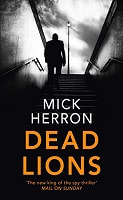
|
1. Amended with en dash
He was bald, or mostly bald – a crop of white stubble gilded his ears – and gave off an air of pent-up energy, of emotions kept in check – the same sense Lamb had had watching the video of him, shot eighteen years ago, through a two-way mirror in one of Regent’s Park’s luxury suites. Joke. These were underground, and were where the Service’s more serious debriefings took place; those which it might later prove politic to deny had happened.
2. Amended with comma
He was bald, or mostly bald – a crop of white stubble gilded his ears – and gave off an air of pent-up energy, of emotions kept in check, the same sense Lamb had had watching the video of him, shot eighteen years ago, through a two-way mirror in one of Regent’s Park’s luxury suites. Joke. These were underground, and were where the Service’s more serious debriefings took place; those which it might later prove politic to deny had happened.
He was bald, or mostly bald – a crop of white stubble gilded his ears – and gave off an air of pent-up energy, of emotions kept in check – the same sense Lamb had had watching the video of him, shot eighteen years ago, through a two-way mirror in one of Regent’s Park’s luxury suites. Joke. These were underground, and were where the Service’s more serious debriefings took place; those which it might later prove politic to deny had happened.
2. Amended with comma
He was bald, or mostly bald – a crop of white stubble gilded his ears – and gave off an air of pent-up energy, of emotions kept in check, the same sense Lamb had had watching the video of him, shot eighteen years ago, through a two-way mirror in one of Regent’s Park’s luxury suites. Joke. These were underground, and were where the Service’s more serious debriefings took place; those which it might later prove politic to deny had happened.
The en dash in the first alternative version looks awkward because we already have two parenthetical en dashes in play.
What happens if we introduce a comma instead? The sentence is already comma-heavy. All we’ve done is bring in yet another to muddy the waters.
The semi-colon works best. It effectively links the clauses it connects, but in a way that subdivides the sentence clearly.
However, pacing comes into place here too. There’s more on pacing below but, for now, compare the original and the version amended with a comma. The creepy voyeurism is starker when set off by the semi-colon.
More on pacing and the semi-colon
The semi-colon is harder than the comma. It lengthens the pause or increases the distance between two clauses that could have been linked with a comma, making them both stand out.
The semi-colon is softer than the full point. It shortens the pause or reduces the distance between two clauses that could have been linked with a full point, indicating a stronger, more intimate relationship.
Back to Herron for a closer look at the second semi-colon (see the section in bold) and some alternatives we could try:
Original
He was bald, or mostly bald – a crop of white stubble gilded his ears – and gave off an air of pent-up energy, of emotions kept in check; the same sense Lamb had had watching the video of him, shot eighteen years ago, through a two-way mirror in one of Regent’s Park’s luxury suites. Joke. These were underground, and were where the Service’s more serious debriefings took place; those which it might later prove politic to deny had happened.
He was bald, or mostly bald – a crop of white stubble gilded his ears – and gave off an air of pent-up energy, of emotions kept in check; the same sense Lamb had had watching the video of him, shot eighteen years ago, through a two-way mirror in one of Regent’s Park’s luxury suites. Joke. These were underground, and were where the Service’s more serious debriefings took place; those which it might later prove politic to deny had happened.
1. Amended with comma
He was bald, or mostly bald – a crop of white stubble gilded his ears – and gave off an air of pent-up energy, of emotions kept in check; the same sense Lamb had had watching the video of him, shot eighteen years ago, through a two-way mirror in one of Regent’s Park’s luxury suites. Joke. These were underground, and were where the Service’s more serious debriefings took place, those which it might later prove politic to deny had happened.
He was bald, or mostly bald – a crop of white stubble gilded his ears – and gave off an air of pent-up energy, of emotions kept in check; the same sense Lamb had had watching the video of him, shot eighteen years ago, through a two-way mirror in one of Regent’s Park’s luxury suites. Joke. These were underground, and were where the Service’s more serious debriefings took place, those which it might later prove politic to deny had happened.
In the original, the semi-colon acts as a super-comma, subdividing the whole sentence into two more readable chunks.
However, more marked is the impact on the pace. The semi-colon forces us to slow down. That’s important because the clause that comes after it is about the denial of interrogations. The semi-colon makes us pause a little longer, which makes the sinister information that follows stand out.
Semi-colons and dialogue
Some authors resist the use of semi-colons in dialogue, usually on the grounds that the reader can’t hear the punctuation. Does that mean you shouldn’t use them?
A novel’s dialogue isn’t real-life speech; it’s a representation of it. Speech, like narrative, has rhythm. The writer’s job is to create speech that’s clear and well paced. If a semi-colon helps you to do that, why wouldn’t you use it?
Here’s a great example from David Rosenfelt’s New Tricks, p. 316:
|
Original with semi-colon
“You can testify that you spoke to your father that night on Sykes’s phone, and you can say why you went to Mario’s. I can’t say those things in closing arguments; I can only talk about evidence already introduced.” Amended with full point “You can testify that you spoke to your father that night on Sykes’s phone, and you can say why you went to Mario’s. I can’t say those things in closing arguments. I can only talk about evidence already introduced.” |
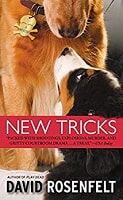
|
Both versions work but Rosenfelt elects to use a semi-colon because he wants to show the relationship between the two independent clauses. A full point would pull the clauses a little further apart and reduce the intimacy between them.
Should you use semi-colons in your fiction?
Some authors prefer to omit semi-colons for a variety of reasons: they're deemed pretentious, confusing, interruptive or ugly. But I’m not sure we should judge them so harshly:
- They needn’t be pretentious. There’s nothing pompous about Herron and Rosenfelt’s writing. Both authors create compelling modern commercial fiction that keeps their readers on a page, and dying to turn it.
- While not all readers understand the grammatical nuances of the semi-colon, few will be stopped in their tracks if you use it well.
- Are they interruptive? Yes; if you use them too frequently; and your writing lurches; like a driver who’s too heavy on the brakes; too much of anything can grate. And; yes, if; you put them; in the wrong; place. Used purposefully, however, they can affect rhythm and bring clarity to a story.
- As for ugly, well, that’s subjective. I think they’re just lovely!
Further reading and cited works
- Dead Lions, Mick Herron, John Murray, 2013
- Dialogue tags
- How to punctuate dialogue
- How to use adverbs
- How to use apostrophes
- More resources for indie authors
- New Tricks, David Rosenfelt, Grand Central, 2009
- Style sheet template
- Using commas and conjunctions
Louise Harnby is a line editor, copyeditor and proofreader who specializes in working with crime, mystery, suspense and thriller writers.
She is an Advanced Professional Member of the Chartered Institute of Editing and Proofreading (CIEP), a member of ACES, a Partner Member of The Alliance of Independent Authors (ALLi), and co-hosts The Editing Podcast.
Visit her business website at Louise Harnby | Fiction Editor & Proofreader, say hello on Twitter at @LouiseHarnby, connect via Facebook and LinkedIn, and check out her books and courses.
She is an Advanced Professional Member of the Chartered Institute of Editing and Proofreading (CIEP), a member of ACES, a Partner Member of The Alliance of Independent Authors (ALLi), and co-hosts The Editing Podcast.
Visit her business website at Louise Harnby | Fiction Editor & Proofreader, say hello on Twitter at @LouiseHarnby, connect via Facebook and LinkedIn, and check out her books and courses.
Is your dialogue pushing your novel forward or making the reader feel like they’re eavesdropping on a mundane conversation at the bus stop? Here’s how to ensure your dialogue pops.
What good dialogue isn’t
Good dialogue is the icing on the cake of a well-structured novel. Bad dialogue will mar a well-structured narrative and bury a story that is barely hanging in there. Before we look at what makes great dialogue, let’s look at what dialogue isn’t:
Good dialogue is the icing on the cake of a well-structured novel. Bad dialogue will mar a well-structured narrative and bury a story that is barely hanging in there. Before we look at what makes great dialogue, let’s look at what dialogue isn’t:
WHAT DIALOGUE IS NOT
- It’s not everyday conversation – much of that is boring and has no place in a novel.
- It’s not a narrative – that tells us what’s happening in a story. Dialogue should show us how characters respond to those events.
- It’s not a tool to set up the next character’s lines – that’s a waste of words on the page. Every line should have a purpose, whoever’s speaking it. Every line should tell us something about the character – who they are, how they’re feeling and what they want.
- It’s not a backstory-delivery mechanism that the characters are already familiar with – that’s maid-and-butler dialogue and a misfire.
- It’s not a monologue – that’s best left for viewpoint characters mulling things over in their own time, unless your intention is to show one person being bored rigid by another. If only one person’s doing all the talking, ask yourself why the other person on the page is still in the room.
3 components of effective dialogue
‘Dialogue should be the character in action,’ says John Yorke in his must-read Into the Woods (p. 151). Yorke’s talking about the art of screenwriting but the advice is just as pertinent for novelists. I recommend you read it even if you have no intention of writing for the screen because it’s a masterclass in storytelling, whatever the medium.
When we stop thinking about dialogue as words spoken – as conversations – and instead frame it in terms of characters, we create something that’s fit for a novel.
What does your dialogue tell readers about who your characters are, how they’re feeling, and what their motivations are?
|
3 COMPONENTS OF EFFECTIVE DIALOGUE
|
|
- Character intent: How characters speak tells us what they want to do. Perhaps they’re asking questions for the purpose of discovery and understanding whodunit (doctors, lawyers, PIs and police officers regularly use dialogue in novels to this end), but dialogue can express a multitude of motivations. Ask yourself what your character wants every time they open their mouth.
Unreliable dialogue
What a character expresses through dialogue need not match their true voice, mood or intent. Unreliable dialogue is powerful precisely because it jars the reader by masking the truth (which the characters themselves may even have buried).
Imagine this scenario: John has been kidnapped by Jane. They met in a club where she spiked his drink. He started to feel unwell and she offered him a ride to the Tube station. He never made it. He’s been held captive for several days, during which time he’s been physically abused and deprived of food. He’s frightened out of his wits, and weak to boot.
The dialogue between John and Jane could go as follows: John raves and rants, telling Jane her behaviour is monstrous, that Jane’s going to pay for her actions and that he’s going straight to the police as soon as he’s escaped. Jane responds in fury, telling John he deserves it all and how there’s no way he’ll ever escape.
Or the dialogue could be unreliable. John might be polite, sycophantic even, as he thanks her for the water she provided, compliments her on her appearance, or asks her about her life. Through that speech, we are shown his desperation. It’s about keeping her on side and calm in order to save himself.
And Jane’s verbal response might be chipper, seductive even. Through that dialogue, we are shown her psychosis.
The result is a sinister verbal exchange that allows us to explore the inner workings of the characters’ minds without it being forced down our throats via an all-to-obvious narrative that’s centred around the viewpoint character.
Breaking free of viewpoint limitations
Most novelists opt to hold third- or first-person narrative viewpoints. That means the story in a chapter plays out through one person’s perspective.
When authors drop viewpoint, readers end up playing a game of narrative table tennis in which they bounce from one character’s head to another. We know who everyone is (voice), what everyone’s feeling (mood), and what everyone wants (intention) all of the time. Readers become disengaged because they don’t have time to immerse themselves in any one character’s experience.
Good dialogue allows writers and readers to break free without head-hopping. Through dialogue, readers can intuit the voice, mood and intention of multiple characters, yet the singular narrative viewpoint remains true throughout. That keeps the reader engaged and the writing taut.
Purposeful dialogue in action
Here’s an excerpt from Lee Child’s Never Go Back (pp. 457–8). I chose it because I’ve also seen the movie, which allowed me to compare my experience of the screen dialogue (and the advice Yorke gives) with the novel’s, and because there are no action beats, only two speech tags and no narrative. It’s just dialogue between a teenage girl and Jack Reacher.
|
Note on what reader already knows: Following a lawsuit filed by Candice Dayton, Jack Reacher believes that the teenager in the scene, who’s running for her life, may be his daughter. He also cased out the diner and the staff the evening before, so the servers’ faces are familiar.
|
|
‘Am I in trouble?’
Reacher said, ‘No you’re not in trouble. We’re just checking a couple of things. What’s your mom’s name?’
‘Is she in trouble?’
‘No one’s in trouble. Not on your street, anyway. This is about the other guy.’
‘Does he know my mom? Oh my God, is it us you’re watching? You’re waiting for him to come see my mom?’
‘One step at a time,’ Reacher said. ‘What’s your mom’s name? And, yes, I know about the Colt Python.’
‘My mom’s name is Candice Dayton.’
‘In that case I would like to meet her.’
‘Why? Is she a suspect?’
‘No, this would be personal.’
‘How could it be?’
‘I’m the guy they’re looking for. They think I know your mother.’
‘You?’
‘Yes, me.’
‘You don’t know my mother.’
‘They think face to face I might recognize her, or she might recognize me.’
‘She wouldn’t. And you wouldn’t.’
‘It’s hard to say for sure, without actually trying it.’
‘Trust me.’
‘I would like to.’
‘Mister, I can tell you quite categorically you don’t know my mom and she doesn’t know you.’
‘Because you never saw me before? We’re talking a number of years here, maybe back before you were born.’
‘How well are you supposed to have known her?’
‘Well enough that we might recognize each other.’
‘Then you didn’t know her.’
‘What do you mean?’
‘Why do you think I always eat in here?’
‘Because you like it?’
‘Because I get it for free. Because my mom works here. She’s right over there. She’s the blonde. You walked past her two times already and you didn’t bat an eye. And neither did she. You two never knew each other.’
Reacher said, ‘No you’re not in trouble. We’re just checking a couple of things. What’s your mom’s name?’
‘Is she in trouble?’
‘No one’s in trouble. Not on your street, anyway. This is about the other guy.’
‘Does he know my mom? Oh my God, is it us you’re watching? You’re waiting for him to come see my mom?’
‘One step at a time,’ Reacher said. ‘What’s your mom’s name? And, yes, I know about the Colt Python.’
‘My mom’s name is Candice Dayton.’
‘In that case I would like to meet her.’
‘Why? Is she a suspect?’
‘No, this would be personal.’
‘How could it be?’
‘I’m the guy they’re looking for. They think I know your mother.’
‘You?’
‘Yes, me.’
‘You don’t know my mother.’
‘They think face to face I might recognize her, or she might recognize me.’
‘She wouldn’t. And you wouldn’t.’
‘It’s hard to say for sure, without actually trying it.’
‘Trust me.’
‘I would like to.’
‘Mister, I can tell you quite categorically you don’t know my mom and she doesn’t know you.’
‘Because you never saw me before? We’re talking a number of years here, maybe back before you were born.’
‘How well are you supposed to have known her?’
‘Well enough that we might recognize each other.’
‘Then you didn’t know her.’
‘What do you mean?’
‘Why do you think I always eat in here?’
‘Because you like it?’
‘Because I get it for free. Because my mom works here. She’s right over there. She’s the blonde. You walked past her two times already and you didn’t bat an eye. And neither did she. You two never knew each other.’
WHAT WE LEARN
- Viewpoint: Reacher is the viewpoint character. However, through the dialogue, readers are able to access information about him and the teenager.
- Voice: Both characters speak in a no-nonsense fashion. Reacher might think he holds the balance of power, given his job and age, but the girl’s streetwise tone suggests she thinks otherwise; they’re equals.
- Mood: Reacher is calm (we’d expect nothing more) and measured, but there is emotional engagement; he seems keen not to give too much away (probably in respect of the fact that he’s talking to a child, perhaps his daughter). As for the girl, she’s almost disinterested. I imagine her stuffing fries into her mouth, as focused on her food as she is on the conversation ... until she thinks her mother might be in trouble. Child doesn’t tell us, but I can see her in my mind’s eye, mouth full, looking at him, just a twitch of alarm registering in her expression. There’s almost a sense of the traditional mother/daughter relationship reversed; this is a kid who’s used to looking after herself. There’s movement in this dialogue; the speech is infused with its own action beats.
- Intent: Reacher wants to find out who the mother is. This exchange is all about building trust with the girl in order to achieve that. The girl needs someone she can turn to because bad people are watching her and her mother. She wants to know how Reacher might know Candice; Reacher wants to keep the possible sexual encounter and his resulting paternity to himself. The girl’s not stupid and picks up on his vague inference to a sexual encounter. As the conversation and the chapter close, Reacher and the readers discover that Candice and our protagonist have never met, and that the girl can’t be his daughter.
This is characters in action, expressed through speech. Child makes every line count towards the chapter denouement. If he was tempted to introduce narrative and action beats that ensured we’d get it, it doesn’t show. In fact, they would have been interruptions and slowed the pace. Instead, he trusts us to do the work because the dialogue gives us everything we need.
Here’s an excerpt from The Poison Artist by Jonathan Moore (pp. 244–5). I chose this because of the contrast between Kennon and Emmeline’s speech.
|
Note on what reader already knows: There’s another man in the room with torture devices attached to him; he’s twitching. Caleb is the viewpoint character, but he’s handcuffed and out of play. Nevertheless, we have access to two more characters’ voices, moods and intentions through the dialogue.
|
|
“Don’t move,” Kennon said.
This time, his voice wasn’t much more than a whisper.
[...]
“Inspector, you’ll hit somebody,” Emmeline said.
[...]
“You look sick, Inspector,” Emmeline said. “I could get you something to drink. A glass of water, maybe? Something a little stronger?”
Kennon fired again and Emmeline didn’t even flinch.
The bullet missed her by ten feet, punching a hole in the back of the building.
“Stop—”
“You should be more careful what you touch,” Emmeline said. “Some things can go right through the skin.”
This time, his voice wasn’t much more than a whisper.
[...]
“Inspector, you’ll hit somebody,” Emmeline said.
[...]
“You look sick, Inspector,” Emmeline said. “I could get you something to drink. A glass of water, maybe? Something a little stronger?”
Kennon fired again and Emmeline didn’t even flinch.
The bullet missed her by ten feet, punching a hole in the back of the building.
“Stop—”
“You should be more careful what you touch,” Emmeline said. “Some things can go right through the skin.”
WHAT WE LEARN
- Viewpoint: Even though Emmeline isn’t the viewpoint character, we get to access her transgressor headspace through the dialogue, and the result is powerful and sinister.
- Voice: Kennon doesn’t say much, but what he does say is what we’d expect from a trained inspector, though it’s offered quietly. Emmeline, however, is pathologically measured. We’re left in no doubt that she’s dangerous.
- Mood: We sense Kennon’s fear and desperation through his truncated, whispered speech. There’s almost exhaustion in play. Emmeline, in contrast, is seductive (offering him a drink as if she were hosting a dinner party). Given the torture in evidence, her dialogue is obscene.
- Intent: Kennon is trying to save himself, Caleb and the twitching man, but he’s playing by the rule of law, warning Emmeline that he will fire his gun. Emmeline wants to finish her game, and her desire to play is evident in her speech. Of course, this may be unreliable; it could be masking a deep-seated fear that she’ll be harmed or killed.
This, too, is characters in action, expressed through speech. Moore draws us deep into the transgressor’s mind – even though she’s not the viewpoint character. Her dialogue, juxtaposed with Kennon’s exhausted near-silence, generates a powerful scene that oozes with sickly tension.
Here’s a third example from Harlan Coben’s Run Away (pp. 68–9):
|
Note on what reader already knows: Simon and Ingrid are married. They hold Aaron – a corrupt and possessive addict who’s been murdered – responsible for their daughter’s breakdown.
|
|
“The murder,” Simon said. “It was gruesome.”
Ingrid wore a long thin coat. She dug her hands into her pockets. “Go on.”
“Aaron was mutilated.”
“How?”
“Do you really need the details?” he asked.
[...]
“According to Hester’s source, the killer slit Aaron’s throat, though she said that’s a tame way of putting it. The knife went deep into his neck. Almost took off his head. They sliced off three fingers. They also cut off ...”
“Pre- or post-mortem?” Ingrid asked in her physician tone.
“The amputations. Was he still alive for them?”
“I don’t know,” Simon said. “Does it matter?”
Ingrid wore a long thin coat. She dug her hands into her pockets. “Go on.”
“Aaron was mutilated.”
“How?”
“Do you really need the details?” he asked.
[...]
“According to Hester’s source, the killer slit Aaron’s throat, though she said that’s a tame way of putting it. The knife went deep into his neck. Almost took off his head. They sliced off three fingers. They also cut off ...”
“Pre- or post-mortem?” Ingrid asked in her physician tone.
“The amputations. Was he still alive for them?”
“I don’t know,” Simon said. “Does it matter?”
WHAT WE LEARN
- Viewpoint: Simon is the viewpoint character but through Ingrid’s speech we learn how she uses her professional mindset to manage stressful situations.
- Voice: Simon’s voice is emotional and verbose; Ingrid’s is precise and clinical.
- Mood: Simon’s disgust and distress are evident. You can almost feel the words falling out of his mouth. Ingrid’s speech exudes clinical detachment. She’s in doctor mode.
- Intent: Simon wants to unload. Ingrid wants to understand.
Again, through speech we see the characters in action. The contrasting voices and moods show us Simon and Ingrid’s different intentions. There’s no need for more than a peppering of supporting narrative.
Summing up
- Make your characters’ speech count. Use it to show who the character is (voice), how they feel (mood) and what they want (intention).
- Play with unreliable dialogue if it will enhance our understanding of characters’ emotions and motivations. Those deliberate juxtapositions will deepen our engagement.
- Realistic everyday speech, while authentic, is dull, invasive and will disengage your reader. Remove it!
Free dialogue enrichment tool
To help you think about your characters' voices, moods and intentions, and how these will enrich your dialogue, download this tool. It's a fillable PDF with ready-made examples and space for you to record your own decisions.
CLICK TO DOWNLOAD YOUR FREE PDF
|
Cited sources
|
Louise Harnby is a line editor, copyeditor and proofreader who specializes in working with crime, mystery, suspense and thriller writers.
She is an Advanced Professional Member of the Chartered Institute of Editing and Proofreading (CIEP), a member of ACES, a Partner Member of The Alliance of Independent Authors (ALLi), and co-hosts The Editing Podcast.
Visit her business website at Louise Harnby | Fiction Editor & Proofreader, say hello on Twitter at @LouiseHarnby, connect via Facebook and LinkedIn, and check out her books and courses.
She is an Advanced Professional Member of the Chartered Institute of Editing and Proofreading (CIEP), a member of ACES, a Partner Member of The Alliance of Independent Authors (ALLi), and co-hosts The Editing Podcast.
Visit her business website at Louise Harnby | Fiction Editor & Proofreader, say hello on Twitter at @LouiseHarnby, connect via Facebook and LinkedIn, and check out her books and courses.
A vocative expression is one in which a person is directly referred to in dialogue. It needn’t be someone’s name; it could be a form of address that relates to their job or position, or a term of endearment, respect or disrespect. Here’s how to work with them.
Purpose of vocative expressions
Vocatives serve several purposes in fiction writing:
1. They help readers keep track of who’s saying what to whom. This is especially useful when a character is talking to two or more people.
Vocatives serve several purposes in fiction writing:
1. They help readers keep track of who’s saying what to whom. This is especially useful when a character is talking to two or more people.
‘Dan, can you take the father into Interview Room 2? I don’t want him having to face the mother – not yet, anyway.’ Charlie flicked through the file and scanned down the penultimate page. ‘Deputy Douglas, I know you’re new to the team but I’d like you to handle the mom.’
2. They can enrich characters’ emotions by conveying a deeper sense of urgency, frustration, surprise or patience.
|
“For God’s sake, Amir! Get a move on.”
‘Inspector Witherspoon,’ Hightower began slowly, as though talking to a thick-skulled child, ‘if you’ll trouble yourself to lift Dr Slocum’s head, you’ll see why I considered his death suspicious.’ (The Inspector and Mrs Jeffries, p. 3) |
|
3. Readers can learn quickly about how characters relate to each other. Does one rank higher or defer to the other? Perhaps they’re friends, lovers, or loathe each other.
|
‘And who could tell after the blast if the explosion wasn’t atomic?’ he asked.
‘No, my Lady. They’ll not risk anything that illegal. Radiation lingers. The evidence is hard to erase.’ (Dune, p. 181) ‘Is that what you thought, honey? I’m so sorry – I never meant for you to find out.’ “Hey, Captain Letch. Try thinking with your head instead of your dick. Maybe you’ll find out whodunit before someone else gets killed.” |
|
Overuse that distracts
Overusing people’s names and titles can be grating. Vocatives aren’t the only way of signalling who’s being talked to – you could use action beats (See: What are action beats and how can you use them in fiction writing?). And if there are only two people in a scene it will be unnecessary to continually use direct forms of address.
Think about the natural speech you hear in your everyday life. Most of the time, people don’t use vocative expressions excessively. Follow their lead in your novel.
Compare the following examples:
|
The Big Sleep, p. 140:
‘Nice work, Marlowe. Are you my bodyguard now?’ Her voice had a harsh note. ‘Looks that way. Here’s the bag.’ She took it. I said: ‘Have you a car with you?’ She laughed. ‘I came with a man. What are you doing here?’ Butchered version: ‘Nice work, Marlowe. Are you my bodyguard now?’ Her voice had a harsh note. ‘Looks that way, Vivian. Here’s the bag.’ She took it. I said: ‘Have you a car with you, Vivian?’ She laughed. ‘I came with a man. What are you doing here, Marlowe?’ |
|
The original version is much cleaner. The vocative in the first line helps to convey Vivian’s sarcasm. After that, Chandler lets us do the work and the conversation sounds natural.
How to punctuate vocatives
Commas are required for clarity.
- If the vocative expression comes at the beginning of the sentence, place a comma after it.
- If the vocative expression comes at the end of the sentence, place a comma before it.
- If the vocative expression interrupts a sentence, place a comma before and after it.
- A vocative at the beginning of a sentence can also stand alone, in which case it will be followed by a full stop (period) or exclamation mark.
|
There was a high-pitched scream and, almost simultaneously, a cry from the lounge. Jonesy jumped off her lap and padded under the bed, reappearing a moment later with a dead mouse in his jaws.
‘Jonesy! Where did you get that?’ (29 Seconds, p. 157) ‘Jake, is that your new car over there?’ Mal said. ‘You don’t have a clue who I am, do you, you bumbling fool?’ Lord Pompous asked. ‘Did you know, Beelzebub, that your wings are scorched?’ Lucifer said, poking the fiery brimstone. |
|
Punctuating vocative expressions incorrectly can lead to ambiguity. Compare the following examples of dialogue. Notice how the missing comma changes the meaning from expressions of address to instructions to carry out acts of violence.
|
With vocative comma
|
Without comma
|
|
“Let’s eat, children,” said a salivating Wendy.
|
“Let’s eat children,” said a salivating Wendy.
|
|
‘Shoot, Sergeant Ash!’ ordered the captain.
|
‘Shoot Sergeant Ash!’ ordered the captain.
|
Lower-case or upper-case initials?
Should you use lower-case or upper-case initials when addressing a person in written dialogue? It depends.
People’s names
Names are proper nouns and therefore always take initial capital letters in the vocative case.
Should you use lower-case or upper-case initials when addressing a person in written dialogue? It depends.
People’s names
Names are proper nouns and therefore always take initial capital letters in the vocative case.
“What the hell are you doing with that novel, Louise? You’ve changed how all the vocative expressions are punctuated,” said Johnny.
‘You, Ringo, are a cad and a bounder. However, I’m prepared to forgive you because of your excellent taste in music,’ said George, thumbing through five different editions of The White Album.
‘You, Ringo, are a cad and a bounder. However, I’m prepared to forgive you because of your excellent taste in music,’ said George, thumbing through five different editions of The White Album.
Terms of respect, endearment and abuse
Vocative terms of respect and endearment take lower case when used generally. Examples include: madam, sir, m’lady, miss, milord, mister; buddy, sweetie, darling, love, dear; and dopehead, fuckwit and plenty more I’d love to write here but won’t!
|
To get a lawyer would mean calling on my family for finances. The only officer I would have really liked—a barrister who had been sailing with us several times—was obvious. “As far as I’m concerned, sir,” I said, “I’d be glad if you’d act for me.” (Maddon’s Rock, p. 75)
‘Honestly, darling. I’d never do anything to hurt you. He means nothing to me. Nothing.’ Marie yawned and flicked a crumb off the table. “Don’t push it, love. I have neither the time nor the patience.” ‘Hey, numbskull! Try searching on Google before you email a busy colleague with your query.’ The sounds of the steps grew louder, and the whistling went on cheerfully. In a moment the jerkin showed. I stepped out between the two cars and said: ‘Got a match, buddy?’ (The Big Sleep, p. 96) ‘Maybe in the service,’ Reacher said. ‘Not necessarily in some half-assed private company.’ ‘I don’t see a difference.’ ‘Well, you ought to, soldier.’ ‘Watch your mouth, pal. I’m helping you out here.’ (The Hard Way, p. 141) |
|
When terms of respect are used in conjunction with names, they become proper nouns and take upper case. Endearments and insults usually remain in lower case because they’re used adjectivally.
|
“For shame! For shame!” cried the lady’s maid. “What shocking conduct, Miss Eyre, to strike a young gentleman, your benefactress’s son. Your young master.” (Jane Eyre, Chapter 2)
‘Surely you realized, Master Doolittle, that your father could talk to the animals,’ said Eliza as she slid off the pushmi-pullyu. ‘You, dear Jack, are the light of my life,’ said Bobby. ‘Well, nearly – sweet baby James glows a little brighter.’ |
|
Titles of rank and nobility
Titles of rank and nobility take initial capitals when used vocatively. Examples include: Your Majesty, Commander, Constable, Agent, Lord, and Detective Inspector.
|
‘I’d like you to handle this personally, Superintendent. It’s going to require quite a delicate hand.’ She kept her expression steady. This was an assignment for a detective inspector at most. (The Punishment She Deserves)
“What, Agent Copperbonce, do you think you are doing with that pineapple?” |
|
Compare these with narrative text and dialogue that include indirect address forms. If the relational titles are used as names (proper nouns), we retain upper case. If we’re using common nouns with determiners (a modifying word that references a noun such as ‘a’, ‘the’, ‘each’, ‘her’ and ‘my’) we use lower case.
The commander knocked on the door and marched in without waiting for an invitation.
Fifteen minutes later, the chief called the squad into the incident room.
‘I’ve asked Inspector Harnby to take a look at the case. Hope that’s okay with you.’
‘That other constable is a waste of space, don’t you agree, Constable MacMillan?’
Fifteen minutes later, the chief called the squad into the incident room.
‘I’ve asked Inspector Harnby to take a look at the case. Hope that’s okay with you.’
‘That other constable is a waste of space, don’t you agree, Constable MacMillan?’
Titles indicating a relationship
When used as a form of direct address, relational titles take upper case. Examples include: Mother, Uncle, Dad, Auntie, Grandma and Papa.
‘I’m begging you, Dad, don’t make me watch that Jimi Hendrix docudrama again. Thirty-five times is enough.’ I smashed the guitar over the back of the sofa and stuck my nose in the air. ‘See? It’s never going to happen.’
“Oh, don't refer him to me, Mama! I have just one word to say of the whole tribe – they are a nuisance.” (Jane Eyre, Chapter 17)
“Oh, don't refer him to me, Mama! I have just one word to say of the whole tribe – they are a nuisance.” (Jane Eyre, Chapter 17)
Again, compare these with narrative text and dialogue that include indirect address forms. If the relational titles are used as names (proper nouns), we retain upper case. If we’re using common nouns with determiners, we use lower case.
I thought back to the earlier conversation. Hadn’t his dad said we could catch the 8.15 from Waterloo if we put our skates on?
‘Can you ask your uncle if we can stay at his place this weekend?’
‘Every grandmother receives a free cup of tea and a slice of cake. Do you think Gran would like to come?’
The guy’s mom was an absolute monster, or so he’d heard. That was just one side of the story, though. Best to check before bowling in and arresting anyone.
‘Can you ask your uncle if we can stay at his place this weekend?’
‘Every grandmother receives a free cup of tea and a slice of cake. Do you think Gran would like to come?’
The guy’s mom was an absolute monster, or so he’d heard. That was just one side of the story, though. Best to check before bowling in and arresting anyone.
Summing up
Use vocatives as follows:
- to convey who’s being spoken to
- to enrich mood and emotion
- to indicate what the mood or relationship is between the speakers
And, thank you, dear reader, for getting to the end of this article! (See what I did there?)
Cited sources
- 29 Seconds. T.M. Logan. Zaffre Publishing, 2018
- Dune. Frank Herbert. New English Library, 1984
- Jane Eyre. Charlotte Brontë. Scholastic, 2014. Kindle edition
- Maddon’s Rock. Hammond Innes. Fontana Books, 1947
- The Big Sleep. Raymond Chandler. Penguin, 1948
- The Hard Way. Lee Child. Bantam Books, 2006
- The Inspector and Mrs Jeffries. Emily Brightwell. C&R Crime, 2013
- The Punishment She Deserves. Elizabeth George. Hodder, 2019. Kindle edition
Louise Harnby is a line editor, copyeditor and proofreader who specializes in working with crime, mystery, suspense and thriller writers.
She is an Advanced Professional Member of the Chartered Institute of Editing and Proofreading (CIEP), a member of ACES, a Partner Member of The Alliance of Independent Authors (ALLi), and co-hosts The Editing Podcast.
She is an Advanced Professional Member of the Chartered Institute of Editing and Proofreading (CIEP), a member of ACES, a Partner Member of The Alliance of Independent Authors (ALLi), and co-hosts The Editing Podcast.
- Get in touch: Louise Harnby | Fiction Editor & Proofreader
- Connect: Twitter at @LouiseHarnby, Facebook and LinkedIn
- Learn: Books and courses
- Discover: Resources for authors and editors

PDF MARKUP
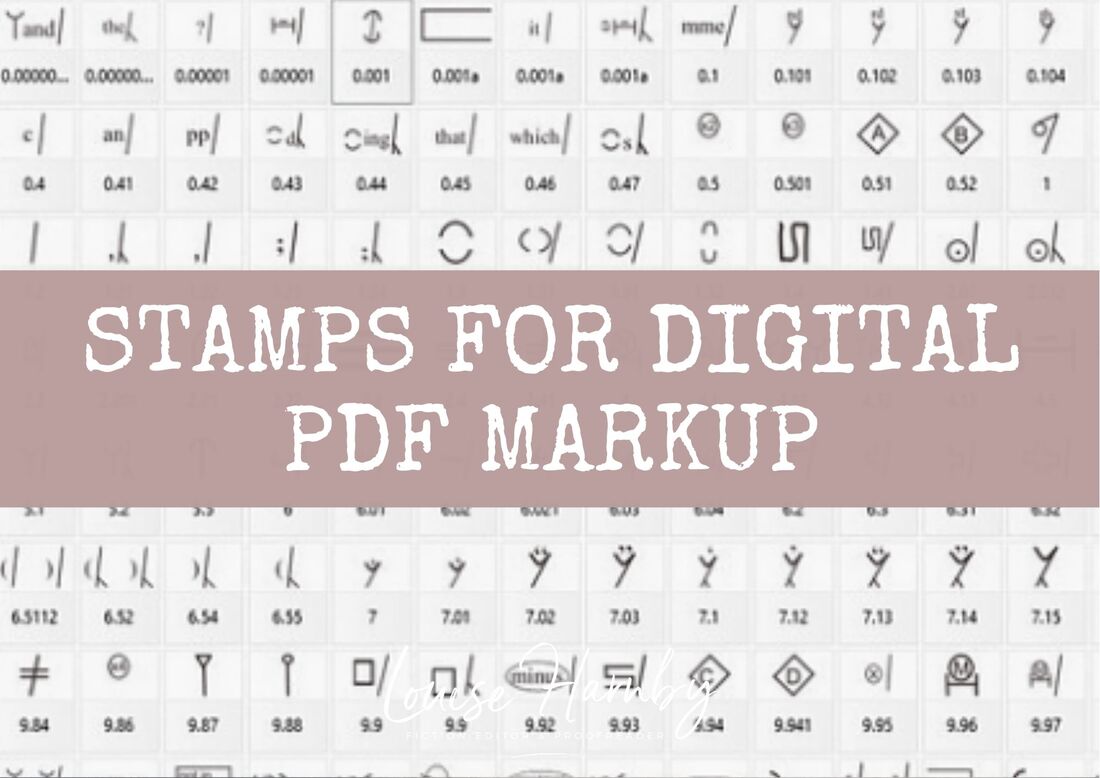
AUTHOR RESOURCES
EDITOR RESOURCES
TESTIMONIALS
Dare Rogers
'Louise uses her expertise to hone a story until it's razor sharp, while still allowing the author’s voice to remain dominant.'
Jeff Carson
'I wholeheartedly recommend her services ... Just don’t hire her when I need her.'
J B Turner
'Sincere thanks for a beautiful and elegant piece of work. First class.'
Ayshe Gemedzhy
'What makes her stand out and shine is her ability to immerse herself in your story.'
Salt Publishing
'A million thanks – your mark-up is perfect, as always.'
CATEGORIES
All
Around The World
Audio Books
Author Chat
Author Interviews
Author Platform
Author Resources
Blogging
Book Marketing
Books
Branding
Business Tips
Choosing An Editor
Client Talk
Conscious Language
Core Editorial Skills
Crime Writing
Design And Layout
Dialogue
Editing
Editorial Tips
Editorial Tools
Editors On The Blog
Erotica
Fiction
Fiction Editing
Freelancing
Free Stuff
Getting Noticed
Getting Work
Grammar Links
Guest Writers
Indexing
Indie Authors
Lean Writing
Line Craft
Link Of The Week
Macro Chat
Marketing Tips
Money Talk
Mood And Rhythm
More Macros And Add Ins
Networking
Online Courses
PDF Markup
Podcasting
POV
Proofreading
Proofreading Marks
Publishing
Punctuation
Q&A With Louise
Resources
Roundups
Self Editing
Self Publishing Authors
Sentence Editing
Showing And Telling
Software
Stamps
Starting Out
Story Craft
The Editing Podcast
Training
Types Of Editing
Using Word
Website Tips
Work Choices
Working Onscreen
Working Smart
Writer Resources
Writing
Writing Tips
Writing Tools
ARCHIVES
April 2024
March 2024
October 2023
August 2023
July 2023
June 2023
May 2023
April 2023
March 2023
January 2023
December 2022
November 2022
October 2022
September 2022
August 2022
July 2022
June 2022
May 2022
April 2022
March 2022
February 2022
January 2022
December 2021
November 2021
October 2021
September 2021
August 2021
July 2021
June 2021
May 2021
April 2021
March 2021
February 2021
January 2021
December 2020
November 2020
October 2020
September 2020
August 2020
July 2020
June 2020
May 2020
April 2020
March 2020
February 2020
January 2020
December 2019
November 2019
October 2019
September 2019
August 2019
July 2019
June 2019
May 2019
April 2019
March 2019
February 2019
January 2019
December 2018
November 2018
October 2018
September 2018
August 2018
July 2018
June 2018
May 2018
April 2018
March 2018
February 2018
January 2018
December 2017
November 2017
October 2017
September 2017
August 2017
July 2017
June 2017
May 2017
April 2017
March 2017
February 2017
January 2017
December 2016
November 2016
October 2016
September 2016
June 2016
May 2016
April 2016
March 2016
February 2016
January 2016
December 2015
November 2015
October 2015
September 2015
July 2015
June 2015
May 2015
March 2015
February 2015
January 2015
November 2014
October 2014
September 2014
August 2014
July 2014
June 2014
March 2014
January 2014
November 2013
October 2013
September 2013
August 2013
June 2013
February 2013
January 2013
November 2012
October 2012
September 2012
August 2012
July 2012
June 2012
May 2012
April 2012
March 2012
February 2012
January 2012
December 2011
 RSS Feed
 |

|

|

|

|
|
|
|

© 2011–2024 Louise Harnby