

|
Fresh eyes on a piece of writing is ideal. Sometimes, however, the turnaround time for publication precludes it. Other times, the return on investment just won’t justify the cost of hiring a professional proofreader, especially when shorter-form content’s in play. Good enough has to be enough.
Here are 10 ideas to help you minimize errors and inconsistencies. 
Checking our own writing rarely produces the same level of quality as a fresh pair of eyes. We see what we think is on the page, not what is on the page. That's because we're so close to the content.
I'm a professional editor and I know that when I don't pass on my blog posts to one of my colleagues there are more likely to be mistakes. It's not that I don't know my craft but that I'm wearing a writer's hat. Sometimes, getting pro help isn't an option. So what can you do to minimize errors and inconsistencies? Here are 10 tips.
Style guides help you keep track of your preferences, including hyphenation, capitalization, proper-noun spelling, figures and measurements, time and date format.
2. Use a page-proofs checklist
This pro-proofreading checklist (free when you sign up to The Editorial Letter) helps you spot and identify layout problems in designed page proofs (hard copy or PDF). It’s based on the house guidelines provided by the many mainstream publishers I've worked for.
3. Run PerfectIt
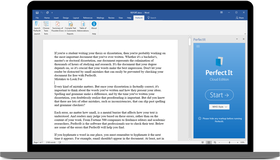
PerfectIt is affordable software that takes the headache out of consistency checking. And because it’s customizable, it will help you enforce your style preferences and save you time. It’s a must-have tool for writers and pro editors.
4. Use find-and-replace in Word
Microsoft Word’s onboard find-and-replace tool enables you to locate and fix problems in your document quickly. This free ebooklet, The Author’s Proofreading Companion, includes a range of handy strings and wildcard searches.
5. Set up styles in Word
Word's styles palette ensures the different elements of your text are formatted consistently. This tutorial shows you how to set up, assign and amend styles. It'll save you heaps of time whether you're working on business documents, web copy, short stories or novels.
6. Trade with a colleague
If you want fresh eyes but budget's an issue, swap quality-control checking with a colleague or friend in the same position. Pick someone who has a strong command of language, spelling and grammar.
Even if they're not a professional editor, they're wearing the hat of the reader, not the originator, and that means they'll spot things you missed. 7. Tools that locate inconsistent spelling
Here are 2 tools to help you locate inconsistent spelling:
8. Run The Bookalyser
The Bookalyser analyses a text for inconsistencies, errors and poor style: 70 different tests across 17 report areas in about 20 seconds, for up to 200,000 words at once. It works on fiction and non-fiction, and for British and American English.

9. Run Word’s onboard Check Document tool
Microsoft Word has an onboard document-checking tool that flags up potential spelling and grammar problems. It's not foolproof (no software is) but it's a second pair of digital eyes that's available at a click.
Go to the ribbon, click on the Review tab, and select the Check Document button. 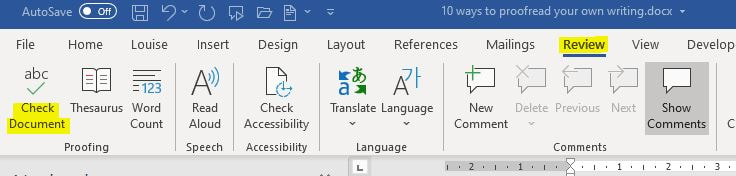
10. Read it out loud
Read the text out loud. Your brain works faster than your mouth and you might well spot missing words, grammar flops and problems with sentence flow when you turn the written word into the spoken word!
Word also has an onboard narration tool that can do the speaking for you. There’s a tutorial here: ‘Hear text read aloud with Narrator’.
Louise Harnby is a line editor, copyeditor and proofreader who specializes in working with crime, mystery, suspense and thriller writers.
She is an Advanced Professional Member of the Chartered Institute of Editing and Proofreading (CIEP), a member of ACES, a Partner Member of The Alliance of Independent Authors (ALLi), and co-hosts The Editing Podcast.
6 Comments
There are different types of novel editing: developmental editing, line editing, copyediting and proofreading. Revising in the right order is essential if you want your book to be in the best shape possible.
Feel free to enjoy this blog, and watch the complementary webinar or download the free ebook too.
Developmental editing Developmental editing comes first. This is big-picture work that involves looking at the story as a whole. You’ll also hear it called structural editing, perhaps even content editing, and the base components always include plot, structure, characterization, pace, viewpoint, narrative style, and tense.
3 things you should know about developmental editing

Line editing
Line editing is the next step in the revision process and it is stylistic work. A strong sentence elevates story; a poorly crafted one can bury it. This level of editing revises for style, sense, and flow. You might also hear line editing referred to as substantive editing or stylistic editing. Editors will be addressing the following:
3 things you should know about line editing
Copyediting
Copyediting is the technical side of sentence-level work. Editors will be addressing the following:
3 things you should know about copyediting
Proofreading
Proofreading is the last stage of the editing process prior to publication. Every novel, whether it’s being delivered in print or digitally, requires a final quality-control check. A proofreader looks for literal errors and layout problems that slipped through previous rounds of revision or were introduced at design stage. Authors preparing for print can ask a proofreader to annotate page proofs. These are almost what a reader would see if they pulled the novel off the shelf. Others ask proofreaders to amend the raw text, either because they’re preparing for epublication or for audiobook narration. Proofreaders are more than typo hunters. They check for consistency of spelling, punctuation and grammar, but also for layout problems such as (but not limited to) indentation, line spacing, inconsistent chapter drops, missing page numbers, and font and heading styles. The remit is extensive (download a free checklist). The art of good proofreading lies in knowing when to change and when to leave well enough alone. A good proofreader should understand the impact of their revisions—not only in relation to the knock-on effect on other pages but also to the cost if a third-party designer/formatter is part of the team.
3 things you should know about proofreading
Which type of editing do you need? Authors need to take their books through all the types of editing. That doesn’t mean hiring third party professionals for each stage. Writing groups, self-study courses, how-to books, and self-publishing organizations are all great sources of editorial support. If you decide to work with a professional, invest in one who can help you where you’re weakest. You might be a great structural self-editor but prone to overwriting. Or you might have nailed line craft but need help with story development. And pay attention to the order of play when it comes to revision. Fixing plot holes at proofreading stage might damage previous rounds of editing. That’s a waste of time and money that every writer wants to avoid!
Louise Harnby is a line editor, copyeditor and proofreader who specializes in working with independent authors of commercial fiction, particularly crime, thriller and mystery writers.
She is an Advanced Professional Member of the Chartered Institute of Editing and Proofreading (CIEP), a member of ACES, a Partner Member of The Alliance of Independent Authors (ALLi), and co-hosts The Editing Podcast. Visit her business website at Louise Harnby | Fiction Editor & Proofreader, say hello on Twitter at @LouiseHarnby, connect via Facebook and LinkedIn, and check out her books and courses.
Writing or editing in Microsoft Word on a PC? Save yourself time by learning these 27 keyboard shortcuts.
If you don’t want to learn 27, learn just the first one: Save!
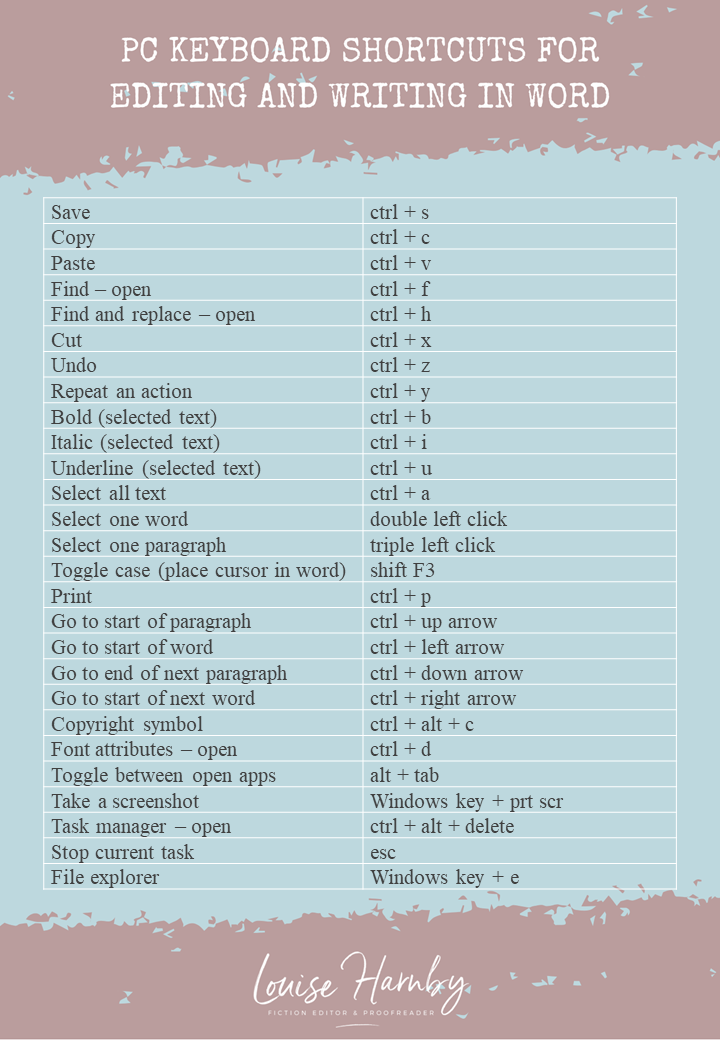
CLICK ON IMAGE TO DOWNLOAD A PDF
Louise Harnby is a line editor, copyeditor and proofreader who specializes in working with crime, mystery, suspense and thriller writers.
She is an Advanced Professional Member of the Chartered Institute of Editing and Proofreading (CIEP), a member of ACES, a Partner Member of The Alliance of Independent Authors (ALLi), and co-hosts The Editing Podcast. Visit her business website at Louise Harnby | Fiction Editor & Proofreader, say hello on Twitter at @LouiseHarnby, connect via Facebook and LinkedIn, and check out her books and courses.
Are your readers bouncing from one character’s head to another in the same scene? You might be head-hopping. This article shows you how to spot it in your fiction writing, understand its impact, and fix it.
Rebus pushed open the wrought-iron gate. No sound from its hinges, the garden to either side of the flagstone path well tended. Two bins – one landfill, one garden waste – had already been placed on the pavement outside. None of the neighbours had got round to it yet. Rebus rang the doorbell and waited. The door was eventually opened by a man the same age as him, though he looked half a decade younger. Bill Rawlston had kept himself trim since retirement, and the eyes behind the half-moon spectacles retained their keen intelligence.
‘John Rebus,’ he said, a sombre look on his face as he studied Rebus from top to toe. ‘Have you heard?’ Rawlston’s mouth twitched. ‘Of course I have. But nobody’s saying it’s him yet.’ ‘Only a matter of time.’ ‘Aye, I suppose so.’ Rawlston gave a sigh and stepped back into the hall. ‘You better come in then. Tea or something that bit stronger?’ […] ‘Sugar?’ Rawlston asked. ‘I can’t remember.’ ‘Just milk, thanks.’ Not that Rebus was planning on drinking the tea; he was awash with the stuff after his trip to Leith. But the making of the drinks had given him time to size up Bill Rawlston. And Rawlston, too, he knew, would have been using the time to do some thinking. Anaylsis: Tight third-person limited narration Rebus is the viewpoint character. That means the internal experiences we access are limited to his. For example:
We cannot get in Rawlston’s head. All we can do is consider his internal experiences via his observable and audible behaviour, and his dialogue. For example:
What head-hopping would look like Here’s what that excerpt might look like if there was head-hopping going on:
Rebus pushed open the wrought-iron gate. No sound from its hinges, the garden to either side of the flagstone path well tended. Two bins – one landfill, one garden waste – had already been placed on the pavement outside. None of the neighbours had got round to it yet. Rebus rang the doorbell and waited.
Bill Rawlston walked down the hall and peered through the peephole. Rebus. Same age as him, though he looked half a decade older. He opened the door. Rawlston had kept himself trim since retirement, and the eyes behind the half-moon spectacles retained their keen intelligence. ‘John Rebus,’ he said, a knot forming in his stomach as he studied Rebus from top to toe. ‘Have you heard?’ The question riled him. Was Rebus stupid? ‘Of course I have. But nobody’s saying it’s him yet.’ ‘Only a matter of time.’ ‘Aye, I suppose so.’ Rawlston begrudged letting Rebus in but stepped back into the hall. ‘You better come in then. Tea or something that bit stronger?’ […] ‘Sugar?’ Rawlston asked. ‘I can’t remember.’ ‘Just milk, thanks.’ Not that Rebus was planning on drinking the tea; he was awash with the stuff after his trip to Leith. But the making of the drinks had given him time to size up Bill Rawlston. Rawlston had used the time to do some thinking, too. Rebus turning up here after all those years – it pissed him off. Analysis: Confused narration Notice how we bounce between the heads of Rebus and Rawlston. Now we have access to the internal experiences of both.
In that butchered version, the reader is forced to play a game of ping-pong on the page. Why head-hopping spoils fiction Here are 4 reasons to hold viewpoint rather than head-hopping:
1. Head-hopping renders a story less immersive
In Rankin’s original prose, we are limited to the world of the novel as Rebus experiences it. That’s powerful because every word on the page is a step we take with Rebus, as Rebus. I get to be a male, Scottish detective for a few hours rather than a female, English book editor! In my butchered version, I take that first step with Rebus but then trip and fall into Rawlston. Because I’m bouncing between those characters’ internal experiences, I don’t have time to invest in either. And so I stay as lil’ ol’ me. I do like being me, but when I buy one of Rankin’s books I want to immerse myself in its world for a few hours at a time and dig deep under the skin of the viewpoint character. I can be me without paying fifteen quid for the privilege!
2. Head-hopping diminishes suspense
In the original text, Rankin keeps the suspense tight by allowing us to access only Rebus’s senses. Rawlston’s sombre expression, twitching mouth and curt responses make Rebus (and us) think, Does he want me here? Does he begrudge my presence? What’s going on in his head? Those questions demand answers and we seek them in the clues offered by the limited narrative. Because the limited viewpoint requires Rebus and the reader to make assumptions based on what’s observable and audible, there’s uncertainty. That’s what provides the suspense, and it compels us to keep reading in the hope that the truth will be unveiled. In my head-hopping version, the prose is flat. There are no questions. We know what everyone’s thinking because we’re in everyone’s head. Readers aren’t called upon to use their imagination – both characters’ internal experiences are spoon-fed to us.
3. Head-hopping is less authentic
Head-hopping reminds readers that they are in a story written by an author. We don’t get to suspend belief because the writing won’t allow us to immerse ourselves that deeply. In Rankin’s original prose, we walk through the world as if we are Rebus, and Rebus alone. That’s what happens in real life. I know only what I’m thinking, feeling, seeing and hearing. I can’t be sure than another’s perception is the same. Audio-visual signals help me make reasonable assumptions but I’m only ever in my own head … or Rebus’s if I’m reading a story about him because Rankin knows how to hold viewpoint. In my mangled version of the excerpt, there’s a reality flop. Now I’m everyone, which is ridiculous of course. Authenticity has fallen off a cliff.
4. Head-hopping can be confusing
When a writer head-hops, the reader has to keep track of whose thoughts and emotions are being experienced. When a reader doesn’t know where they are in a novel for even a few seconds, that’s a literary misfire. This is what happens in the head-hopping excerpt. For example, Rawlston walks down the hall and identifies Rebus through the peephole. We’re right with him, in his head. But what follows is jarring. That he reports on his spectacles sitting in front of keenly intelligent eyes is oddly self-aware. Of course, it’s not Rawlston’s perception; it’s Rebus’s. And once we realize that, the prose makes sense. But working that out is not where Rankin wants the reader’s attention. He’s telling us a story and he wants us to read it. That’s why he holds a tight limited viewpoint throughout. Head-hop check Make a list of the characters in a chapter or scene. Identify the viewpoint character. There can be more than one viewpoint character in a book but most commercial fiction authors separate them by chapters or sections. Here’s a quick way to check whether you’re holding viewpoint. Viewpoint characters: What the reader can access
Non-viewpoint characters: What the reader can access
Some examples to show you the way
Summing up Even if your readers don’t know what head-hopping is, by removing it from your novel you’ll give them a more immersive, suspenseful and authentic journey through the world you’ve built. Plus, you’ll ensure they’re reading your story, not trying to work out who’s telling it.
Louise Harnby is a line editor, copyeditor and proofreader who specializes in working with independent authors of commercial fiction, particularly crime, thriller and mystery writers.
She is an Advanced Professional Member of the Chartered Institute of Editing and Proofreading (CIEP), a member of ACES, a Partner Member of The Alliance of Independent Authors (ALLi), and co-hosts The Editing Podcast. Visit her business website at Louise Harnby | Fiction Editor & Proofreader, say hello on Twitter at @LouiseHarnby, connect via Facebook and LinkedIn, and check out her books and courses.
This post helps less experienced authors and editors understand how a third-person narrative viewpoint works in fiction, and the differences between objective and limited.
What is narrative point of view?
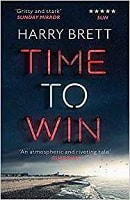
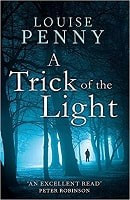
Point of view (POV) describes whose head we’re in when we read a book ... from whose perspective we discover what’s going on – and the smells, sounds, sights and emotions involved. Third-person limited POV Along with third-person objective, this viewpoint is the one that most writers find easiest to master at the beginning of their journey. Furthermore, readers are used to encountering it in contemporary fiction. The pronouns of choice are ‘she’, ‘he’, ‘it’ and ‘they’. Third-person limited is so called because it’s a deeper viewpoint that limits readers to a single character’s experience – what they see, hear, feel and think. Readers get to sit in their skin and that provides an immersive experience. It’s as if we’re them. Example: Intimacy and getting under the character’s skin Here are some examples from Mick Herron, Harry Brett and Louise Penny that demonstrate an intimate third-person limited narrative:
The voices are distinctive. It’s not just dialogue that conveys how the viewpoint characters speak and think; it’s the narrative too. However, it’s called third-person limited for a reason. Strictly speaking, what that character can’t see or know shouldn’t be reported. In the above examples, we’re left with questions – of destination in the first, of the origin of a smell in the second, and of the nature of the journey – because we don’t know any more than the viewpoint characters. Third-person limited is effective because an author doesn’t want to give everything away at once. The limitations over what can be known, and therefore divulged, allow the writer to control the unveiling of information via the viewpoint character. Recommendation I recommend you stick to a single character’s POV per chapter or section to avoid confusion or interruption. Mittelmark and Newman (p. 159) offer this wisdom:
Sometimes an author slips into a different point of view for the space of a single paragraph, or even a sentence. This is especially jarring when the remaining novel is given from the point of view of a single character, whom we have come to regard as our second self. It gives the feeling of a fleeting and unexplained moment of telepathy, an uncomfortable intrusion of somebody else’s thoughts. When the protagonist’s point of view resumes, we move forward into the narrative warily, ready at any moment for a fresh assault on our minds.
That’s worth heeding. It means the reader’s trust has been lost, that they’ve been pulled out of the story rather than drawn further into it. Trickier still is narrative ping pong, where within one section we bounce back and forth between the POVs of Character X and Character Y. Here’s a made-up example that demonstrates how things can go wrong.
Jan ran down the road, her lungs screaming for air. She snatched a glance over her shoulder, hoping to Christ Melody was behind.
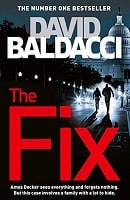
‘You okay, Jan?’ said Melody. She’d barely got the words out – her throat was on fire. All she wanted to do was stop, breathe, devour that bottle of water in her backpack bouncing hard against her spine. ‘We’re here,’ Jan said. Thank God. Tears of relief stung her eyes. She’d been worried Mel wouldn’t keep up. Guilt niggled. Would she have gone back for her? She wasn’t sure. The problem with this kind of setup is that it ‘alienates the reader from both perspectives. She is unable to identify with either because there’s no telling when it will be yanked away’ (Mittelmark and Newman, p. 161). In other words, the reader has been prevented from immersing themselves in the character’s version of the story. When you stay in the head of one character per chapter or section, you make your writing life and your reader’s journey easier. Third-person objective POV If third-person limited provides intimacy – allowing us to explore a character’s emotions and hear their voice – third-person objective offers a more neutral flexibility when we need some distance to look around and beyond objectively. Like its limited sister, writers find this easiest to master and readers are used to encountering it. The pronouns too are ‘she’, ‘he’, ‘it’ and ‘they’. It’s a useful viewpoint for the author who wants to convey descriptive information – height, weight, facial expression, environment. If you’re using this POV, practice your observation skills so that you understand how people move from place to place, what they wear, where they live, how they gesture, so that you can show what might be going on in their heads through what can be observed. The same can be said of the objects in your novel. How does light play on water or a brick building at various times of the day? What sounds might be audible in your environment? How do the seasons affect the flora and fauna? Third-person objective viewpoints are powerful because they force a writer to show rather than tell what’s being seen. That’s because we don’t have access to the internal thoughts of a character. Example: A more distant and descriptive narrative Here’s an example from David Baldacci’s The Fix (p. 3) that demonstrates third-person narration as observable description.
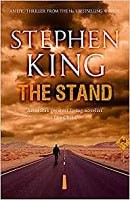
Example: Shown-not-told in action Here are some excerpts from Stephen King’s The Stand that demonstrate a close attention to the way things and people behave when observed.
Objectivity allows the writer to explore in detail what would be unnatural for a character to report directly. Remember, we’re not accessing thoughts, opinions and emotions with an objective POV, just the stuff that any onlooker could see, hear or smell. Objective is the key word here. Third-person objective viewpoints should focus on what could be known by a narrator witnessing that scene. When information is reported that moves beyond a floating camera that’s tracking the immediate environs and into a space where the narrator knows more than could possibly be witnessed by the character or the onlooker, omniscience is in play (more on that below). In some genres – crime fiction for example – this can be useful because the reader will be forced to reach their own conclusions as to the reasons for, or motivations behind, a particular event or behaviour. In other words, it’s mysterious. However, it can be distancing if overused and as a result contemporary commercial fiction writers rarely write entire novels from an objective POV because it’s reportage and we can’t get into the characters’ heads. It’s harder to understand what motivates them unless they express it through dialogue. A blend of limited and objective is a more likely choice. Recommendation Use third-person objective POV to create suspense, to make your reader wonder, and ask their own questions, and to provide scene-setting information, but blend with a limited viewpoint for deeper emotional engagement. In the first paragraph of the example below, Baldacci (The Fix, p. 3) uses third-person objective to give us background facts. In the second, he switches to limited to explain the character’s feelings. It’s a lovely fusion:
Cited sources and related reading
Louise Harnby is a line editor, copyeditor and proofreader who specializes in working with crime, mystery, suspense and thriller writers.
She is an Advanced Professional Member of the Chartered Institute of Editing and Proofreading (CIEP), a member of ACES, a Partner Member of The Alliance of Independent Authors (ALLi), and co-hosts The Editing Podcast. Visit her business website at Louise Harnby | Fiction Editor & Proofreader, say hello on Twitter at @LouiseHarnby, connect via Facebook and LinkedIn, and check out her books and courses. The impact of ‘before’ and ‘after’ in fiction writing: Tacit and explicit chronology of action17/2/2020
When the order of characters’ movements is told with the words ‘before’ and ‘after’, there’s a risk that readers will focus on timeline rather than story. That distraction can reduce engagement and dumb down the writing.
Here’s what to look out for and how to fix the problem. 
In this article, we’ll look at tacit and explicit chronologies of action, and assess which style of writing is more immersive and why.
Why writers include ‘before’ and ‘after’ The inclusion of ‘before’ and ‘after’ to tell the order of play is not an indication of poor grammar – not at all. There’s nothing grammatically wrong with these constructions. 
More usually, it’s an indication of insecurity. The author hasn’t learned to trust the power of their words on the page, or the ability of their readers to perceive the meaning behind those words.
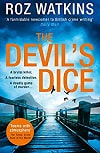
It’s also why writers sometimes use several adjectives with similar meanings rather than one strong one, or an adverbial phrase to fortify a weak verb. Some authors also fear that their writing will come across as too ‘plain’ or ‘simple’. Chronological nudges are an attempt to ornament the prose. Tacit chronology of action The things that we do occur in a sequence; they have a chronology. This is as much the case in real life as it is on the screen, in an audiobook and in the pages of a novel. That chronology is tacit – we don’t need to explain it because it’s understood. Take a look at this excerpt from The Devil’s Dice by Roz Watkins (p. 79, HQ, 2019):
Watkins doesn’t tell us explicitly that the shuddering occurred before the laptop was put down, or that the laptop was moved before the character shifted the cat onto their knee. And yet we know. The sequence of events is implied by the order in which she places each clause. It’s tacit.
And that’s the thing with strong line craft – it allows the reader to immerse themselves in the chronology of action by showing us, clause by clause, what’s transpiring, instead of tapping us on the shoulder and telling us. Explicit chronology of action Let’s recast the Watkins excerpt with some explicit taps on the shoulder:
I shuddered before putting the laptop down, then manoeuvred Hamlet onto my knee. After leaning in, I breathed in his subtle, nutty cat smell.
I see this use of timeline nudges frequently in the fiction writing of less experienced authors, and it’s problematic when overused. Here’s why. 1. Some readers might feel patronized Not every reader will notice the use of chronology nudges. But some will, and since no author wants to alienate a chunk of their readership, why push the story over a cliff when we can work out the sequence of events from the order of the words? Telling readers that X was done before doing Y, or after doing Z, is akin to saying: ‘Hey, just in case you’re not clever enough, let me spell it out for you.’ It’s a dumbing-down that readers in the know won’t appreciate. 2. The inclusion is unnecessary If you’re still not convinced, ask yourself whether the inclusion of ‘before’ or ‘after’ as timeline nudges is necessary. It often isn’t. If a character’s shuddering occurs at the beginning of a sentence, the reader will assume that shuddering is what’s happening right now. If a new action follows that shuddering, the reader will assume that – just like in real life – the moment has passed and something else is happening in the new now of the novel. 3. The reader is focused on the wrong thing When writers create immersive fiction, the reader feels as if they are in the moment – this is happening, now that, now the other. ‘Before’ and ‘after’ are distractions that focus the reader on when rather than what’s happening. The former is telling; the latter is showing. 4. There are more words than are necessary Not enough words leaves readers hungry for clarity. Too many gives them indigestion. The artistry comes in the form of balance. As long as the sequence of events can be understood by the reader, consider whether timeline nudges such as ‘before’ and ‘after’ are cluttering your prose. 
The power of tacit chronology – more examples
Take a look at these pairs of narrative text, each of which has a shown tacit chronology and an alternative told explicit sequence. Which versions are more suspenseful? Which are most immediate? Which flow better when you read them out loud? I’ve used examples from published fiction for the tacit versions, and taken a little artistic licence – altering them in ways their authors never intended – for the explicit chronologies.
In the original version, the ‘and’ between the initial breath and the walk into the kitchen is a fine example of the power of a conjunction. It’s almost invisible, which gives us the space to take that breath with the viewpoint character. And having taken it, we’re ready to go into the kitchen with them. In the edited version, ‘before’ pulls us away from that moment. The tension has fallen out of the sentence.
In the original version, it’s as if we’re in the room, watching the man as he smiles and leans back. There is space for that action to have its moment. Then he blows the smoke – that’s the new moment; we’ve left the other behind. In the edited version, ‘after’ shoves us past the leaning back and smiling before we’ve had a chance to savour it. It’s already gone, even though we’re still reading about it.
In the original version, Crichton shows us the action. Perhaps, like me, you can hear the chunter of the helicopter blades in the air. Who’s in this helicopter? Men in uniform. They jump out. What will happen next? We’re shown: they fling open the door. There’s a sense of order, of clandestine and militaristic precision. In the edited version, ‘before’ saps the suspense from the final sentence. We’re focused on the timeline rather than the action. Summing up The table below summarizes the impact of tacit and explicit chronology on prose.
Take a look at your narrative. If ‘before’ and ‘after’ are telling rather than showing, recast gently and reread out loud. Is the order of play still clear? Is the prose more immersive? If so, there’ll be fewer words but what’s there will be all the richer.
And if you’re worried that your prose will be too plain, think again. Immersive writing allows the reader to decorate the story with their own imagination.
Louise Harnby is a line editor, copyeditor and proofreader who specializes in working with crime, mystery, suspense and thriller writers.
She is an Advanced Professional Member of the Chartered Institute of Editing and Proofreading (CIEP), a member of ACES, a Partner Member of The Alliance of Independent Authors (ALLi), and co-hosts The Editing Podcast.
Flat chapter finales are a fast track to reader disappointment. Here’s how to nail those last few lines so that readers can’t wait to turn the page.
Readers turn the page to find answers to questions. Why did that happen? Who’s responsible? What will happen next?
Unanswered questions at the end of chapters place us in a state of suspense. We’ll try to predict the answers based on the information we’ve been given. We might be proved right. I thought so! We might be proved wrong. I didn’t see that coming! Either way, as long as there’s suspense, we’ll turn the page. Here are some ideas, with examples from published fiction, about how to do it, so that even predictable outcomes are structured line by line such that readers are itching with anticipation. 1. Wrap up the chapter in the middle of something interesting There are two people in a bedroom. They’ve survived a harrowing encounter. And there’s oodles of sexual tension between them. A less confident writer might wrap up the chapter as follows:
‘I’m sorry I shot you,’ she said, and slipped into the bed. ‘But I did it to save your life.’
Mark pulled off his tie and began to undo the buttons on his shirt. They made love, then ordered food and drink – two omelettes and fries and a bottle of champagne – and, after they’d eaten, and drunk, they made love again. [CHAPTER ENDS] The problem here is that the suspense dissipates. Mark begins to undress but we don’t bother to wonder what will happen next – whether he and the woman will have sex, or try to but be interrupted, or do the deed and grab some food. We don’t need to – we’re told. Fear not! This is actually a tweaked version of an excerpt from Solo by William Boyd, Vintage, 2014 (pp. 259–60). Boyd is cannier. This is what it really looks like:
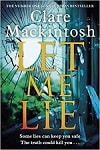
In the real version, we do ask those questions. The artistry lies in the fact that we have to turn the page to find the answers and relieve our suspense. They’re given in the next chapter. A sex scene follows. It’s an interlude – a chance to breathe, for them and us – before Bond leaves and sets up a diversion that will confuse the CIA’s surveillance of him. 2. Wrap up the chapter with foreshadowing Chapter endings that tell of incoming storms are powerful. When they’re short and taut, even better! Take a look at this super example from p. 210 of Clare Mackintosh’s Let Me Lie (Sphere, 2019):
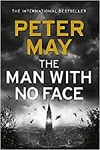
That final line is like a punch in the gut. It begs us to ask: When will he come? What will he do? And how will she protect herself? It’s six words of masterful suspense. 3. Wrap up the chapter with emotional reflection In the The Man with No Face by Peter May (Riverrun, 1981), the protagonist, a journalist called Neil Bannerman, walks into a restaurant and alerts a minister that he has evidence about a government cover-up. That’s the juicy bit. Bannerman then exits, leaving the minister to mull over the revelation. That’s the mundane bit and May needs a way to close the chapter with a pop. Emotional reflection is the tool of choice. Here’s the excerpt from p. 233:
The journos and minister won’t be enjoying their meal but this isn’t an exercise in gastronomy. The end-of-chapter suspense comes in the form of questions: Will there be consequences for Bannerman? How will those play out? Will the minister get his just deserts? 4. Wrap up the chapter with a surprise interruption Another way of wrapping up a chapter when the big stuff has already played out is to introduce some sort of surprise interruption. Perhaps there’s a knock on the door from an unexpected visitor, or an odour that forces the viewpoint character to direct their attention elsewhere. Here’s another excerpt from Let Me Lie (p. 226). Murray, the viewpoint character, has just had a telephone call with Anna, during which he told her that her parents had indeed been murdered. She becomes emotional and commands him to drop the investigation, despite her bringing the case to him in the first place.
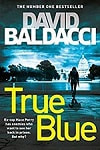
What would ordinarily be a domestic mundanity serves to show his mood; his shock is so immersive that he’s forgotten everything around him until the alarm goes off. We leave the chapter imagining the shrill noise, the odour of burnt food, the smoke in the kitchen, and wondering what on earth has happened to make Anna change her mind. 5. Wrap up the chapter with a shocking last line There’s nothing better than a final line that the reader doesn’t see coming. Here’s a magnificent example from David Baldacci’s True Blue (Kindle edition, Macmillan, 2009). In Chapter 4, we meet Roy, a young lawyer. He finishes a game of basketball and slopes back to the office where, we learn, he earns a healthy pay cheque by plea-bargaining on behalf of mostly guilty defendants.
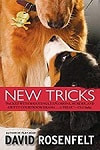
Baldacci sets up the whole chapter as just another day at the office. We should know better than to be lulled into this false sense of security, but Baldacci’s narrative is strong enough from the start to convince us this might go in another direction. Maybe Roy is crooked. Perhaps he’s about to be fired. Maybe he’s going to get a phone call telling him he has to go to court and represent someone he’d rather not. What we don’t expect is the wallop when a body falls out of the fridge. And now we have a ton of suspenseful questions. Who is she? How did she get in the fridge? Why was she killed? To find out, we’ll have to turn the page. 6. Wrap up the chapter with dialogue that demands answers One great line of dialogue can close a chapter beautifully. No action beats, no narrative, no response – just the spoken word. It works as an outro when the speech leaves us with questions, and therefore in suspense. Here's an example from New Tricks by David Rosenfelt (2009, Grand Central Publishing, pp. 215–16):
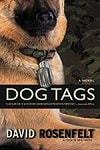
The dialogue forces us to wonder: Why has Richard not carried out the redirect? Has some new evidence come to light? How will this affect the case? Rosenfelt doesn’t dampen the suspense by cluttering his prose with the detail of what came next – maybe people in the courtroom looked surprised or confused; perhaps there was an objection, and the judge banged their gavel and announced a recess. Instead, all that stuff is left unwritten – we just imagine it. It’s one line of dialogue and the chapter’s done. 7. Wrap up the chapter in the middle of one character’s speech Here’s Rosenfelt again in Dog Tags (Grand Central Publishing, 2010, pp. 28–9). Unlike in the example above where there’s a natural chapter break because of a shift from the courtroom to the chambers, this time he inserts the chapter break in the middle of one person’s speech. Less experienced authors might shy away from this, but it can work – if it’s an appropriate suspense point that leaves the reader reeling with questions.
That final line is a shock, for lawyer Andy Carpenter and us. Why would a dog need a lawyer? How can such an absurd conversation be happening? We learn the answers to these questions in the next chapter, and that’s exactly where they should be because ‘The government’ is the suspense point that grabs us by the scruff of the neck and demands we keep reading. Do you know when it’s closing time? Like artists who can’t put down a paintbrush, less confident writers sometimes lack the courage to end with one line that evokes questions rather than solutions. Yet that’s what the authors in all the examples above have done, and that’s why their outros are suspenseful and page-turning. If your chapters have a saggy bottom, maybe you haven’t identified closing time. I line edit for an author who writes knockout chapter endings … he just places them 10 lines further up the page than they should be to create a suspenseful finale! When you find yourself stuck, look up the page to find the point that will make the reader think How’s that going to play out? or Why did she do that? or That was a surprise! or Ha! You deserved that. … those few lines that will kick them up the backside and push them forward. If those lines are already there, think about whether they should be moved to the end of the chapter, or whether the prose after them should be shifted (or even deleted). If they’re not there, write them. Think about the very last sentence in your chapter too. How long is it? Your writing style and genre might dictate the style of your final lines but notice how lean the word count is in most of the examples above. The brevity acts like a command: Read me. Pay attention. Turn the page. Summing up Every chapter should end with a pop, regardless of genre. Those last few lines are what the reader remembers before they pause. An otherwise beautifully crafted chapter can be ruined if it flops at the finishing line. Find the suspense point – the lines that make readers ask questions – and use them to wrap up your chapter. And pay attention to the very last sentence. Sometimes less is more. Related resources
Louise Harnby is a line editor, copyeditor and proofreader who specializes in working with crime, mystery, suspense and thriller writers.
She is an Advanced Professional Member of the Chartered Institute of Editing and Proofreading (CIEP), a member of ACES, a Partner Member of The Alliance of Independent Authors (ALLi), and co-hosts The Editing Podcast.
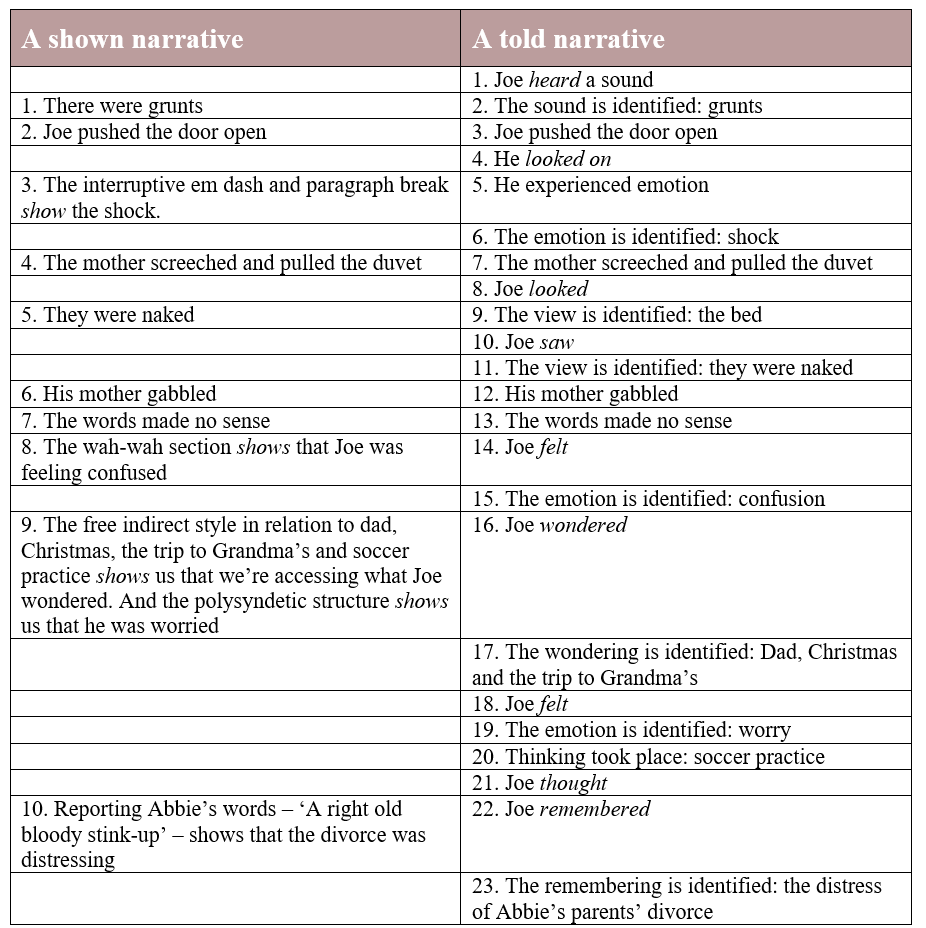
Are you storytelling-telling? Too much told narrative can force the reader to experience a story through extraneous layers that add clutter rather than clarity. Here’s how to identify one type of told prose and write with more immediacy.
|


|
Her eyes flash with hatred. I go to speak, to defend myself, but no words will come. Instead I let Sonia guide me away, Barbara’s venom ringing in my ears.
|
|
Here are some additional (made-up) examples of where motivation is the order of the day. The character does X for the purpose of achieving Y, and the infinitive is effective.
- I take deep breaths to calm myself.
- He’d worked his backside off with this parole officer to stay out of trouble.
- Arthur went to pull Excalibur from the stone but Merlin’s scream stopped him in his tracks.
- I’ve made a decision. I’ll fill up her petrol tank with diesel to trash the engine. That’ll teach her.
Summing up
If you want your characters to act, show those actions in your prose rather than telling readers about intention. Replace the infinitives with a conjunction and modify how the verb’s conjugated. Or, for a more staccato feel, try commas, or closing the sentence with a full point and starting a new one.
If it’s motivation you want, a ‘to’ plus a verb has the right to stand.
Louise Harnby is a line editor, copyeditor and proofreader who specializes in working with crime, mystery, suspense and thriller writers.
She is an Advanced Professional Member of the Chartered Institute of Editing and Proofreading (CIEP), a member of ACES, a Partner Member of The Alliance of Independent Authors (ALLi), and co-hosts The Editing Podcast.
Visit her business website at Louise Harnby | Fiction Editor & Proofreader, say hello on Twitter at @LouiseHarnby, connect via Facebook and LinkedIn, and check out her books and courses.
She is an Advanced Professional Member of the Chartered Institute of Editing and Proofreading (CIEP), a member of ACES, a Partner Member of The Alliance of Independent Authors (ALLi), and co-hosts The Editing Podcast.
Visit her business website at Louise Harnby | Fiction Editor & Proofreader, say hello on Twitter at @LouiseHarnby, connect via Facebook and LinkedIn, and check out her books and courses.
In this episode of The Editing Podcast, Denise and Louise talk with guest Sea Chapman about constructed languages, or conlangs.
Click to listen to Season 3, Episode 10
Listen to find out more about:
Resources mentioned in the show
Music credit
‘Vivacity’ Kevin MacLeod (incompetech.com). Licensed under Creative Commons: By Attribution 3.0 License.
- What is a constructed language, or conlang?
- The different types of conlang
- Tips for writers who want to include conlangs in fiction
- The rules of play
- Base languages sometimes and conlang creation
Resources mentioned in the show
- Email Sea Chapman (sea@seachapman.com) for handouts from her ACES 2018 presentation, ‘Conlangs: Languages with Stories to Tell’ or to request additional resources
- Language Creation Society
- Conlangs on reddit
- Constructed Languages on Facebook
- ConWorkShop forum
- Conlangery podcast
- Iain Banks talks writing, world events and Mastermind (video)
- ‘A few notes on Marain by Iain M. Banks’
- Fabulosa!: The Story of Polari, Britain's Secret Gay Language
- ‘What’s Polari?’
Music credit
‘Vivacity’ Kevin MacLeod (incompetech.com). Licensed under Creative Commons: By Attribution 3.0 License.
Louise Harnby is a line editor, copyeditor and proofreader who specializes in working with crime, mystery, suspense and thriller writers.
She is an Advanced Professional Member of the Chartered Institute of Editing and Proofreading (CIEP), a member of ACES, a Partner Member of The Alliance of Independent Authors (ALLi), and co-hosts The Editing Podcast.
Visit her business website at Louise Harnby | Fiction Editor & Proofreader, say hello on Twitter at @LouiseHarnby, connect via Facebook and LinkedIn, and check out her books and courses.
She is an Advanced Professional Member of the Chartered Institute of Editing and Proofreading (CIEP), a member of ACES, a Partner Member of The Alliance of Independent Authors (ALLi), and co-hosts The Editing Podcast.
Visit her business website at Louise Harnby | Fiction Editor & Proofreader, say hello on Twitter at @LouiseHarnby, connect via Facebook and LinkedIn, and check out her books and courses.
In this episode of The Editing Podcast, Denise and Louise discuss em dashes, or em rules, and how to use them in fiction and non-fiction writing.
Click to listen to Season 3, Episode 9
Listen To Find Out More About:
Editing Bites
Music credit
‘Vivacity’ Kevin MacLeod (incompetech.com). Licensed under Creative Commons: By Attribution 3.0 License.
- Parenthetical use
- Indicating a new speaker
- Indicating omission
- Profanity
- Showing faltering speech
- Conveying end-of-line interruptions
Editing Bites
- The Magic of Fiction, Beth Hill
- ‘Start here: How to self-publish your book’, Jane Friedman
Music credit
‘Vivacity’ Kevin MacLeod (incompetech.com). Licensed under Creative Commons: By Attribution 3.0 License.
Louise Harnby is a line editor, copyeditor and proofreader who specializes in working with crime, mystery, suspense and thriller writers.
She is an Advanced Professional Member of the Chartered Institute of Editing and Proofreading (CIEP), a member of ACES, a Partner Member of The Alliance of Independent Authors (ALLi), and co-hosts The Editing Podcast.
Visit her business website at Louise Harnby | Fiction Editor & Proofreader, say hello on Twitter at @LouiseHarnby, connect via Facebook and LinkedIn, and check out her books and courses.
She is an Advanced Professional Member of the Chartered Institute of Editing and Proofreading (CIEP), a member of ACES, a Partner Member of The Alliance of Independent Authors (ALLi), and co-hosts The Editing Podcast.
Visit her business website at Louise Harnby | Fiction Editor & Proofreader, say hello on Twitter at @LouiseHarnby, connect via Facebook and LinkedIn, and check out her books and courses.
In this episode of The Editing Podcast, Denise and Louise explain what a comma splice is, why you should usually avoid it, and how it can add clarity.
Click to listen to Season 3, Episode 8
Music credit
‘Vivacity’ Kevin MacLeod (incompetech.com). Licensed under Creative Commons: By Attribution 3.0 License.
What is a comma splice?
When two independent clauses – which could stand on their own as sentences and make perfect sense – are separated by a comma, the sentence is said to contain a comma splice. For example:
Those two sentence above could be separated by a semi-colon, a dash, or a full stop and no one would be breathing grammar rules down your neck:
Standard punctuation
However, if you use a comma to separate them, that heavy breathing will come from some quarters:
Non-standard: comma splice
Why comma splices trip up readers
Some people don’t know what a comma splice is and don’t care. But plenty do, and even if they don’t know what’s it called, they trip up. For those in the know, comma spliced sentences (sometimes) scream off the page for precisely that reason.
That's because when readers see a comma they're inclined to think, This is the start of a list.
A standard method for showing a reader that they’re coming to the end of a list is to incorporate a coordinating conjunction such as ‘and’, ‘but’, ‘though’ and ‘or’. It acts as shorthand for One more item’s coming. Then there’ll be a full stop.
And so when only two items are separated by a comma, the reader’s expecting at least one more item in that list. When that third item doesn’t appear and the sentence finishes, the reader is jolted because they've placed the emphasis in the wrong place. Try reading these examples out loud:
Your intonation likely changed as you read the words 'but I think oranges are okay' because you knew you were finishing a sentence. In the second example, you were left hanging after 'hate pears' and likely hadn't placed the stress correctly.
These kinds of stumbles are a distraction that, even if only for a split second, pulls the reader out of the writing. Now they’re thinking about where they placed the emphasis, not about our fabulous learning tool, enthralling plot line or groundbreaking academic research.
When comma splices can work: fiction
Comma splices are probably more prevalent in published fiction, and more acceptable. Sometimes, and with good reason. The comma doesn't always trip up readers.
The key is to allow splices to stand when they serve a purpose.
Narrative and rhythm
Take this example from A Tale of Two Cities by Charles Dickens: ‘It was the best of times, it was the worst of times, it was the age of wisdom, it was the age of foolishness, it was the epoch of belief, it was the epoch of incredulity’ and so on.
This prose is an experiment in rhythm. The splices work. But something else is going on too – the anaphora.
Anaphora is a literary device that uses repetition for rhythmic effect. In the Dickens example, the repetition of 'it was' pulls us along on a beautiful booky wave. Editing in semi-colons or full points would destroy the rhythm and would qualify as an example of editorial hypercorrection.
For a more detailed examination of anaphora, read: What is anaphora and how can you use it in fiction writing?
Dialogue and mood
While a comma splice will stick out like a sore thumb in a piece of academic research or an education textbook, that’s not always the case in dialogue.
If the speech is truncated, or there's anaphora in play, a comma might well work. Imagine this scenario in a novel: two characters are having an argument. One says, ‘It’s not me, it’s you’.
Strictly speaking, that's a comma splice. There are two independent clauses with a comma. Would it bother you? Probably not. The speech looks and sounds natural to the mind's ear. Changing the comma to a full stop would slow down the rhythm of the character’s speech and affect the emotionality in the dialogue.
But most important, readers won't trip up; they'll place the emphasis correctly. And so while emotion and mood have been respected, this hasn't been at the expense of clarity.
Summing up
‘Vivacity’ Kevin MacLeod (incompetech.com). Licensed under Creative Commons: By Attribution 3.0 License.
What is a comma splice?
When two independent clauses – which could stand on their own as sentences and make perfect sense – are separated by a comma, the sentence is said to contain a comma splice. For example:
- I love tomatoes.
- Red and yellow ones are my favourites.
Those two sentence above could be separated by a semi-colon, a dash, or a full stop and no one would be breathing grammar rules down your neck:
Standard punctuation
- I love tomatoes; red and yellow ones are my favourites.
- I love tomatoes – red and yellow ones are my favourites.
- I love tomatoes—red and yellow ones are my favourites.
- I love tomatoes. Red and yellow ones are my favourites.
However, if you use a comma to separate them, that heavy breathing will come from some quarters:
Non-standard: comma splice
- I love tomatoes, red and yellow ones are my favourites.
Why comma splices trip up readers
Some people don’t know what a comma splice is and don’t care. But plenty do, and even if they don’t know what’s it called, they trip up. For those in the know, comma spliced sentences (sometimes) scream off the page for precisely that reason.
That's because when readers see a comma they're inclined to think, This is the start of a list.
A standard method for showing a reader that they’re coming to the end of a list is to incorporate a coordinating conjunction such as ‘and’, ‘but’, ‘though’ and ‘or’. It acts as shorthand for One more item’s coming. Then there’ll be a full stop.
And so when only two items are separated by a comma, the reader’s expecting at least one more item in that list. When that third item doesn’t appear and the sentence finishes, the reader is jolted because they've placed the emphasis in the wrong place. Try reading these examples out loud:
- Let me tell you about fruit: I like apples, I hate pears but I think oranges are okay. Are we clear now?
- Let me tell you about fruit: I like apples, I hate pears. Are we clear now?
Your intonation likely changed as you read the words 'but I think oranges are okay' because you knew you were finishing a sentence. In the second example, you were left hanging after 'hate pears' and likely hadn't placed the stress correctly.
These kinds of stumbles are a distraction that, even if only for a split second, pulls the reader out of the writing. Now they’re thinking about where they placed the emphasis, not about our fabulous learning tool, enthralling plot line or groundbreaking academic research.
When comma splices can work: fiction
Comma splices are probably more prevalent in published fiction, and more acceptable. Sometimes, and with good reason. The comma doesn't always trip up readers.
The key is to allow splices to stand when they serve a purpose.
Narrative and rhythm
Take this example from A Tale of Two Cities by Charles Dickens: ‘It was the best of times, it was the worst of times, it was the age of wisdom, it was the age of foolishness, it was the epoch of belief, it was the epoch of incredulity’ and so on.
This prose is an experiment in rhythm. The splices work. But something else is going on too – the anaphora.
Anaphora is a literary device that uses repetition for rhythmic effect. In the Dickens example, the repetition of 'it was' pulls us along on a beautiful booky wave. Editing in semi-colons or full points would destroy the rhythm and would qualify as an example of editorial hypercorrection.
For a more detailed examination of anaphora, read: What is anaphora and how can you use it in fiction writing?
Dialogue and mood
While a comma splice will stick out like a sore thumb in a piece of academic research or an education textbook, that’s not always the case in dialogue.
If the speech is truncated, or there's anaphora in play, a comma might well work. Imagine this scenario in a novel: two characters are having an argument. One says, ‘It’s not me, it’s you’.
Strictly speaking, that's a comma splice. There are two independent clauses with a comma. Would it bother you? Probably not. The speech looks and sounds natural to the mind's ear. Changing the comma to a full stop would slow down the rhythm of the character’s speech and affect the emotionality in the dialogue.
But most important, readers won't trip up; they'll place the emphasis correctly. And so while emotion and mood have been respected, this hasn't been at the expense of clarity.
Summing up
- Understand what a comma splice is. Only then can you make an informed decision about whether to let it stand or fix it.
- Read the sentence aloud, tor ask someone else to. If you or they stumble over what you’ve written, so might your reader.
- Just because Woolf, McCarthy and Dickens use comma splices doesn't mean every writer should. There may be other literary devices in play or narrative motivations affecting their choices.
- There is a grammatical standard for how commas are handled between two independent clauses, but even so, we can’t prescribe for always right or always wrong. Sometimes it’s about style, rhythm and flow.
Louise Harnby is a line editor, copyeditor and proofreader who specializes in working with crime, mystery, suspense and thriller writers.
She is an Advanced Professional Member of the Chartered Institute of Editing and Proofreading (CIEP), a member of ACES, a Partner Member of The Alliance of Independent Authors (ALLi), and co-hosts The Editing Podcast.
Visit her business website at Louise Harnby | Fiction Editor & Proofreader, say hello on Twitter at @LouiseHarnby, connect via Facebook and LinkedIn, and check out her books and courses.
She is an Advanced Professional Member of the Chartered Institute of Editing and Proofreading (CIEP), a member of ACES, a Partner Member of The Alliance of Independent Authors (ALLi), and co-hosts The Editing Podcast.
Visit her business website at Louise Harnby | Fiction Editor & Proofreader, say hello on Twitter at @LouiseHarnby, connect via Facebook and LinkedIn, and check out her books and courses.
In this episode of The Editing Podcast, Denise and Louise discuss en dashes, or en rules, and how to use them in fiction and non-fiction writing.
Click to listen to Season 3, Episode 7
Find out more about ...
Editing bites
Music credit
‘Vivacity’ Kevin MacLeod (incompetech.com). Licensed under Creative Commons: By Attribution 3.0 License.
Find out more about ...
- Parenthetical use
- Indicating number spans
- Placement in dialogue interrupted by narrative description
- Linking in adjectival compounds
- Showing faltering speech
- Indicating a relationship/alternative
- Profanity
Editing bites
Music credit
‘Vivacity’ Kevin MacLeod (incompetech.com). Licensed under Creative Commons: By Attribution 3.0 License.
Louise Harnby is a line editor, copyeditor and proofreader who specializes in working with crime, mystery, suspense and thriller writers.
She is an Advanced Professional Member of the Chartered Institute of Editing and Proofreading (CIEP), a member of ACES, a Partner Member of The Alliance of Independent Authors (ALLi), and co-hosts The Editing Podcast.
Visit her business website at Louise Harnby | Fiction Editor & Proofreader, say hello on Twitter at @LouiseHarnby, connect via Facebook and LinkedIn, and check out her books and courses.
She is an Advanced Professional Member of the Chartered Institute of Editing and Proofreading (CIEP), a member of ACES, a Partner Member of The Alliance of Independent Authors (ALLi), and co-hosts The Editing Podcast.
Visit her business website at Louise Harnby | Fiction Editor & Proofreader, say hello on Twitter at @LouiseHarnby, connect via Facebook and LinkedIn, and check out her books and courses.
In this episode of The Editing Podcast, Louise and Denise demystify (and stand up for) one of the most misunderstood pieces of punctuation – the semi-colon.
Click to listen to Season 3, Episode 5
Find out more about ...
- What the semi-colon looks like
- Separating two independent clauses
- Subjects and predicates
- Weighting and parallelism
- Comma splices
- Separating items in a list
- Emojis
- Objections to the semi-colon
Resources
- National Centre for Writing’s podcast
- Semicolon: How a misunderstood punctuation mark can improve your writing, enrich your reading and even change your life, by Cecilia Watson
- How to use semi-colons in fiction writing
Music credit
‘Vivacity’ Kevin MacLeod (incompetech.com). Licensed under Creative Commons: By Attribution 3.0 License.
Louise Harnby is a line editor, copyeditor and proofreader who specializes in working with crime, mystery, suspense and thriller writers.
She is an Advanced Professional Member of the Chartered Institute of Editing and Proofreading (CIEP), a member of ACES, a Partner Member of The Alliance of Independent Authors (ALLi), and co-hosts The Editing Podcast.
Visit her business website at Louise Harnby | Fiction Editor & Proofreader, say hello on Twitter at @LouiseHarnby, connect via Facebook and LinkedIn, and check out her books and courses.
She is an Advanced Professional Member of the Chartered Institute of Editing and Proofreading (CIEP), a member of ACES, a Partner Member of The Alliance of Independent Authors (ALLi), and co-hosts The Editing Podcast.
Visit her business website at Louise Harnby | Fiction Editor & Proofreader, say hello on Twitter at @LouiseHarnby, connect via Facebook and LinkedIn, and check out her books and courses.
In this episode of The Editing Podcast, Denise and Louise chat with Tim Storm about the concept of unearned writing, and how to craft prose that's authentic and plausible.
Click to listen to Season 3, Episode 4
Find out more about
Resources related to the show
Music credit
‘Vivacity’ Kevin MacLeod (incompetech.com). Licensed under Creative Commons: By Attribution 3.0 License.
Find out more about
- The writer’s responsibility to the reader and the story
- Story events and character reactions in relation to plausibility and authenticity
- Salvation events
- Unnatural character realizations
- Contrived plot turns
- Thematic insertions or digressions
- Turning unearned writing into earned prose
- Idea flow in non-fiction
Resources related to the show
- Title Case Converter
- The Allusionist podcast
- Storm Writing School
- Free course from Tim: The Gold Standard Scene: Analyses of Near-Perfect Scenes in Prose Fiction
- Storm Writing School on Twitter
- Storm Writing School on Facebook
- Storm Writing School on Pinterest
- Writing resources from Louise
Music credit
‘Vivacity’ Kevin MacLeod (incompetech.com). Licensed under Creative Commons: By Attribution 3.0 License.
Louise Harnby is a line editor, copyeditor and proofreader who specializes in working with crime, mystery, suspense and thriller writers.
She is an Advanced Professional Member of the Chartered Institute of Editing and Proofreading (CIEP), a member of ACES, a Partner Member of The Alliance of Independent Authors (ALLi), and co-hosts The Editing Podcast.
Visit her business website at Louise Harnby | Fiction Editor & Proofreader, say hello on Twitter at @LouiseHarnby, connect via Facebook and LinkedIn, and check out her books and courses.
She is an Advanced Professional Member of the Chartered Institute of Editing and Proofreading (CIEP), a member of ACES, a Partner Member of The Alliance of Independent Authors (ALLi), and co-hosts The Editing Podcast.
Visit her business website at Louise Harnby | Fiction Editor & Proofreader, say hello on Twitter at @LouiseHarnby, connect via Facebook and LinkedIn, and check out her books and courses.
In this episode of The Editing Podcast, Denise and Louise chat about 4 features of written language that are often thought to be Americanisms but aren’t!
Click to listen to Season 3, Episode 3
Find out more about ...
- -iz- spellings
- serial commas
- em dashes
- which/that in restrictive relative clauses
Mentioned in the show
- Lexico/Oxford: ‘The Differences Between British and American Terms’
- Lynne Murphy on British and American English (video)
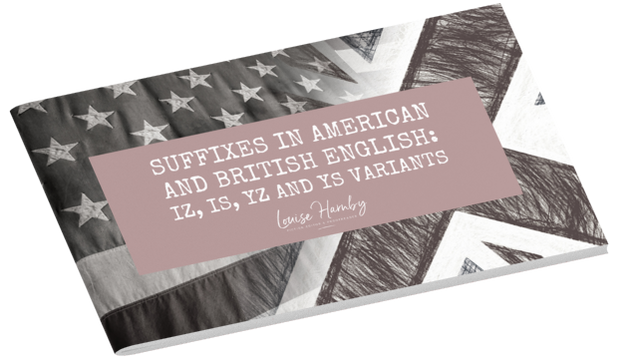
- Free PDF booklet: Visit the grammar and spelling page in my resource library to download this free booklet summarizing suffix variations in American and British English.
Music credit
‘Vivacity’ Kevin MacLeod (incompetech.com). Licensed under Creative Commons: By Attribution 3.0 License.
Louise Harnby is a line editor, copyeditor and proofreader who specializes in working with crime, mystery, suspense and thriller writers.
She is an Advanced Professional Member of the Chartered Institute of Editing and Proofreading (CIEP), a member of ACES, a Partner Member of The Alliance of Independent Authors (ALLi), and co-hosts The Editing Podcast.
Visit her business website at Louise Harnby | Fiction Editor & Proofreader, say hello on Twitter at @LouiseHarnby, connect via Facebook and LinkedIn, and check out her books and courses.
She is an Advanced Professional Member of the Chartered Institute of Editing and Proofreading (CIEP), a member of ACES, a Partner Member of The Alliance of Independent Authors (ALLi), and co-hosts The Editing Podcast.
Visit her business website at Louise Harnby | Fiction Editor & Proofreader, say hello on Twitter at @LouiseHarnby, connect via Facebook and LinkedIn, and check out her books and courses.
In this episode of The Editing Podcast, Denise and Louise talk with linguist Rob Drummond about grammar pedantry, peevery, youth language, and non-standard language in context.
Listen here ...
Find out more about ...
- Correct or conventional – a linguist’s perspective
- Better versus standard
- Zombie rules, and what we can ditch
- Youth language – dumbing down English or enriching it?
- Young people's language in relation to identity and language change
- Varieties of English in written communication: globalization, national and cultural identities
- The internet’s impact on pedantry and peevery
- The relationship between knowledge and pedantry
- The difference between preferences and judgements
- Recognizing our own pedantry and respecting contextually appropriate style
- Stepping outside our linguistic comfort zones
Mentioned in the show
- Radical Copyeditor blog
- ‘The Business of Being a Writer, with Jane Friedman’
- Rob Drummond Linguistics
- TED Talk: 'John McWhorter: Txtng is killing language. JK!!!'
- Rob's graph: Linguistic knowledge versus linguistic pedantry
Music credit
‘Vivacity’ Kevin MacLeod (incompetech.com). Licensed under Creative Commons: By Attribution 3.0 License.
Louise Harnby is a line editor, copyeditor and proofreader who specializes in working with crime, mystery, suspense and thriller writers.
She is an Advanced Professional Member of the Chartered Institute of Editing and Proofreading (CIEP), a member of ACES, a Partner Member of The Alliance of Independent Authors (ALLi), and co-hosts The Editing Podcast.
Visit her business website at Louise Harnby | Fiction Editor & Proofreader, say hello on Twitter at @LouiseHarnby, connect via Facebook and LinkedIn, and check out her books and courses.
She is an Advanced Professional Member of the Chartered Institute of Editing and Proofreading (CIEP), a member of ACES, a Partner Member of The Alliance of Independent Authors (ALLi), and co-hosts The Editing Podcast.
Visit her business website at Louise Harnby | Fiction Editor & Proofreader, say hello on Twitter at @LouiseHarnby, connect via Facebook and LinkedIn, and check out her books and courses.
Denise and Louise talk about how to use question marks in fiction and non-fiction according to convention.
Listen here ...
Find out more about
- Direct questions
- Indirect questions
- How-to statements
- Idiomatic phrases and question marks
- Double punctuation
- Uncertain dates and date ranges
- Indicating uncertainty
Mentioned in the show
- But Can I Start A Sentence With “But”? by Carol Saller
- Making a Point: The Pernickety Story of English Punctuation by David Crystal
Music credit
‘Vivacity’ Kevin MacLeod (incompetech.com). Licensed under Creative Commons: By Attribution 3.0 License.
Louise Harnby is a line editor, copyeditor and proofreader who specializes in working with crime, mystery, suspense and thriller writers.
She is an Advanced Professional Member of the Chartered Institute of Editing and Proofreading (CIEP), a member of ACES, a Partner Member of The Alliance of Independent Authors (ALLi), and co-hosts The Editing Podcast.
Visit her business website at Louise Harnby | Fiction Editor & Proofreader, say hello on Twitter at @LouiseHarnby, connect via Facebook and LinkedIn, and check out her books and courses.
She is an Advanced Professional Member of the Chartered Institute of Editing and Proofreading (CIEP), a member of ACES, a Partner Member of The Alliance of Independent Authors (ALLi), and co-hosts The Editing Podcast.
Visit her business website at Louise Harnby | Fiction Editor & Proofreader, say hello on Twitter at @LouiseHarnby, connect via Facebook and LinkedIn, and check out her books and courses.
Here's how to use quote marks (or speech marks) according to publishing convention in your fiction writing. The guidance covers both US English and UK English conventions.
In this post, I cover the following:
What quote marks are used for
Quote marks are used in 3 ways in fiction:
Character dialogue
Quote marks show that we’re reporting what someone else is saying or said.
Each new speaker's dialogue should appear on a new line and include opening and closing quote marks.
- What quote marks are used for
- Omitting a closing quote mark in dialogue
- Whether to use single or double quote marks
- Whether to use straight or curly quote marks
- Where the closing quote mark goes in relation to other punctuation
- When not to use quote marks
What quote marks are used for
Quote marks are used in 3 ways in fiction:
- Character dialogue
- To distance the narrator from what's being reported
- To denote song titles and other works
Character dialogue
Quote marks show that we’re reporting what someone else is saying or said.
Each new speaker's dialogue should appear on a new line and include opening and closing quote marks.
|
That puzzled me. ‘What do they need them for?’ I asked Hawthorne.
‘Latent footprints,’ he replied. ‘They need to eliminate you from the enquiry.’ The Word is Murder (p. 208), Anthony Horowitz, Arrow 2018 |
|
To distance the narrator from what's being reported
The tone of the distancing rendered by the quote marks will depend on narrative intent. Perhaps the voice is sarcastic. Or the author might want the reader to suspend belief by indicating that a character considers a word or phrase unreliable.
Imagine the character is saying so-called or supposed or allegedly before the word in quotes.
'What about your friends? Didn't they help?' Molly said.
Peter almost laughed. The last time his 'friends' had phoned or visited had been over six months ago. Two had wanted money, Another needed business advice. A fourth had spent the evening flirting with his now ex-wife.
Peter almost laughed. The last time his 'friends' had phoned or visited had been over six months ago. Two had wanted money, Another needed business advice. A fourth had spent the evening flirting with his now ex-wife.
A word of caution: Don't be tempted to differentiate distancing terms in the narrative from dialogue by using an alternate style. If there are double speech marks around the dialogue, there should be double marks around the distancing words.
NON-STANDARD (USING DOUBLES AS BASE STYLE)
"What about your friends? Didn't they help?" Molly said.
Peter almost laughed. The last time his 'friends' had phoned or visited had been over six months ago. Two had wanted money, Another needed business advice. A fourth had spent the evening flirting with his now ex-wife.
STANDARD (USING DOUBLES AS BASE STYLE)
"What about your friends? Didn't they help?" Molly said.
Peter almost laughed. The last time his "friends" had phoned or visited had been over six months ago. Two had wanted money, Another needed business advice. A fourth had spent the evening flirting with his now ex-wife.
"What about your friends? Didn't they help?" Molly said.
Peter almost laughed. The last time his 'friends' had phoned or visited had been over six months ago. Two had wanted money, Another needed business advice. A fourth had spent the evening flirting with his now ex-wife.
STANDARD (USING DOUBLES AS BASE STYLE)
"What about your friends? Didn't they help?" Molly said.
Peter almost laughed. The last time his "friends" had phoned or visited had been over six months ago. Two had wanted money, Another needed business advice. A fourth had spent the evening flirting with his now ex-wife.
To denote song titles and other works
Quote marks are also used to identify certain published works such as song titles and book chapter titles.
So, for example, if a writer is referring to an album or book title, this is rendered in italic. However, when it comes to a song on an album, or a chapter in a book, it's conventional to use quote marks.
Jamie pulled the vinyl from its sleeve. The White Album. His favourite. Well, 'Back in the USSR' anyway. He'd never admit it but he didn't much care for the other songs.
Omitting a closing quote mark in dialogue
There's one occasion where it's acceptable to omit the closing speech mark in dialogue: same speaker, new paragraph.
So, if you want your dialogue to take a new paragraph while retaining the current speaker, use a quotation mark at start of the new line but omit the closing one at the end of the previous paragraph.
|
‘[…] My father described the regular pom-pom-pom of the cannons and the increasingly high-pitched wails of the planes as they dived. He said he’d heard them every night since.
‘The last day of the battle he was standing on the bridge when they saw a plane emerging. […] Then he jumped overboard and was gone.’ The Bat (p. 251), Jo Nesbo, Vintage, 2013 |
|
Single versus double quote marks
There’s no rule, just convention.
There are lots of Englishes: US, UK, Canadian, Australian, New Zealand, South African, Indian, etc. Each has its own preferences and idiosyncrasies.
Focus on which English your audience will expect, and punctuate your writing accordingly. Whichever style you choose, the main thing is be consistent.
- In the UK, it’s more common to use single quote marks. And if there’s a quote within the quote, that’s a double. You might hear quotes within quotes called nested quotes.
- In US English it’s conventional to use double quote marks with nested singles.
|
Ray studied his drink and narrowed his eyes. ‘You can be cruel sometimes, you know. I don’t know where you got it from. “How sharper than a serpent’s tooth …” Your mother didn’t have a cruel bone in her body.’
Sleeping in the Ground (p. 261), Peter Robinson, Hodder & Stoughton, 2017 “I had no idea why he was bringing that up now. So when I asked him he said, ‘Remember when the going got tough, who was there for you. Remember your old man was right there holding your hand. Always think of me trying to do the right thing, honey. Always. No matter what.’” The Fix (p. 428), David Baldacci, Pan Books, 2017 |
|
If you choose double quote marks, use the correct symbol, not two singles.
Straight versus curly quote marks
Curly quote marks are more conventionally known as smart quotes.
It’s conventional in mainstream publishing to use smart or curly quotation marks, not unidirectional ones.

Changing straight quotes to smart quotes is one of the initial clean-up jobs an editor will carry out when they start work on a file. To prevent the problem occurring from the minute you begin typing:
If you’ve pasted material into your book from elsewhere, or you didn’t check autocorrect options before you began typing, there might be some rogue unidirectional marks in your file. To change them quickly, do a global find/replace:
The closing quote mark in relation to other punctuation
In fiction, punctuation related to dialogue is placed similarly whether you're writing in US or UK style: within the quote marks.
Here are some examples:
- Go to FILE and select OPTIONS
- Select PROOFING, then click on the AUTOCORRECT OPTIONS button
- Choose the AUTOFORMAT AS YOU TYPE tab
- Make sure there’s a tick in the "STRAIGHT QUOTES" WITH “SMART QUOTES” box
- Click on OK
If you’ve pasted material into your book from elsewhere, or you didn’t check autocorrect options before you began typing, there might be some rogue unidirectional marks in your file. To change them quickly, do a global find/replace:
- Select CTRL+H on your keyboard to open FIND AND REPLACE
- Type a quotation mark into the FIND WHAT box
- Type the same quotation mark into the REPLACE WITH box
- Click on the REPLACE ALL button
The closing quote mark in relation to other punctuation
In fiction, punctuation related to dialogue is placed similarly whether you're writing in US or UK style: within the quote marks.
Here are some examples:
- "Don't move a muscle," Stephen said.
- "My God! Is that Jonathan? He looks fabulous."
- “Maybe you don't think we've met but I can assure—”
- Dave glanced at the signature tattoo on the Matt’s hand. ‘That looks familiar. Who inked you?’
- ‘Never.’ I sized up the door and the window. ‘I love you ...'
However, there's a difference when it comes to distancing or cited works. Note the different placement of the commas and full stops in the US and UK examples. In US English, the commas come before the closing quotation marks; in UK English, they come after.
- US English convention: Peter's "friends," the ones who hadn't bothered to find out if he was okay after his wife ditched him, seemed oddly keen to get in touch now that he'd won the lottery.
- UK English convention: Peter's 'friends', the ones who hadn't bothered to find out if he was okay after his wife ditched him, seemed oddly keen to get in touch now that he'd won the lottery.
- US English convention: "Favourite Jimi Hendrix songs? 'Foxy Lady,' 'Hey Joe,' and 'Purple Haze.'"
- UK English convention: 'Favourite Jimi Hendrix songs? "Foxy Lady", "Hey Joe", and 'Purple Haze".'
When not to use quote marks
There are 2 issues to consider here:
- Thoughts
- Emphasis
Thoughts
CMOS at section 13.43 says you can use quote marks to indicate thought, imagined dialogue and other internal discourse if you want to. However, I recommend you don't. For one thing, I can’t remember the last time I saw this approach used in commercial fiction coming out of a mainstream publisher’s stable.
But the best reason for not putting thoughts in quote marks is because it might confuse your reader. The beauty of quote marks – or speech marks – is that they indicate speech. Let them do their job!
Emphasis
It can be tempting to use quote marks in your writing to draw attention to a word or phrase, but it’s rarely necessary and could even have the opposite effect to what you intended. It works instead as a distancing tool, as discussed above.
If you’re tempted to use quote marks for emphasis, imagine saying the sentence out loud, and making air quotes with your fingers as you speak. Would your character/narrator say it like that? If the answer's no, leave out the quote marks. Italic will work better. Or recast your dialogue so that the reader can work out where to place the stress themselves.
Summing up
If in doubt about how to use quote marks for your book, consult a style manual. I recommend the Chicago Manual of Style, the Penguin Guide to Punctuation and New Hart’s Rules, all of which offer industry-standard guidance.
Fancy listening instead?
If you'd prefer to listen to the advice offered here, Denise Cowle (a non-fiction editor) and I chat about how to use quote marks in all types of writing on The Editing Podcast. You can listen right here or via Apple Podcasts, Spotify or your favourite podcast platform
If you'd prefer to listen to the advice offered here, Denise Cowle (a non-fiction editor) and I chat about how to use quote marks in all types of writing on The Editing Podcast. You can listen right here or via Apple Podcasts, Spotify or your favourite podcast platform
Louise Harnby is a line editor, copyeditor and proofreader who specializes in working with crime, mystery, suspense and thriller writers.
She is an Advanced Professional Member of the Chartered Institute of Editing and Proofreading (CIEP), a member of ACES, a Partner Member of The Alliance of Independent Authors (ALLi), and co-hosts The Editing Podcast.
She is an Advanced Professional Member of the Chartered Institute of Editing and Proofreading (CIEP), a member of ACES, a Partner Member of The Alliance of Independent Authors (ALLi), and co-hosts The Editing Podcast.
- Get in touch: Louise Harnby | Fiction Editor & Proofreader
- Connect: Twitter at @LouiseHarnby, Facebook and LinkedIn
- Learn: Books and courses
- Discover: Resources for authors and editors
Story-level critiques focus on the big picture – plot, pace, characterization, voice. Line critiques evaluate a book at a micro level, focusing on sentence construction, word choice, and readability. Here’s an overview of what to expect.
Story first ...
Think of your book as a construction project.
First you lay the foundations and build the walls – writing and redrafting to ensure the structure of your storytelling is sound. It’s where you and your editor (if you have one) focus on the big-picture stuff such as:
At this macro stage, you might end up adding, deleting or shifting sections of your prose.
Some authors do their own structural editing because they’re good at it and have studied story craft via writing courses, groups or books. Others seek professional help, either because they’re at an earlier stage of their authorial journey or because they feel they’re too close to the book to see the problems.
One thing’s for sure – there’s no right or wrong way. Every writer has to make their own choices.
If a full, done-for-you developmental (or structural) edit isn’t the path you take, you might still decide to work with a specialist editor who analyses your book and provides a detailed report on its strengths and weaknesses at story level, and offers suggestions about how to improve your writing.
That’s where story-level critiques come into play. You might also hear them called manuscript evaluations and manuscript assessments.
Think of your book as a construction project.
First you lay the foundations and build the walls – writing and redrafting to ensure the structure of your storytelling is sound. It’s where you and your editor (if you have one) focus on the big-picture stuff such as:
- Plot
- Pace
- Characterization
- Voice
- Tense choices
- Viewpoint decisions
At this macro stage, you might end up adding, deleting or shifting sections of your prose.
Some authors do their own structural editing because they’re good at it and have studied story craft via writing courses, groups or books. Others seek professional help, either because they’re at an earlier stage of their authorial journey or because they feel they’re too close to the book to see the problems.
One thing’s for sure – there’s no right or wrong way. Every writer has to make their own choices.
If a full, done-for-you developmental (or structural) edit isn’t the path you take, you might still decide to work with a specialist editor who analyses your book and provides a detailed report on its strengths and weaknesses at story level, and offers suggestions about how to improve your writing.
That’s where story-level critiques come into play. You might also hear them called manuscript evaluations and manuscript assessments.
Line level second ...
Once the foundations and walls are in place, it’s plastering time – smoothing at sentence level to ensure that a reader’s journey through the pages is satisfying. In a sense, it’s still structural work but at a micro level. This is where you (and your editor if you have one) focus on nuances such as:
Again, some authors do their own line editing because they’re good at it and have studied line craft via writing courses, groups or books. Others seek help.
If a full, done-for-you line- and copyedit isn’t an option, a line critique could be just the ticket.
A line critique, like its story-level sister, is an assessment or evaluation of your story but at sentence level. Your report will include examples from your novel that show what’s holding you back.
You’ll also be offered suggestions on how you can fix any problems identified. Then you can implement what you learn throughout the rest of your book.
Once the foundations and walls are in place, it’s plastering time – smoothing at sentence level to ensure that a reader’s journey through the pages is satisfying. In a sense, it’s still structural work but at a micro level. This is where you (and your editor if you have one) focus on nuances such as:
- Viewpoint
- Spelling, grammar, syntax and punctuation
- Dialogue
- Narrative readability
- Character description
- Thoughts
- Action beats
- Shown and told prose
- Tenses
- Formatting
Again, some authors do their own line editing because they’re good at it and have studied line craft via writing courses, groups or books. Others seek help.
If a full, done-for-you line- and copyedit isn’t an option, a line critique could be just the ticket.
A line critique, like its story-level sister, is an assessment or evaluation of your story but at sentence level. Your report will include examples from your novel that show what’s holding you back.
You’ll also be offered suggestions on how you can fix any problems identified. Then you can implement what you learn throughout the rest of your book.
Critiques are about learning, not criticizing
Some authors are nervous about critiques. Pro editors get it – it can be tough to put your book in the hands of another and ask them to tell you what’s working and what’s not, especially when you’ve put in so much hard work.
The thing to remember is that a critique (whether at sentence or story level) is not about criticism. It’s about identifying strengths and weaknesses, and offering solutions so that you can move forward to the next stage of your publishing journey with confidence.
And critiques are a long-term investment. They enable you to improve your self-editing skills. That’ll save you time and money further down the line because anyone else you commission will have less to do.
The line critique: the process and the report
What follows is an overview of the way I handle line critiques. Every editor has their own process, but the basic principles will be similar.
1. The service: Mini line critique
Authors email a Word file comprising, say, 5K words of their novel. It’s in a writer’s best interest to include a section that includes both narrative and dialogue. That way we can assess whether both are working effectively.
Furthermore, if there are multiple viewpoint characters in the novel, and different viewpoint styles and tenses have been used, a sample that represents these choices will enable us to provide a report that evaluates the success of those decisions.
2. First readthrough
The first stage of the process is a complete readthrough of the 5K words. It’s not about micro-level reporting, not yet. Rather, we’re getting a sense of the author’s writing style, the characters’ voices, and the flow of the narrative.
3. Second pass: Identification tagging
We go back to the beginning and start the analytical process, identifying the strengths and weaknesses of the author’s line craft.
We work through the sample, tagging sections of the text with Word’s commenting tool. The author won’t see these tags – they’re just a tool that allow us to locate the sections we’ll pull from the text and into the report for demonstration.
The text in the image below has been blurred in order to respect confidentiality, but you can see the tagging process in the margins of just one page of one of my reports.
Some authors are nervous about critiques. Pro editors get it – it can be tough to put your book in the hands of another and ask them to tell you what’s working and what’s not, especially when you’ve put in so much hard work.
The thing to remember is that a critique (whether at sentence or story level) is not about criticism. It’s about identifying strengths and weaknesses, and offering solutions so that you can move forward to the next stage of your publishing journey with confidence.
And critiques are a long-term investment. They enable you to improve your self-editing skills. That’ll save you time and money further down the line because anyone else you commission will have less to do.
The line critique: the process and the report
What follows is an overview of the way I handle line critiques. Every editor has their own process, but the basic principles will be similar.
1. The service: Mini line critique
Authors email a Word file comprising, say, 5K words of their novel. It’s in a writer’s best interest to include a section that includes both narrative and dialogue. That way we can assess whether both are working effectively.
Furthermore, if there are multiple viewpoint characters in the novel, and different viewpoint styles and tenses have been used, a sample that represents these choices will enable us to provide a report that evaluates the success of those decisions.
2. First readthrough
The first stage of the process is a complete readthrough of the 5K words. It’s not about micro-level reporting, not yet. Rather, we’re getting a sense of the author’s writing style, the characters’ voices, and the flow of the narrative.
3. Second pass: Identification tagging
We go back to the beginning and start the analytical process, identifying the strengths and weaknesses of the author’s line craft.
We work through the sample, tagging sections of the text with Word’s commenting tool. The author won’t see these tags – they’re just a tool that allow us to locate the sections we’ll pull from the text and into the report for demonstration.
The text in the image below has been blurred in order to respect confidentiality, but you can see the tagging process in the margins of just one page of one of my reports.
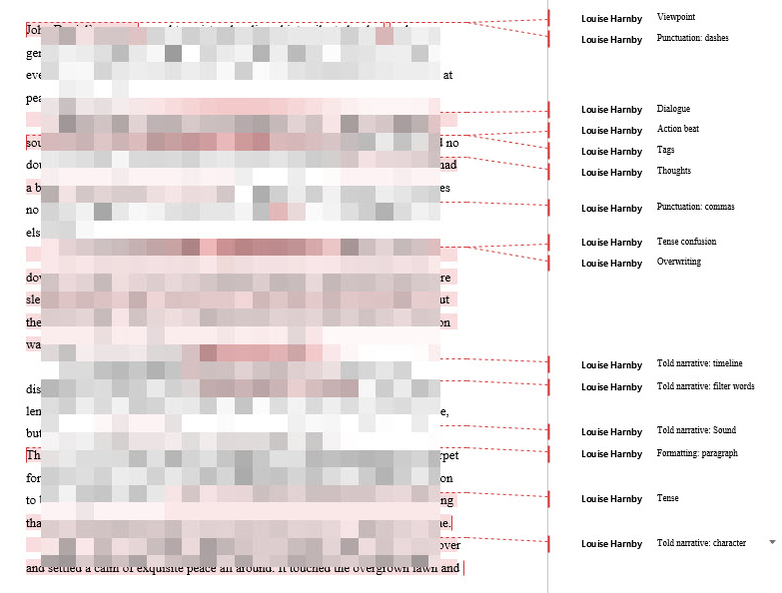
TAGGING IN A MINI FICTION LINE CRITIQUE
4. Writing the report
Now that we’ve tagged the sample, we can create a report. Line critiques are usually between 20 and 30 pages long, depending on the length of the text samples the editor is pulling in and offering recasts for.
Each report is divided into sections that address the strengths and weaknesses of the following:
NARRATIVE
DIALOGUE AND THOUGHTS
TECHNICAL ELEMENTS
FORMATTING
The tags in the sample allow editors to search for and locate the text we want to use as examples of good practice and to highlight areas with improvement potential.
Here’s an example of one of those sections (I’ve disguised the identifying traits of the original in order to respect the author’s confidentiality):
Now that we’ve tagged the sample, we can create a report. Line critiques are usually between 20 and 30 pages long, depending on the length of the text samples the editor is pulling in and offering recasts for.
Each report is divided into sections that address the strengths and weaknesses of the following:
NARRATIVE
- Clarity of narrative viewpoint
- Tense choice
- Showing and telling
- Character description
- Filter words
- Action beats
- Sentence length, flow and rhythm
- Adverbs and adverbial phrases
- Tentative language in relation to a told narrative
DIALOGUE AND THOUGHTS
- Voice, mood and intention
- Dialogue layout
- Dialogue punctuation
- Effectiveness of dialogue tags
- How thoughts are styled
TECHNICAL ELEMENTS
- Spelling
- Punctuation
- Grammar
- Syntax
FORMATTING
- Pre-proof layout recommendations
- Using Word’s styles tool
The tags in the sample allow editors to search for and locate the text we want to use as examples of good practice and to highlight areas with improvement potential.
Here’s an example of one of those sections (I’ve disguised the identifying traits of the original in order to respect the author’s confidentiality):
CLARITY OF NARRATIVE VIEWPOINT
What worked
You held narrative viewpoint well and I commend your decision to separate the two viewpoint characters with chapters. This ensured the narrative voices remained distinct.
Using a present-tense second-person POV for your transgressor and a past-tense first-person POV for your protagonist worked extremely well. Have you read Complicity by Iain Banks? He does the same thing! It’s effective because it makes us wonder whether that first-person narrative is reliable, though you don’t give the game away until the denouement, which I loved.
The second-person POV also lent a rather creepy voyeurism to the transgressor chapters, and though these were demanding to read, you did give your readers plenty of breathing space with the contrasting protagonist chapters. Nicely done!
What could be improved
Your protagonist narrative was laboured at times because of the abundance of ‘I’. Overusing this pronoun can lead to an overly told narrative in which the reader is forced to experience everything via the character’s experience of it. This can be distancing. I’m not suggesting you remove every instance of ‘I’ plus the verb – not at all. Instead, consider toning it down and removing some of the filter words so that the reader can experience some of the doing with the character rather than through the character. Here are two examples and suggested fixes:
Notice how I’ve suggested removing ‘I saw’, which feels redundant given that we already know that Marcus is looking up, and only tells us of more seeing being done. Instead, you can focus the reader’s attention on the immediacy of what’s seen once the looking up’s happened: the movement of the shooting star. That allows you to show readers what Marcus sees rather than telling them.
Notice how in the original there’s a lot of telling of what ‘I’ did. I like your use of a strong verb to introduce tension – ‘scuttled’ – but that tension dissipates with the more distant told narrative that follows. There’s telling of sound, smell, and realization. I’ve suggested you tighten up the paragraph by retaining the original anchor in which Marcus hides; perhaps follow that with a shown narrative that, again, allows the reader to experience the sounds and smells at the same time as Marcus rather than through his ears, nose and brain’s doing hearing, smelling and realizing.
Recommendation
Bear in mind that a first-person narrative, by definition, puts the reader in the character’s head. If you keep that in mind, you’ll save yourself a lot of work because you’ll need fewer words on the page.
Have a read through all the protagonist chapters and consider where you can tighten up the prose in order to limit some of the telling of doing being done. You can still anchor the first-person viewpoint with ‘I’ in places, of course, but you might recast some of writing that follows with shown action.
What worked
You held narrative viewpoint well and I commend your decision to separate the two viewpoint characters with chapters. This ensured the narrative voices remained distinct.
Using a present-tense second-person POV for your transgressor and a past-tense first-person POV for your protagonist worked extremely well. Have you read Complicity by Iain Banks? He does the same thing! It’s effective because it makes us wonder whether that first-person narrative is reliable, though you don’t give the game away until the denouement, which I loved.
The second-person POV also lent a rather creepy voyeurism to the transgressor chapters, and though these were demanding to read, you did give your readers plenty of breathing space with the contrasting protagonist chapters. Nicely done!
What could be improved
Your protagonist narrative was laboured at times because of the abundance of ‘I’. Overusing this pronoun can lead to an overly told narrative in which the reader is forced to experience everything via the character’s experience of it. This can be distancing. I’m not suggesting you remove every instance of ‘I’ plus the verb – not at all. Instead, consider toning it down and removing some of the filter words so that the reader can experience some of the doing with the character rather than through the character. Here are two examples and suggested fixes:
- ORIGINAL (p. 14): I looked up and saw a shooting star zipping through the night sky.
- SUGGESTED EDIT: I looked up. A shooting star zipped through the night sky.
Notice how I’ve suggested removing ‘I saw’, which feels redundant given that we already know that Marcus is looking up, and only tells us of more seeing being done. Instead, you can focus the reader’s attention on the immediacy of what’s seen once the looking up’s happened: the movement of the shooting star. That allows you to show readers what Marcus sees rather than telling them.
- ORIGINAL (p. 24): I scuttled towards the garage and hid behind a large oak tree. I heard the sound of Phil’s boots on the gravel underfoot and smelled the sharp aroma of his awful aftershave. I realized he was close, about two feet away from me.
- SUGGESTED EDIT: I scuttled towards the garage and hid behind a large oak. Gravel crunched. Rank aftershave tickled my nose. Phil was close, a couple of feet at most.
Notice how in the original there’s a lot of telling of what ‘I’ did. I like your use of a strong verb to introduce tension – ‘scuttled’ – but that tension dissipates with the more distant told narrative that follows. There’s telling of sound, smell, and realization. I’ve suggested you tighten up the paragraph by retaining the original anchor in which Marcus hides; perhaps follow that with a shown narrative that, again, allows the reader to experience the sounds and smells at the same time as Marcus rather than through his ears, nose and brain’s doing hearing, smelling and realizing.
Recommendation
Bear in mind that a first-person narrative, by definition, puts the reader in the character’s head. If you keep that in mind, you’ll save yourself a lot of work because you’ll need fewer words on the page.
Have a read through all the protagonist chapters and consider where you can tighten up the prose in order to limit some of the telling of doing being done. You can still anchor the first-person viewpoint with ‘I’ in places, of course, but you might recast some of writing that follows with shown action.
5. Wrapping up and emailing the report
When the report is complete, we save it as a PDF and email it to the author. PDF is the tool of choice for many editors because it can’t be edited. If the client wishes to refer back to it during future writing projects, they can do so safe in the knowledge that nothing’s been accidentally removed.
Summing up
If you want to hone your line craft and polish your book at sentence level, but a full line- and copyedit is beyond your budget, consider a more affordable alternative: the line critique.
Think of a critique as another form of authorial development, of book-craft study. And what you learn from your critique won’t be something you can apply just to the current book. It’s a tool you can use with every story you write thereafter.
And here’s a free booklet that outlines the various levels of editing. Just click on the cover to get your copy (and, no, you don’t have to give me your email address!).
Louise Harnby is a line editor, copyeditor and proofreader who specializes in working with crime, mystery, suspense and thriller writers.
She is an Advanced Professional Member of the Chartered Institute of Editing and Proofreading (CIEP), a member of ACES, a Partner Member of The Alliance of Independent Authors (ALLi), and co-hosts The Editing Podcast.
Visit her business website at Louise Harnby | Fiction Editor & Proofreader, say hello on Twitter at @LouiseHarnby, connect via Facebook and LinkedIn, and check out her books and courses.
She is an Advanced Professional Member of the Chartered Institute of Editing and Proofreading (CIEP), a member of ACES, a Partner Member of The Alliance of Independent Authors (ALLi), and co-hosts The Editing Podcast.
Visit her business website at Louise Harnby | Fiction Editor & Proofreader, say hello on Twitter at @LouiseHarnby, connect via Facebook and LinkedIn, and check out her books and courses.
It doesn’t matter a jot to me which kind of English an author wants to write in. What does matter is their readers' expectations and perceptions, and being consistent.
This free booklet shows you how to stay on track. To get it, head over to the Grammar and Spelling section of my Resource Centre.
This free booklet shows you how to stay on track. To get it, head over to the Grammar and Spelling section of my Resource Centre.
Louise Harnby is a line editor, copyeditor and proofreader who specializes in working with crime, mystery, suspense and thriller writers.
She is an Advanced Professional Member of the Chartered Institute of Editing and Proofreading (CIEP), a member of ACES, a Partner Member of The Alliance of Independent Authors (ALLi), and co-hosts The Editing Podcast.
She is an Advanced Professional Member of the Chartered Institute of Editing and Proofreading (CIEP), a member of ACES, a Partner Member of The Alliance of Independent Authors (ALLi), and co-hosts The Editing Podcast.
- Get in touch: Louise Harnby | Fiction Editor & Proofreader
- Connect: Twitter at @LouiseHarnby, Facebook and LinkedIn
- Learn: Books and courses
- Discover: Resources for authors and editors
If your characters seem or appear to be doing or feeling something – probably, maybe, perhaps – then you might be using half measures to express a good chunk of that action or emotion. Uncertainty can drag a story down. Here’s how to edit for it at line level.
In fiction, tentative language can lead to the following:
Authors sometimes introduce tentative language into a novel because:
Tentative language: words to watch out for
I’m not suggesting you remove every tentative word; some might be deliberate and necessary. More likely, you’ll be checking that your prose isn’t rife with them.
Still, these little blighters can slip in accidentally and it’s worth taking the time to root them out and decide whether to give them space on your page or remove them.
Here are some of the words (or word groups) to watch out for:
When there’s a problem, it can sometimes be fixed with a simple deletion, or a stronger verb.
When viewpoint, tension and reader immersion are at stake, more intervention might be required.
How to fix it without dropping viewpoint
I see the likes of seemed, appeared, and looked as if creeping frequently into line editing projects for less experienced authors because they want to hold viewpoint.
Hats off to them – I’ll take a seemed over a head-hop any day of the week! Still, there might be a better fix.
Here’s a framework you can use to recast in a way that removes the uncertainty but keeps the narrative alive.
- Flatness: Tension and dynamism are reduced
- Woolliness: The narrative voice can’t make its mind up
- Distance: The reader is pulled away from the story
Authors sometimes introduce tentative language into a novel because:
- They’re afraid of dropping viewpoint
- Their narrative voice lacks confidence
- They think it’s appropriate
Tentative language: words to watch out for
I’m not suggesting you remove every tentative word; some might be deliberate and necessary. More likely, you’ll be checking that your prose isn’t rife with them.
Still, these little blighters can slip in accidentally and it’s worth taking the time to root them out and decide whether to give them space on your page or remove them.
Here are some of the words (or word groups) to watch out for:
- as if to
- almost as if
- appeared to
- considered
- could
- hoped
- looked as if/looked like
- maybe
- might
- perhaps
- presumably
- probably
- seemed
- thought
- wondered
When there’s a problem, it can sometimes be fixed with a simple deletion, or a stronger verb.
When viewpoint, tension and reader immersion are at stake, more intervention might be required.
How to fix it without dropping viewpoint
I see the likes of seemed, appeared, and looked as if creeping frequently into line editing projects for less experienced authors because they want to hold viewpoint.
Hats off to them – I’ll take a seemed over a head-hop any day of the week! Still, there might be a better fix.
Here’s a framework you can use to recast in a way that removes the uncertainty but keeps the narrative alive.
|
Fixing framework that holds viewpoint
|
|
In the examples below, I’ve used this framework to craft a shown narrative rather than an assumed one. The original text is based on real examples that have been adapted to respect confidentiality.
EXAMPLE 1
Luke peeked around the headstone. The hooded man seemed frustrated.
Luke can’t know for sure how the other character is feeling, and the author covers this with seemed. That’s all well and good; removing it would flip the reader from Luke’s internal experience to the hooded man’s.
The sentence is flat though. Yes, we readers are still in Luke’s head but it’s not a particularly interesting space. There’s no tension in our observations from his hiding place.
Here’s how the fixing framework helped me recast in a way that shows readers the hooded man’s assumed frustration, as seen by Luke:
The sentence is flat though. Yes, we readers are still in Luke’s head but it’s not a particularly interesting space. There’s no tension in our observations from his hiding place.
Here’s how the fixing framework helped me recast in a way that shows readers the hooded man’s assumed frustration, as seen by Luke:
Luke peeked around the headstone. The hooded man glanced at his watch and swore under his breath. His foot lashed out, knocking over a grave vase. The stagnant water stunk and Luke wrinkled his nose.
In the revised version, we see the hooded man’s emotion through his action. That helps with the flatness but also with narrative distance; we stay close to Luke because we experience not only what he sees but also what he smells. It’s more immersive.
EXAMPLE 2
Thom turned and tripped over the blind guy’s white stick – Mikey, someone had called him. He looked at Mikey, who seemed almost to be picking out Thom’s facial features in his mind.
Thom is the viewpoint character so we can’t know what’s going on in Mikey’s head. And that means we can’t just remove the tentative words and change the verb to picked.
But there’s a problem. If Mikey were the viewpoint character, his imagining Thom’s face would make for an interesting narrative. However, it’s Thom’s head we’re in. In this case, the assumption seems off, too big to believe.
When I listen to someone speaking, I tend to use my eyes to focus on their mouths; my friend with restricted vision tends to move his head so that his ears are more in play. Sighted people in his company need to be aware that his eyes don’t focus directly on a speaker even though he’s fully engaged.
If we place this experience within the fixing framework, we can imagine Mikey’s physicality and the effect on Thom, the viewpoint character.
But there’s a problem. If Mikey were the viewpoint character, his imagining Thom’s face would make for an interesting narrative. However, it’s Thom’s head we’re in. In this case, the assumption seems off, too big to believe.
When I listen to someone speaking, I tend to use my eyes to focus on their mouths; my friend with restricted vision tends to move his head so that his ears are more in play. Sighted people in his company need to be aware that his eyes don’t focus directly on a speaker even though he’s fully engaged.
If we place this experience within the fixing framework, we can imagine Mikey’s physicality and the effect on Thom, the viewpoint character.
Thom turned and tripped over the blind guy’s white stick – Mikey, someone had called him. Mikey tilted his head, gaze off-centre, ear trained on Thom’s blustered apology.
In the revised version, the assumption is gone. Instead, readers are shown what Mikey does and what Thom experiences. Viewpoint is intact, and the clunk has gone.
How to fix an insecure narrative voice
In the examples below, the tentative words have crept in because the authors are still developing the confidence to make every word count.
Useful tools of the trade include deletion, stronger verbs, smoother recasts, and free indirect style.
The fixes below are suggestions only, offered so you have an idea of what to look out for and how you might tackle the solution. The approach you use will depend on your writing style and the mood of the scene.
When tentative language creates a flat sentence
In these examples, the tentative mood is justified but the sentences are rather flat. We need to inject tension.
|
Original
|
Tamsin Johns came to mind. He wondered what her story was.
|
|
Free indirect style
|
Tamsin Johns came to mind. What the hell was her story?
|
|
Original
|
Confused, Ava wondered if he’d thought she was going to rob him.
|
|
Recast
|
Ava shook her head. It was odd, like the guy had thought she was going to rob him.
|
|
Original
|
Arty thought the new door seemed not to fit the others in the old house.
|
|
Recast
|
Arty touched the cherrywood door. It was different to the others, the grain fine and straight, the lacquer smooth under his fingertips.
|
When tentative language creates a woolly sentence
In these examples, the tentative words relate to viewpoint characters’ experiences. The uncertainty introduces distance because it pulls the reader out of their experience. It makes us say, ‘Why the lack of commitment? Doesn’t the viewpoint character know?’
Once more, I’ve used real examples and adapted them to disguise the originals.
In these examples, the tentative words relate to viewpoint characters’ experiences. The uncertainty introduces distance because it pulls the reader out of their experience. It makes us say, ‘Why the lack of commitment? Doesn’t the viewpoint character know?’
Once more, I’ve used real examples and adapted them to disguise the originals.
|
Original
|
Her body appeared to hum with fear.
|
|
Deletion
|
Her body hummed with fear.
|
|
Original
|
Eleanor gasped as the craft shot into the air and was gone in what seemed like an instant.
|
|
Deletion
|
Eleanor gasped as the craft shot into the air and was gone in an instant.
|
|
Stronger verb
|
Eleanor gasped as the craft shot into the air and vanished.
|
|
Original
|
Debs scrolled through her contacts, found his name and hit DELETE. Hilary probably thought she could do better, and Debs agreed.
|
|
Deletion
|
Debs scrolled through her contacts, found his name and hit DELETE. Hilary had said she could do better, and Debs agreed.
|
When tentative language works
In these examples, the tentative words work. They show the reader that the viewpoint character is guessing.
In these examples, the tentative words work. They show the reader that the viewpoint character is guessing.
She glowered as if to say, You really think there’s enough meat on that plate?
Mark glanced at the blue car. There were two people inside, neither familiar. Might be undercover cops, but he legged it anyway … just in case.
Mark glanced at the blue car. There were two people inside, neither familiar. Might be undercover cops, but he legged it anyway … just in case.
A haze hung in the air – maybe brick dust from the fallen building or ash from the fire. It stung his eyes and irritated his throat.
The news knocked the breath out of her. Jamie had seemed happy the last time they’d met. Ecstatic even, what with the new job, the kayaking holiday, that girl he’d met the week before.
She combed the beach for Ben’s blue sun hat, pushing the unthinkable to the back of her mind. Thought it through. Probably with Mark at the rockpool. The café maybe. Or the groyne or the dunes. Her head spun left, right, left again.
Summing up
As soon as a writer or editor begins line editing fiction, subjectivity comes into play. It’s rare that there’s a right or a wrong way.
With that in mind, don’t ban tentative language in your prose; just watch out for it. It may well have the right to be there, though it shouldn’t trump tension or add clunk.
If removing it messes with viewpoint, use the fixing framework to craft an alternative shown narrative.
Louise Harnby is a line editor, copyeditor and proofreader who specializes in working with crime, mystery, suspense and thriller writers.
She is an Advanced Professional Member of the Chartered Institute of Editing and Proofreading (CIEP), a member of ACES, a Partner Member of The Alliance of Independent Authors (ALLi), and co-hosts The Editing Podcast.
She is an Advanced Professional Member of the Chartered Institute of Editing and Proofreading (CIEP), a member of ACES, a Partner Member of The Alliance of Independent Authors (ALLi), and co-hosts The Editing Podcast.
- Get in touch: Louise Harnby | Fiction Editor & Proofreader
- Connect: Twitter at @LouiseHarnby, Facebook and LinkedIn
- Learn: Books and courses
- Discover: Resources for authors and editors
In this bonus episode of The Editing Podcast, Denise and Louise chat about 10 things an author needs to tell an editor about so that both parties can work out whether they're a good fit.
Listen here ...
Find out more about ...
- Word count
- File format
- Genre or subject
- Previous rounds of editing
- Type of editing required
- Audience and publishing path
- Time frame
- Other published works (online or in print)
- Sourcing editorial assistance
Mentioned in the show
- The Editing Podcast, Point of view: On editing erotica. With editor Maya Berger
- The Editing Podcast, S1E1: The different levels of editing
- The Editing Podcast, S1E6: What is a sample edit?
- The Editing Podcast, S2E9: Writing and editing for the web. With Erin Brenner
Music credit
‘Vivacity’ Kevin MacLeod (incompetech.com). Licensed under Creative Commons: By Attribution 3.0 License.
Louise Harnby is a line editor, copyeditor and proofreader who specializes in working with crime, mystery, suspense and thriller writers.
She is an Advanced Professional Member of the Chartered Institute of Editing and Proofreading (CIEP), a member of ACES, a Partner Member of The Alliance of Independent Authors (ALLi), and co-hosts The Editing Podcast.
Visit her business website at Louise Harnby | Fiction Editor & Proofreader, say hello on Twitter at @LouiseHarnby, connect via Facebook and LinkedIn, and check out her books and courses.
She is an Advanced Professional Member of the Chartered Institute of Editing and Proofreading (CIEP), a member of ACES, a Partner Member of The Alliance of Independent Authors (ALLi), and co-hosts The Editing Podcast.
Visit her business website at Louise Harnby | Fiction Editor & Proofreader, say hello on Twitter at @LouiseHarnby, connect via Facebook and LinkedIn, and check out her books and courses.
In this episode of The Editing Podcast, Denise and Louise talk to Laura Poole about the importance of fact checking.
Listen here ...
Find out more about
- What a copyediting service includes
- When fact checking takes place in the editorial process
- Fiction: place names, historical accuracy, idiom, dates, etymology
- Non-fiction: people names, obscure terms, place names, dates, protecting author reputation
- Differences between spot checking and fact checking
- Fact checking for consistency across series
- Print versus digital: preventing reputational damage in the long term
- Tools for fact checking
- Who’s responsible for fact checking?
- Effective and sensitive querying of facts in non-fiction
- Artistic licence with facts in fiction
Related links and resources
- Laura Poole, Archer Editorial
- Tool: Internet Movie Database (IMDb)
- Tool: The Historical Thesaurus of English
- Tool: Google Ngram Viewer
- Tool: CIA – The World Factbook
- Tool: The New Food Lover's Companion (Barron's Cooking Guide)
- Tool: Research tools for crime and thriller writers
Music credit
‘Vivacity’ Kevin MacLeod (incompetech.com). Licensed under Creative Commons: By Attribution 3.0 License http://creativecommons.org/licenses/by/3.0/
Louise Harnby is a line editor, copyeditor and proofreader who specializes in working with crime, mystery, suspense and thriller writers.
She is an Advanced Professional Member of the Chartered Institute of Editing and Proofreading (CIEP), a member of ACES, a Partner Member of The Alliance of Independent Authors (ALLi), and co-hosts The Editing Podcast.
Visit her business website at Louise Harnby | Fiction Editor & Proofreader, say hello on Twitter at @LouiseHarnby, connect via Facebook and LinkedIn, and check out her books and courses.
She is an Advanced Professional Member of the Chartered Institute of Editing and Proofreading (CIEP), a member of ACES, a Partner Member of The Alliance of Independent Authors (ALLi), and co-hosts The Editing Podcast.
Visit her business website at Louise Harnby | Fiction Editor & Proofreader, say hello on Twitter at @LouiseHarnby, connect via Facebook and LinkedIn, and check out her books and courses.
In this bonus episode of The Editing Podcast, Denise and Louise talk to editor Maya Berger about editing erotica.
Listen here ...
Summary
Find out more about:
Related links and resources
Music credit
‘Vivacity’ Kevin MacLeod (incompetech.com). Licensed under Creative Commons: By Attribution 3.0 License http://creativecommons.org/licenses/by/3.0/
Find out more about:
- Why authors shouldn’t fear approaching an editor
- Why erotica deserves the same editorial rigour as any other genre
- The rise of romance and erotica in mainstream publishing
- How to find an editor who specializes in erotic fiction
- Subgenres and the benefits of specialist editing: LGBTQ, kink and taboo (BDSM and powerplay dymanics)
- Sensitivity reading: representing voice and identity
Related links and resources
- Maya Berger (website): What I Mean To Say
- Maya Berger (CIEP listing)
- Directory of Editorial Services: Chartered Institute of Editing and Proofreading (CIEP)
- Finding an editor (blog by Louise)
- Finding an editor (podcast): The Editing Podcast, S1E10, How to Find an Editor
- Copyediting and proofreading pornography and erotica (blog by Louise)
Music credit
‘Vivacity’ Kevin MacLeod (incompetech.com). Licensed under Creative Commons: By Attribution 3.0 License http://creativecommons.org/licenses/by/3.0/
Louise Harnby is a line editor, copyeditor and proofreader who specializes in working with crime, mystery, suspense and thriller writers.
She is an Advanced Professional Member of the Chartered Institute of Editing and Proofreading (CIEP), a member of ACES, a Partner Member of The Alliance of Independent Authors (ALLi), and co-hosts The Editing Podcast.
Visit her business website at Louise Harnby | Fiction Editor & Proofreader, say hello on Twitter at @LouiseHarnby, connect via Facebook and LinkedIn, and check out her books and courses.
She is an Advanced Professional Member of the Chartered Institute of Editing and Proofreading (CIEP), a member of ACES, a Partner Member of The Alliance of Independent Authors (ALLi), and co-hosts The Editing Podcast.
Visit her business website at Louise Harnby | Fiction Editor & Proofreader, say hello on Twitter at @LouiseHarnby, connect via Facebook and LinkedIn, and check out her books and courses.

PDF MARKUP
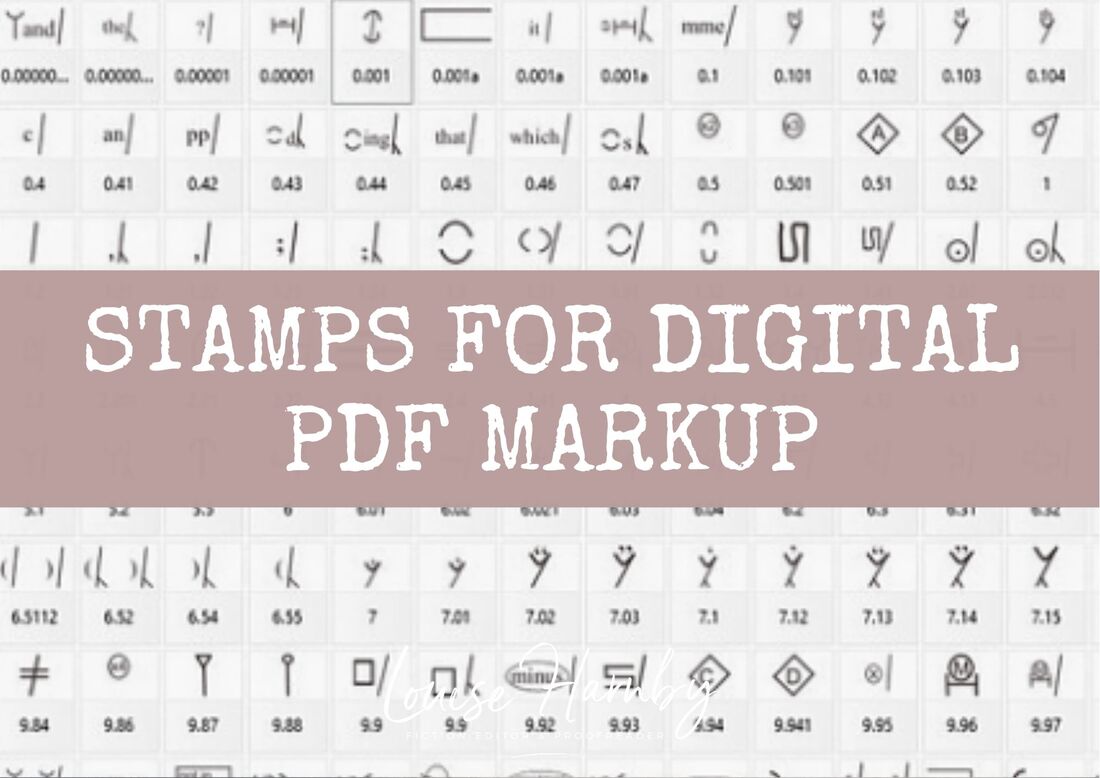
AUTHOR RESOURCES
EDITOR RESOURCES
TESTIMONIALS
Dare Rogers
'Louise uses her expertise to hone a story until it's razor sharp, while still allowing the author’s voice to remain dominant.'
Jeff Carson
'I wholeheartedly recommend her services ... Just don’t hire her when I need her.'
J B Turner
'Sincere thanks for a beautiful and elegant piece of work. First class.'
Ayshe Gemedzhy
'What makes her stand out and shine is her ability to immerse herself in your story.'
Salt Publishing
'A million thanks – your mark-up is perfect, as always.'
CATEGORIES
All
Around The World
Audio Books
Author Chat
Author Interviews
Author Platform
Author Resources
Blogging
Book Marketing
Books
Branding
Business Tips
Choosing An Editor
Client Talk
Conscious Language
Core Editorial Skills
Crime Writing
Design And Layout
Dialogue
Editing
Editorial Tips
Editorial Tools
Editors On The Blog
Erotica
Fiction
Fiction Editing
Freelancing
Free Stuff
Getting Noticed
Getting Work
Grammar Links
Guest Writers
Indexing
Indie Authors
Lean Writing
Line Craft
Link Of The Week
Macro Chat
Marketing Tips
Money Talk
Mood And Rhythm
More Macros And Add Ins
Networking
Online Courses
PDF Markup
Podcasting
POV
Proofreading
Proofreading Marks
Publishing
Punctuation
Q&A With Louise
Resources
Roundups
Self Editing
Self Publishing Authors
Sentence Editing
Showing And Telling
Software
Stamps
Starting Out
Story Craft
The Editing Podcast
Training
Types Of Editing
Using Word
Website Tips
Work Choices
Working Onscreen
Working Smart
Writer Resources
Writing
Writing Tips
Writing Tools
ARCHIVES
April 2024
March 2024
October 2023
August 2023
July 2023
June 2023
May 2023
April 2023
March 2023
January 2023
December 2022
November 2022
October 2022
September 2022
August 2022
July 2022
June 2022
May 2022
April 2022
March 2022
February 2022
January 2022
December 2021
November 2021
October 2021
September 2021
August 2021
July 2021
June 2021
May 2021
April 2021
March 2021
February 2021
January 2021
December 2020
November 2020
October 2020
September 2020
August 2020
July 2020
June 2020
May 2020
April 2020
March 2020
February 2020
January 2020
December 2019
November 2019
October 2019
September 2019
August 2019
July 2019
June 2019
May 2019
April 2019
March 2019
February 2019
January 2019
December 2018
November 2018
October 2018
September 2018
August 2018
July 2018
June 2018
May 2018
April 2018
March 2018
February 2018
January 2018
December 2017
November 2017
October 2017
September 2017
August 2017
July 2017
June 2017
May 2017
April 2017
March 2017
February 2017
January 2017
December 2016
November 2016
October 2016
September 2016
June 2016
May 2016
April 2016
March 2016
February 2016
January 2016
December 2015
November 2015
October 2015
September 2015
July 2015
June 2015
May 2015
March 2015
February 2015
January 2015
November 2014
October 2014
September 2014
August 2014
July 2014
June 2014
March 2014
January 2014
November 2013
October 2013
September 2013
August 2013
June 2013
February 2013
January 2013
November 2012
October 2012
September 2012
August 2012
July 2012
June 2012
May 2012
April 2012
March 2012
February 2012
January 2012
December 2011
 RSS Feed
 |

|

|

|

|
|
|
|

© 2011–2024 Louise Harnby